 English
 Español
 Pусский
 عربي
عربي 


Starting a paper cup business is one of the most promising opportunities in today’s eco-focused packaging industry. With rising demand for disposable yet environmentally friendly products, entrepreneurs can build a scalable and profitable venture. This guide walks you through every essential step—from market research to production setup, pricing, and distribution—while highlighting how modern machines like TOPPRO paper cup machines can enhance your production efficiency.
Why Should You Start a Paper Cup Business?
Paper cups are widely used in cafes, restaurants, offices, hospitals, events, and vending machines. Increasing restrictions on plastic packaging have accelerated the shift toward paper-based alternatives, making paper cups a growing and sustainable market.
Key benefits:
-
High and consistent demand
-
Eco-friendly product with global acceptance
-
Low-to-medium investment with scalable returns
-
Multiple size and customization opportunities
Conducting Market Research
Effective market research lays the foundation for success. Focus on three key areas:
Target Market Segmentation: Identify high-demand sectors such as beverage chains, corporate offices, event organizers, or e-commerce meal kits. Asia-Pacific contributes over 45% of global market growth, with Southeast Asia and India seeing 18%+ annual growth.
Competitor Analysis: Evaluate local competitors' product ranges, pricing, and distribution channels. Note gaps like lack of biodegradable options or slow delivery for bulk orders.
Policy & Trend Monitoring: Track regional regulations and consumer preferences for PLA-coated or plant-based cups.
Planning Your Paper Cup Business
Develop a comprehensive business plan covering:
Business Model: Choose between standard cup production, custom-printed cups (for brands/events), or specialized products.
Financial Projections: Estimate startup costs, operational expenses, and break-even timelines (typically 12-18 months for small-scale operations).
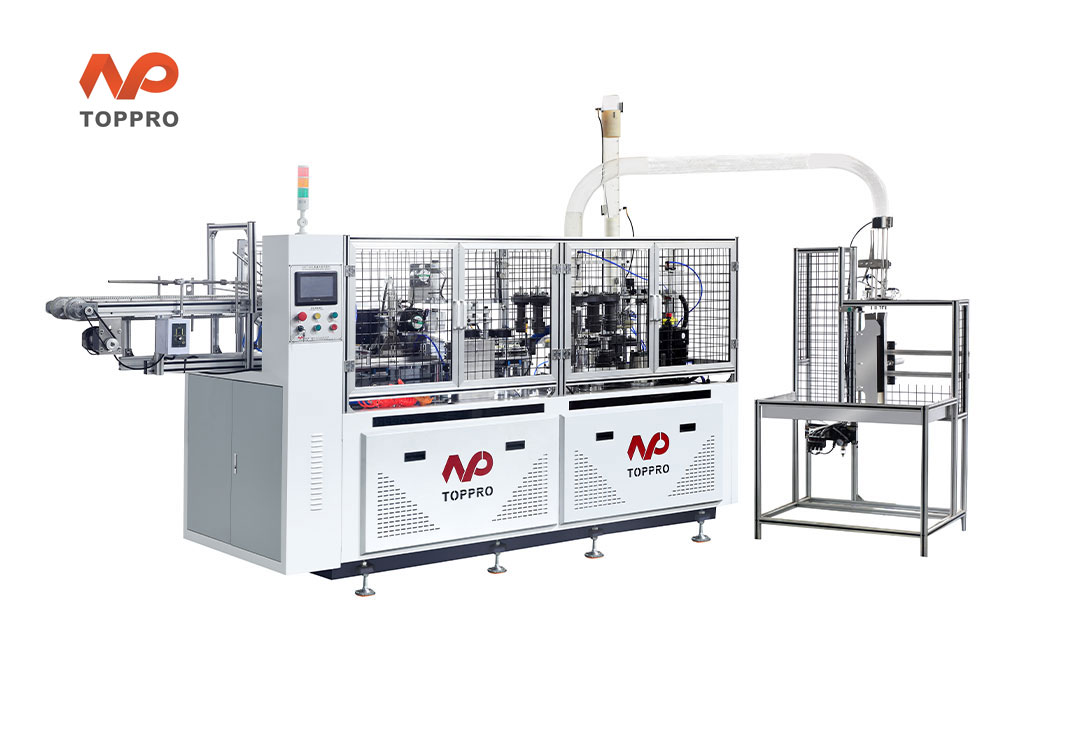
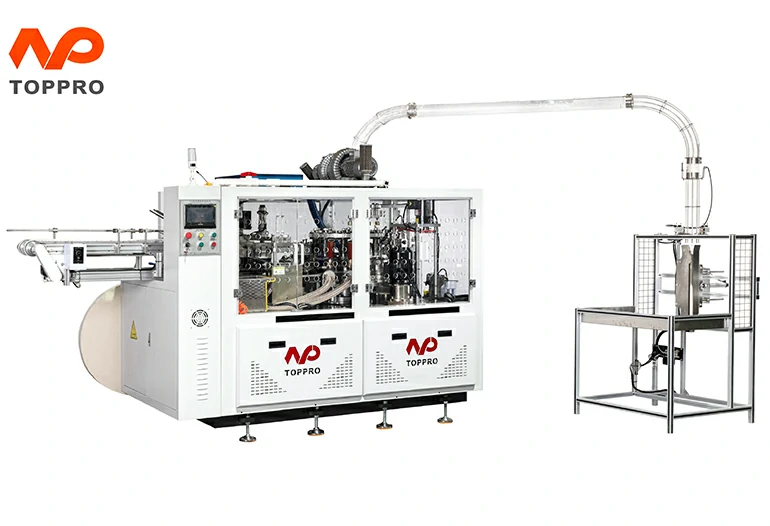
Capacity Planning: Align production capacity with market demand. A mid-sized TOPPRO LF-110 machine (100-110 cups/min) suits most startups.
Obtaining Necessary Licenses and Permits
Compliance is critical for food-contact products:
Core Certifications: Food production license, business registration, and environmental permits for waste disposal.
Material Compliance: Ensure raw materials meet FDA (US) or GB 4806 (China) food safety standards.
Regional Variations: Consult local authorities—for example, California’s AB1276 requires reusable options alongside disposable cups by 2025.
Optimal Location Selection for Your Business Operations
Choose a location that balances cost and efficiency:
Proximity to Suppliers: Reduce transportation costs by locating near food-grade paper or PLA suppliers.
Logistics Access: Prioritize areas with easy access to highways or ports for distributing to regional clients.
Environmental Compliance: Avoid residential zones to meet emission standards; industrial parks often offer tax incentives for eco-friendly businesses.
Understanding the Paper Cup Making Process
Familiarize yourself with the standard production workflow:
1. Paper Preparation: Cut food-grade PE-coated or PLA-coated paper into fan-shaped blanks (170-350 g/m²).
2. Cup Formation: Mold blanks into cylindrical bodies, seal seams (ultrasonic or hot-air technology), and attach bottoms.
3. Finishing: Print logos (food-safe inks), inspect for leaks, and stack cups.
4. Quality Control: Test for heat resistance (up to 150℃ with advanced coatings ) and structural integrity.
Setting Up Your Paper Cup Production Line
Your production line setup determines output efficiency. This is where reliable machinery becomes essential.
Using High-Performance Machines Like TOPPRO
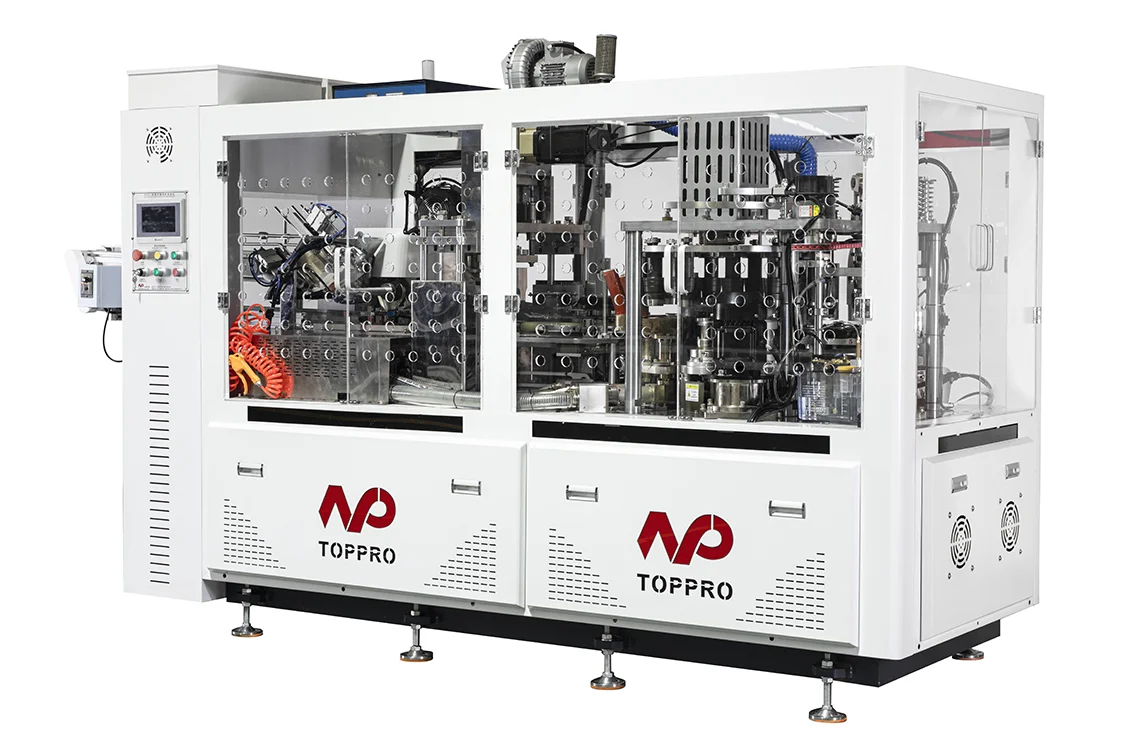
TOPPRO paper cup machines are known for:
-
High-speed production capabilities
-
Stable performance with low error rate
-
Servo-driven precision for accurate sealing
-
User-friendly operation and lower maintenance needs
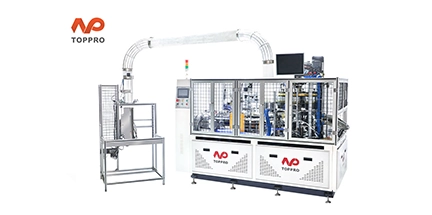
Integrating a TOPPRO automatic paper cup machine ensures better productivity, improved cup quality, and a stronger competitive edge—especially for startups aiming for long-term profitability.
Market Your Paper Cup Business Effectively
-
Build a strong brand identity emphasizing eco-friendliness
-
Offer custom printing services for cafes, events, and brands
-
Promote through social media, Google business listing, and local distributors
-
Highlight your use of advanced machines like TOPPRO to reassure clients about quality and consistency
Conclusion
Starting a paper cup business can be highly profitable when supported by thorough planning, quality raw materials, effective marketing, and reliable machinery. By integrating advanced equipment such as TOPPRO paper cup machines, manufacturers can ensure higher efficiency, consistent output, and a strong competitive position in the fast-growing paper cup market.
FAQ
Q1. How much investment is required to start a paper cup business?
A: Investment typically ranges from $10,000–$50,000, depending on production capacity and machinery quality.
Q2. How long does it take to set up a paper cup manufacturing unit?
A: Most units can be installed within 15–30 days, including machine setup and testing.
Q3. What is the profit margin in paper cup manufacturing?
A: Profit margins range from 12% to 25%, depending on cup size, printing, and volume.
Q4. What machine capacity is suitable for beginners?
A: A machine that produces 40–60 cups per minute (like many TOPPRO models) is ideal for startups.
Q5. Can I manufacture customized printed cups?
A: Yes. With printed PE-coated paper rolls or offset printing partners, you can offer branded cups.