 English
 Español
 Pусский
 عربي
عربي 


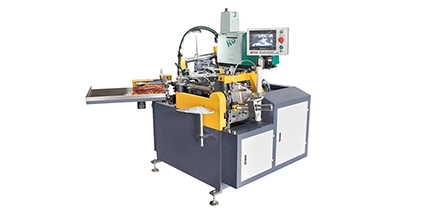
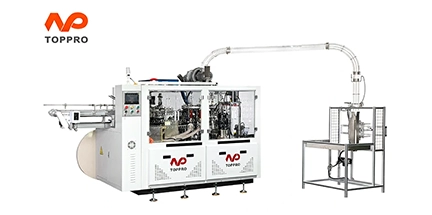
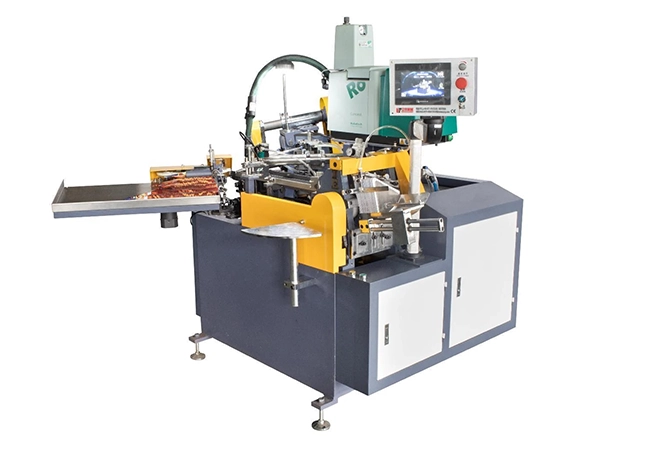
You're running an ice cream packaging line, and the cone sleeve is the piece that wraps the cone, carries the branding, and keeps the product protected from the freezer to the customer's hand. A Paper Cone Machine takes flat paper blanks, wraps them around a conical mold, applies glue, and delivers a finished sleeve — all at production speed. The CPC-220 from Sincere Machine runs this process at 190-230 pcs/min across 4-10oz cone sizes. This article explains how the forming works, what paper materials the machine accepts, and which components keep it running shift after shift.
How Does the Forming Process Turn Paper into a Cone?
Feeding, Wrapping, Gluing, and Cutting
A cone sleeve starts as a flat paper blank. The machine feeds that blank onto a conical mandrel, wraps it around the cone shape, applies hot melt adhesive along the seam, and cuts the finished sleeve free. The cone angle on the CPC-220 runs 17-23 degrees, and the cone length ranges from 90mm to 185mm — that covers the common ice cream cone formats you'll see in retail freezers.
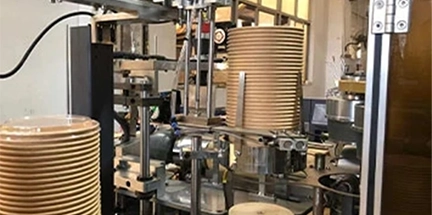
The wrapping happens on a rotating mold. The paper has to conform to the cone shape without wrinkles or gaps, because a sleeve that doesn't sit flat on the cone looks defective on the shelf. The machine's conveying system keeps the paper moving smoothly and stably through the forming station, which is one of the reasons the sleeve comes out consistent cycle after cycle.
What the Rotary Die System Does
The die cutting system separates the finished sleeve from the paper web. On the CPC-220, this is a rotary die setup. The rotary action allows continuous cutting rather than a stop-start motion, which is what supports the machine's sustained output at 190-230 pieces per minute. The die itself is a wear part, and the machine is designed so that die changes for different cone sizes can happen without a long production interruption.
Which Paper Materials Work for Cone Sleeves?
Art Paper, Aluminized Paper, and More
The CPC-220 accepts 80-170 g/m² paper in art paper, aluminized paper, offset paper, and wax paper, among other options. Each paper type gives the finished sleeve a different look and performance profile. Art paper produces a smooth surface that takes high-quality printing well, which matters when the sleeve carries brand graphics. Aluminized paper adds a metallic finish and a moisture barrier that helps the cone stay crisp. Offset paper is a workhorse for general-purpose sleeves where print quality is secondary to cost. Wax paper offers a moisture-resistant surface for applications that need extra protection.
The paper weight range matters for the forming process. Lighter papers conform to the cone shape more easily but may need careful tension control to avoid tearing. Heavier papers hold their shape better but require more force to wrap cleanly around the mandrel. The machine's conveying system and vacuum-assisted feeding handle that range without operator intervention.
| Parameter | CPC-220 Specification |
|---|---|
| Speed | 190-230 pcs/min |
| Cone size | 4-10 oz |
| Cone angle | 17-23 degrees |
| Cone length | 90-185 mm |
| Paper weight | 80-170 g/m² |
| Paper types | Art paper, aluminized paper, offset paper, wax paper |
| Electricity | 220V 50Hz 1-phase, 380V 50Hz 3-phase, or custom |
| Power | 9 kW |
| Net weight | 1,000 kg |
| Dimensions | 1850×1750×1800 mm |
| PLC | Mitsubishi |
| Glue box | Robatech |
| Vacuum pump | Huitong |
| Transducer | Delta |
| Sensor | Panasonic |
| Electrical parts | Schneider + Panasonic |
What Keeps the Machine Running Shift After Shift?
Components That Reduce Downtime
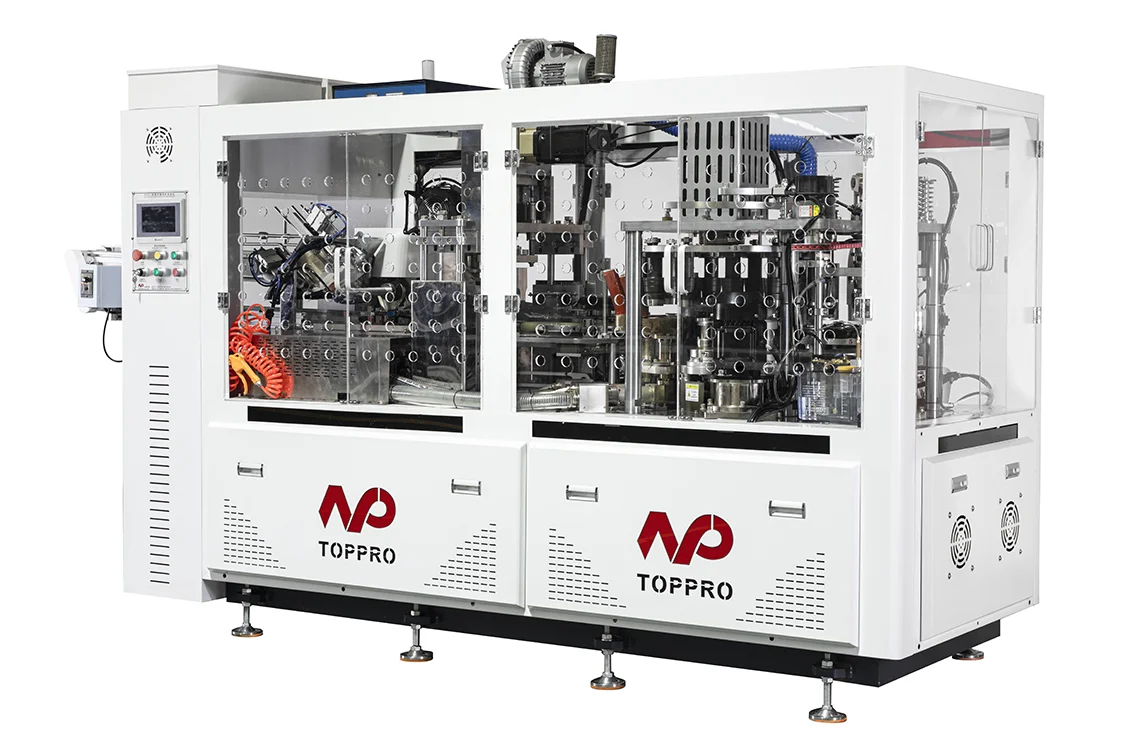
The component list reads like a who's who of industrial automation. The Mitsubishi PLC handles the machine logic and coordinates the forming sequence. The Robatech glue box delivers precise adhesive application with even distribution — a critical detail because a weak seam means a rejected sleeve. The Huitong vacuum pump provides suction for paper holding during forming. Delta transducers and Panasonic sensors monitor the process, and Schneider electrical parts handle the power side.
The control panel uses a 9-inch touch screen, which gives operators a clear view of machine status and parameters. The interface is designed for straightforward operation, so setup and adjustment don't require a specialist on the floor at all times.
Where Do Cone Sleeves Fit in Ice Cream Production?
Retail, Food Service, and Branded Packaging
Cone sleeves serve two purposes: they protect the cone and they carry the brand. In retail freezers, the sleeve is the customer's first visual contact with the product. In food service, the sleeve keeps hands clean and provides a surface for logos and flavor identification. The CPC-220 produces sleeves for both channels across the 4-10oz size range, which covers kiddie cones, standard cones, and larger waffle cone formats.
A Paper Cone Machine like the CPC-220 from Sincere Machine fits into production lines where sleeve demand is high and consistent. The machine's automated feeding and forming reduce the labor needed per sleeve, and the 190-230 pcs/min output translates to 11,400-13,800 sleeves per hour — enough to keep pace with a high-volume cone production operation.
What Should You Check Before Ordering?
Can one machine handle different cone sizes?
Yes, within the machine's range. The CPC-220 handles 4-10oz cones with angles from 17-23 degrees and lengths from 90-185mm. Switching between sizes typically involves changing the forming mold and adjusting the machine settings. The die change system is designed to minimize downtime between runs.
What's the role of the glue system?
The Robatech glue box applies hot melt adhesive to the seam where the paper overlaps. Even distribution matters because a seam with too little glue opens under handling, and a seam with too much glue creates a messy edge that looks unprofessional. The Robatech system is built for precise application, which supports consistent seam quality across the full production run.
How does the touchscreen help operators?
The 9-inch touch screen gives operators access to machine parameters and status information. It's the interface for adjusting settings when changing cone sizes or paper types. A clear display reduces the chance of setup errors, and it lets an operator see what the machine is doing without opening panels or checking separate gauges.
What paper weights work best for cone sleeves?
The machine handles 80-170 g/m² paper. For standard retail sleeves where print quality matters, art paper in the mid-range works well. For premium branded sleeves with a metallic look, aluminized paper in a similar weight range delivers the finish. For moisture-sensitive applications, wax paper provides an extra barrier. The exact choice depends on the print requirements and the cone's storage conditions.
Let's Match a Cone Sleeve Line to Your Production
Share Your Cone Size and Output Target
A Paper Cone Machine should match your cone sizes, paper material, and target output — not the other way around. The CPC-220 from Sincere Machine runs at 190-230 pcs/min, handles 4-10oz cones with 17-23 degree angles and 90-185mm lengths, and accepts paper from 80-170 g/m² in art paper, aluminized paper, offset paper, and wax paper. The machine includes a Mitsubishi PLC, Robatech glue system, and a 9-inch touchscreen for straightforward operation. If you're specifying a cone sleeve production line for ice cream packaging, talk to our team about your cone dimensions, paper requirements, and output targets — we'll help you confirm the right configuration before you order.