 English
 Español
 Pусский
 عربي



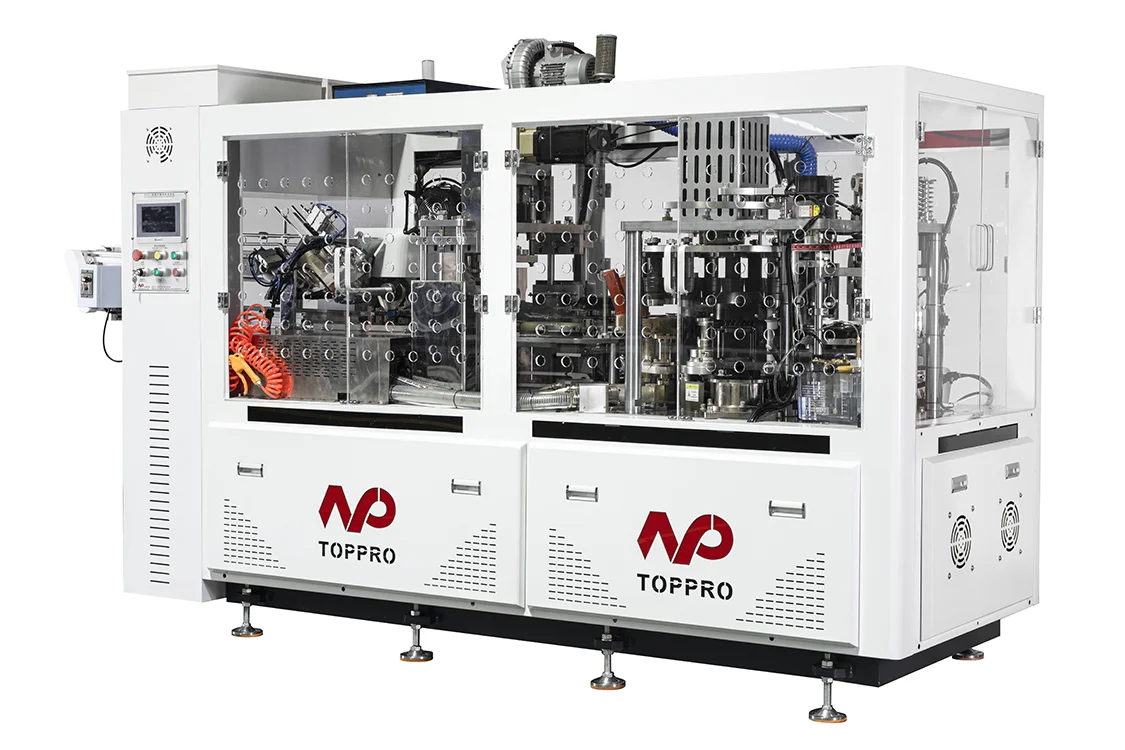
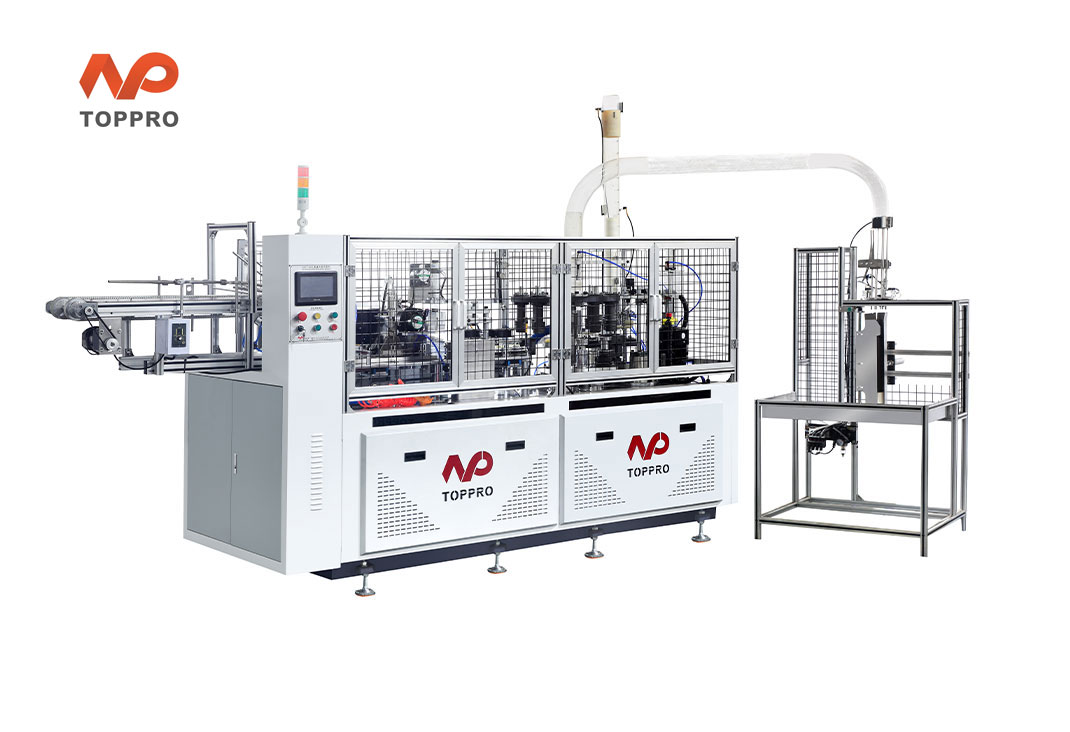
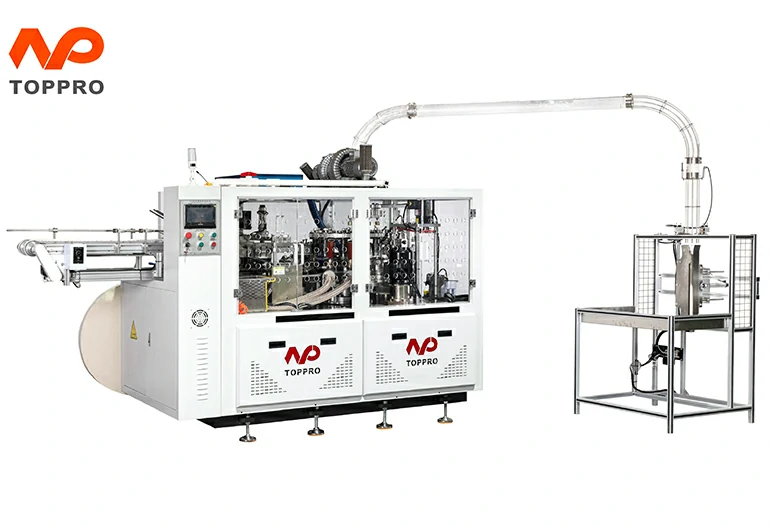
You're holding a paper cup filled with hot coffee, and the outside surface feels warm but not burning. That comfort comes from a layer of air trapped between two paper walls. A Double Wall Paper Cup Machine creates that structure by forming an inner cup, wrapping an outer sleeve around it, and bonding the two layers at specific points so a 3–5mm air gap remains between them. The TM-35 from TOPPRO Machinery runs this process at 40–50 cups per minute for cup sizes from 4 to 32 ounces. This article explains how the air gap forms, what sealing method holds the layers together, and what to verify when you're adding double-wall capability to a cup production line.
How Does the Air Gap Actually Form?
Inner Cup and Outer Sleeve
A double-wall cup is two cups in one. The inner cup holds the liquid. It's formed from PE-coated paper, sealed along the side seam and the bottom, and it's the only layer that contacts the beverage. The outer sleeve is a separate piece of paper that wraps around the inner cup. It doesn't touch the liquid, and on many cups it's uncoated so it can carry printed branding.
The gap between the inner cup wall and the outer sleeve wall is what provides the insulation. Air is a poor conductor of heat, so the trapped layer slows the transfer of heat from the hot beverage to the outside surface. That's why a double-wall cup stays comfortable to hold without a separate cardboard sleeve.
Spiral Bonding and Controlled Spacing
The bonding pattern determines the gap. If the two layers were glued across the entire surface, there would be no air gap and no insulation. The TM-35 uses a bonding pattern that attaches the outer sleeve to the inner cup at defined points—typically along the top and bottom rims, with a spiral or intermittent glue line—so the middle of the wall stays separated.
The result is a consistent air layer that runs around the cup circumference. The insulation performance depends on that spacing staying uniform. If the outer sleeve sags against the inner cup in one area, the gap collapses there and heat transfers more readily.
What Sealing Method Holds the Outer Layer?
Hot Air vs. Glue Sealing
The TM-35 supports hot air or glue sealing for attaching the outer sleeve. Hot air sealing uses a stream of heated air to melt the PE coating on the paper, and the melted polymer bonds the layers together as they're pressed. Glue sealing applies a separate adhesive to the sleeve before it's wrapped.
The choice depends on the paper. Hot air works well for single PE paper, where the coating is on one side. Glue sealing can be used when the paper doesn't have a PE coating or when the adhesive needs to bond uncoated surfaces. The TM-35 is designed for single PE paper from 170 to 300 gsm, so hot air is the standard path for most jobs, with glue as the alternative for specific paper types.
Side Seam Sealing on the Inner Cup
The inner cup's side seam is sealed separately from the outer sleeve attachment. The TM-35 uses ultrasonic sealing for the side seam, which is a solid-state process that vibrates the paper at high frequency to generate heat at the seam interface. Ultrasonic sealing is faster and more reliable than hot air for double-side PE paper, because it doesn't depend on melting an outer coating that could stick to the forming mandrel.
| Parameter | TM-35 Specification |
|---|---|
| Cup size range | 4–32 oz |
| Production speed | 40–50 pcs/min |
| Paper weight | 170–300 gsm |
| Paper type | Single PE |
| Outer layer sealing | Hot air or glue |
| Inner cup side seam | Ultrasonic |
| Lubrication | Full automatic oil bath |
| Main shaft | 30mm |
| Gearbox | 125# |
| Total power | 4.7kW |
| Air supply | 0.6 MPa |
| Voltage | 220V/50Hz single-phase or 380V/50Hz three-phase |
| Net weight | 1,500 kg |
Why Does Oil Bath Lubrication Matter for Small Operations?
Reducing Maintenance Frequency
A double-wall cup machine has more moving stations than a single-wall machine. The inner cup former, the sleeve wrapper, the bonding station, and the rim curling unit all cycle continuously. Each of those stations has shafts, bearings, and cam followers that need lubrication. Manual greasing of those points takes time and depends on the operator remembering to do it.
The TM-35 uses a full automatic oil bath lubrication system. The moving components run in an oil bath, so lubrication is continuous and doesn't depend on a manual schedule. For a small operation with limited maintenance staff, that automation reduces the risk of a missed lubrication interval that could lead to premature wear or a breakdown.
What the 30mm Shaft and 125# Gearbox Contribute
The main shaft is 30mm in diameter, and the gearbox is a 125# size. Those dimensions are larger than what an entry-level machine might carry, and the extra size translates to more rigidity under load. A stiffer shaft deflects less when the forming stations apply pressure, which helps keep the cup dimensions consistent and reduces vibration that could affect the seal quality.
Where Does Double-Wall Production Fit in Cup Manufacturing?
Coffee Shops, Milk Tea, and Premium Beverage Brands
Double-wall cups are the standard for coffee shops and milk tea chains that want to serve hot drinks without a separate sleeve. The insulation keeps the drink hot longer—industry data suggests a 3–5mm air gap can extend heat retention by roughly 30% compared to a single-wall cup. For a cafe, that means the customer's drink stays at temperature through the walk back to the office.
The same format is used for cold beverages where condensation on the outside would make a single-wall cup uncomfortable to hold. A double-wall cup keeps the outside dry and the hand comfortable.
The Margin Difference for Cup Manufacturers
For a cup producer, double-wall cups command a premium. Insulated cups typically sell for 20–40% more than standard single-wall cups, because the cafe saves on sleeves and the customer gets a better experience. The TM-35 is positioned as an entry-level machine for producers who want to start capturing that margin without a six-figure capital outlay. At 40–50 cups per minute, the output is roughly 2,400–3,000 cups per hour, which suits a startup or a small supplier serving a local cluster of cafes.
A Double Wall Paper Cup Machine like the TM-35 from TOPPRO Machinery covers that entry range, with quick mold changes that allow switching between cup sizes in under 15 minutes. The machine also supports custom molds, so a producer can target specific cup shapes or rim profiles.
What Should You Check Before Selecting a Model?
Does the machine support the cup sizes you need?
The TM-35 covers 4 to 32 ounces. That range includes espresso cups, standard coffee cups, and large iced beverage cups. If your product line includes sizes outside that window, confirm whether a customized mold is available. The mold changeover is what allows one machine to run a varied order book.
What paper type does the machine require?
The TM-35 runs single PE paper from 170 to 300 gsm. Single PE paper has polyethylene coating on one side, which provides the moisture barrier for the inside of the cup. The outer sleeve can be uncoated, which is what allows printing on the outside surface. If your production plan includes double PE paper or PLA-coated biodegradable paper, a higher-series model like the GWT-600 is the appropriate platform, because ultrasonic sealing on double-side PE requires a different sealing architecture.
What utility connections are required?
The machine needs 0.6 MPa air pressure and either 220V/50Hz single-phase or 380V/50Hz three-phase power, with a total connected load of 4.7 kW. Confirm the facility's air supply and electrical capacity against those figures before installation. The net weight is 1,500 kg, so the floor loading and the available space—2150×950×1650 mm—should also be verified.
What maintenance does the machine need?
The oil bath lubrication system handles the main drive components, but the oil level and condition should still be checked periodically. The ultrasonic horn on the inner cup side seam needs cleaning to maintain sealing energy. The hot air nozzle or glue applicator should be inspected for buildup or blockage. The forming molds should be checked for wear, because a worn mold produces an inconsistent air gap.
Questions Buyers Ask About Double-Wall Lines
What's the difference between a double-wall cup and a single-wall cup?
A single-wall cup is one layer of paper. A double-wall cup is an inner cup plus an outer sleeve, bonded at specific points with an air gap between them. The double-wall structure provides insulation and eliminates the need for a separate cardboard sleeve. The production process requires an additional forming and bonding step, which the machine handles automatically.
Can the machine run both hot and cold cup applications?
Yes. The insulation works in both directions. A double-wall cup keeps hot drinks hot by slowing heat loss, and it keeps cold drinks cold by slowing heat gain. It also prevents condensation from forming on the outside surface, which matters for iced coffee and cold brew.
What happens if the air gap is not uniform?
If the gap collapses in one area, the insulation performance drops locally and the outside surface may feel hotter or colder in that spot. Non-uniform gap spacing usually traces back to a worn forming mold, inconsistent bonding pressure, or a paper weight that's outside the machine's range. Check the mold and the bonding station before adjusting the process parameters.
How does the machine's speed compare to higher-end models?
The TM-35 runs 40–50 cups per minute. Higher-series models like the GWT-600 run 80–110 cups per minute, and the GWT-600H reaches 130–150 cups per minute for high-volume chains. The trade-off is capital cost: the TM-35 is an entry-level platform for startups and small suppliers, while the higher-speed models suit operations that have already established volume and need higher throughput.
Let's Match a Double-Wall Line to Your Cup Production
Share Your Cup Sizes and Output Target
A Double Wall Paper Cup Machine should match your target cup sizes, paper type, and production volume—not the other way around. The TM-35 from TOPPRO Machinery runs 4–32 oz cups at 40–50 pcs/min on 170–300 gsm single PE paper, with hot air or glue sealing for the outer sleeve, ultrasonic sealing for the inner cup seam, and a full automatic oil bath lubrication system. The 30mm main shaft and 125# gearbox support stable operation, and the 4.7kW total power runs on standard single-phase or three-phase supply. If you're adding insulated cup capability to a coffee, tea, or beverage packaging line, send us your cup sizes and output target — we'll help you confirm the right configuration before you order.