 English
 Español
 Pусский
 عربي
عربي 


You‘ve invested in a high-speed paper cup forming line. The machine runs fast—130, 150, even 180 cups per minute. But speed without quality is just waste. Leaking cups. Poorly sealed bottoms. Misshapen rims. Each defective cup is lost material, lost time, and lost margin.
The difference between a profitable run and a costly one often comes down to understanding where defects originate and how to prevent them. Your Paper Cup Machine is capable of delivering consistent quality at high speed, but achieving that consistency requires attention to material, settings, and maintenance. This guide covers the most common defects in high-speed paper cup forming—leaks, sealing failures, and dimensional issues—and gives you practical prevention strategies for each. For production managers and quality control teams, this is a practical framework for keeping your line running clean and your cups consistent.
Leaks – The Most Common—and Most Costly—Defect
A cup that leaks is a cup that gets rejected. In food service, leaks are non-negotiable.
Why Leaks Happen
Leaks typically originate at the bottom seal or the side seam. The bottom knurling wheel may be worn, the pre-heating plate may not be reaching the right temperature, or the paper may not be properly coated. For machines running single or double PE paper, the polyethylene layer needs to melt and bond correctly. If the temperature is too low, the seal is weak. If it‘s too high, the paper burns.
How to Prevent Leaks
Start with the pre-heating plate. If the paper isn’t heated enough before forming, the PE layer won‘t activate. Check the temperature setting against the paper spec—190-350gsm paper requires different heat levels. The bottom knurling wheel should be inspected regularly for wear. A worn knurling wheel doesn’t apply even pressure, creating weak spots in the seal. Sincere Machinery stocks critical wear parts manufactured in-house, including bottom knurling wheels, paper feeding rollers, side sealing heaters, detection sensors, ultrasonic transducers, pre-heating plates, and punching dies.
The Role of Ultrasonic Sealing
Ultrasonic sealing is glue-free and environmentally friendly, with 30% better leak resistance compared to conventional methods. Machines equipped with ultrasonic sealing, like the SFBJ-600 and GZB-600, use high-frequency vibration to bond the paper layers without adhesive. This eliminates glue-related defects and produces a stronger, more consistent seal.
Poor Side Sealing – When the Seam Fails
The side seam is the other critical seal point. If it fails, the cup won‘t hold liquid.
The Sealing Technology Choice
Different machines use different sealing technologies. The LF-70 uses electric or ultrasonic sealing. The LF-110 uses ultrasonic and hot air sealing combined. The GZB-600 uses both ultrasonic and hot air sealing. For high-speed production, the combination of ultrasonic and hot air provides the most reliable seal. Hot air pre-heats the paper surface, and ultrasonic completes the bond. This two-stage process reduces the risk of incomplete seals.
Checking the Side Sealing Heater
The side sealing heater is a common failure point. If the heater element is worn or the temperature is inconsistent, the seal will be weak. Regular inspection and replacement of the side sealing heater should be part of your maintenance schedule. Sincere Machinery offers original spare parts with fast delivery, ensuring you can replace critical components without extended downtime.
Material Compatibility
The paper type affects sealing quality. Single PE paper requires different settings than double PE or PLA-coated paper. Using the wrong sealing parameters for the material will cause sealing failures. All TOPPRO machines are compatible with single/double PE, PLA, and water-based coated paper, but the settings must be adjusted for each material type.
Dimensional Defects – Cups That Don‘t Stack
Cups that are out of round, have uneven rims, or don’t stack properly are rejects.
Causes of Dimensional Issues
Dimensional defects usually come from the forming station. Worn molds, misaligned components, or inconsistent paper feeding can all cause cups to come out misshapen. The quick-change mold system allows switching between cup sizes in 5-10 minutes, but if the mold isn‘t seated properly, the cups won’t form correctly.
The Role of Servo Control
Full servo control systems, like those on the SFBJ-600, provide precision paper feeding and real-time diagnostics. Servo tracking saves up to 5% paper on bottom feeding by ensuring accurate paper positioning. This precision extends to the forming process—consistent paper feed means consistent cup dimensions. The GZB-600 offers a full servo control system with ultrasonic and hot air sealing, delivering the precision needed for high-quality cups.
Quick Mold Change and Maintenance
The quick-change mold system is a feature for flexibility, but it requires proper maintenance. Inspect molds for wear after each changeover. A worn mold will produce cups with inconsistent dimensions. Sincere Machinery offers custom mold sets as part of their spare parts inventory, so you can replace worn molds without waiting for custom fabrication.
Defect Prevention Starts with the Right Setup
Preventing defects begins before the machine starts running. Proper setup and material preparation are essential.
Choose the Right Machine for Your Volume
The machine‘s speed rating should match your production requirements. The LF-70 runs 65-75 cups/min and is best for small cafes and tea shops. The LF-110 runs 100-120 cups/min and suits startups with varied products. The GZB-600 runs 130-150 cups/min for medium beverage plants. The SFBJ-600 runs 160-200 cups/min for large chains and OEM. Running a machine beyond its optimal speed range invites defects.
Use the Correct Paper
Paper weight and coating affect every part of the forming process. For high-speed production, use paper within the machine‘s specified range. The LF-70 handles 170-300gsm single PE paper. The LF-110 handles 190-350gsm single/double PE. The GZB-600 handles 190-350gsm single/double PE, PLA. Using paper outside these ranges will cause forming issues and sealing failures.
Maintain Your Lubrication System
The machine’s lubrication system affects both performance and part life. The LF-110 and GZB-600 feature auto oil bath lubrication. The LF-70 offers manual or auto lubrication. A properly lubricated machine runs smoother, produces more consistent cups, and experiences fewer wear-related defects.
| Defect Type | Common Cause | Prevention |
|---|---|---|
| Leaking bottom seal | Worn knurling wheel, incorrect pre-heat | Regular knurling wheel inspection; verify pre-heat temperature |
| Weak side seam | Sealing heater wear, wrong sealing parameters | Inspect/replace side sealing heater; match settings to paper type |
| Out-of-round cups | Worn mold, misaligned components | Inspect molds after changeover; verify alignment |
| Paper feed errors | Inconsistent tension, worn feed rollers | Check paper feed system; replace worn rollers |
| Inconsistent cup dimensions | Servo drift, incorrect calibration | Run real-time diagnostics; recalibrate as needed |
Questions Production Managers Ask
How does the quick-change mold system affect defect rates?
The quick-change mold system allows switching between cup sizes in 5-10 minutes, which reduces downtime and the risk of setup errors. However, the speed of changeover doesn‘t guarantee quality. Always run a short test batch after a mold change to verify cup dimensions and sealing quality before starting full production. Sincere Machinery stocks custom mold sets, so replacement molds are available when needed.
Can one machine handle both PE and PLA paper without defects?
Yes, but only if the settings are adjusted for each material. PLA has different melting characteristics than PE. The LF-110 and GZB-600 offer PLC and touch screen control, making it easy to save and recall settings for different materials. The key is to test and document the correct parameters for each paper type. All TOPPRO machines are compatible with single/double PE, PLA, and water-based coated paper, but the operator must select the right settings.
What‘s the most common maintenance-related defect?
Bottom sealing failures from a worn knurling wheel. The bottom knurling wheel is one of the most frequently replaced components on a paper cup machine. It wears with use, and a worn wheel doesn’t apply even pressure, creating weak seals that leak. Sincere Machinery stocks original bottom knurling wheels and other critical wear parts manufactured in-house for fast delivery. Regular inspection and timely replacement prevent this common defect.
Building a Quality Control Routine
Defect prevention isn‘t a one-time setup—it’s an ongoing process.
Start-of-Shift Checks
Before starting production, run a short test batch and inspect every cup. Check the bottom seal for leaks (fill with water and test), the side seam for consistency, and the cup dimensions for roundness. Use the machine‘s PLC and touch screen control to verify that all settings match the paper type and cup size.
In-Process Monitoring
Monitor cup quality throughout the run. The SFBJ-600 and GZB-600 feature full servo control with real-time diagnostics, which helps identify issues before they produce defects. Pay attention to the detection sensors—if the machine alerts you to a problem, stop and investigate rather than letting defects accumulate.
End-of-Run Documentation
After each run, record the settings that worked—paper type, sealing temperatures, speed, and any adjustments made. This documentation makes the next run faster and more consistent. For machines with one-click recipe change, saving and recalling successful settings is even simpler.
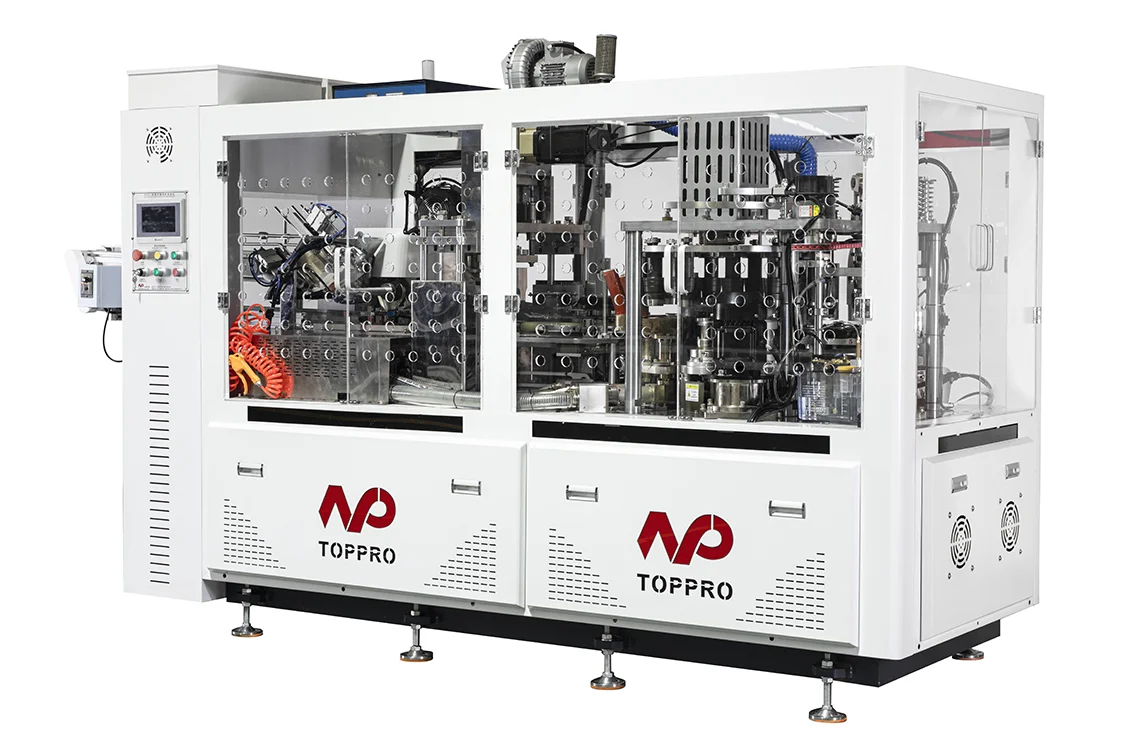
Sincere Machinery, operating under the TOPPRO brand, manufactures high-speed paper cup forming machines designed for reliability and efficiency. The product line ranges from the entry-level LF-70 to the full-servo SFBJ-600, with speeds from 65 to 200 cups per minute. Machines feature ultrasonic sealing for glue-free, leak-resistant seals, quick-change mold systems for production flexibility, and servo control for precision paper feeding. Critical wear parts—bottom knurling wheels, paper feeding rollers, side sealing heaters, detection sensors, ultrasonic transducers, pre-heating plates, punching dies, and custom mold sets—are manufactured in-house for fast delivery. Sincere Machinery offers on-site installation, operator training, remote troubleshooting, and lifetime technical support.
Defects in high-speed paper cup forming are preventable. The key is understanding where they come from—leaks from worn knurling wheels or incorrect pre-heat, poor sealing from heater wear or wrong settings, dimensional issues from worn molds or misalignment—and having a prevention routine that catches problems before they create waste. With the right machine, the right settings, and a consistent quality control process, your paper cup line can run at full speed with minimal defects and maximum output.
Ready to reduce defects on your paper cup forming line? Reach out to Sincere Machinery‘s technical team—they can provide machine setup guidance, spare parts recommendations, and troubleshooting support to help you achieve consistent quality at high speed.