 English
 Español
 Pусский
 عربي



You’re running an ice cream packaging line, and the cone sleeve demand keeps climbing. Every minute of downtime at the start of the shift costs hundreds of finished sleeves. A Paper Cone Machine built around full servo control and a high-speed glue system can sustain 280–300 pcs/min without sacrificing seam quality or angular accuracy. This article breaks down the three subsystems that make that speed possible—servo-driven feed, precision mold rotation, and consistent adhesive application—and what to verify when you’re specifying a high-output cone sleeve line.
How Does Servo Control Push the Speed Envelope?
Independent Motors for Feed and Mold
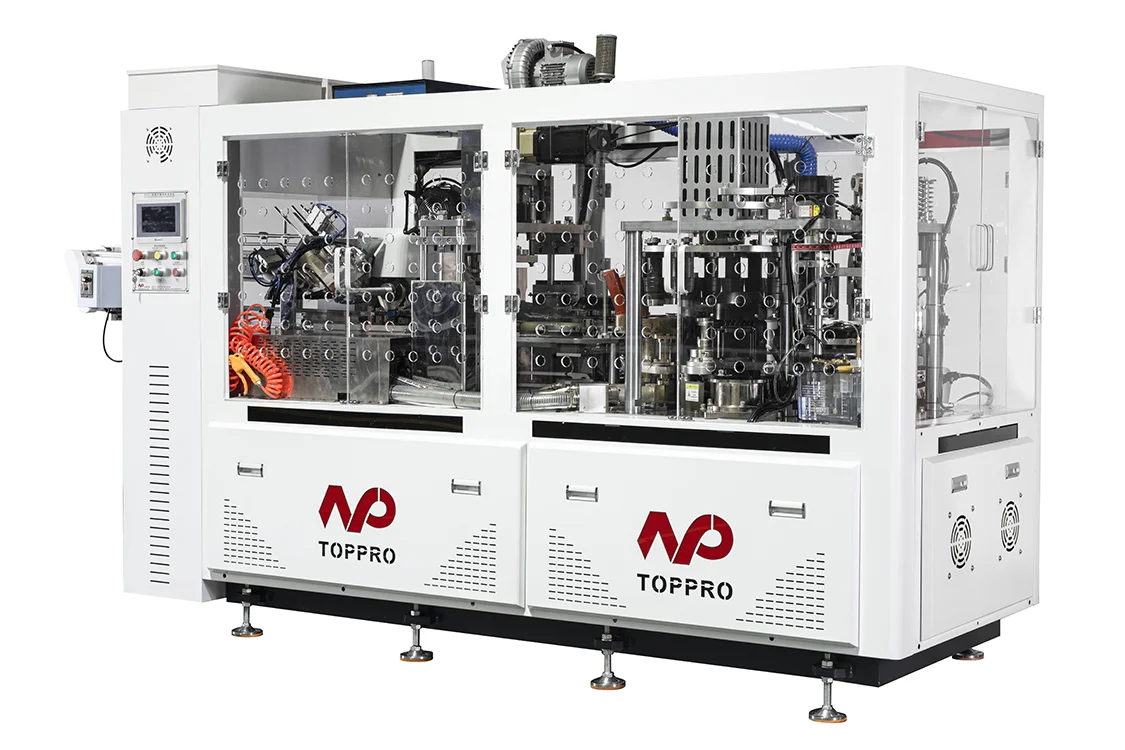
The CPC-300 uses fully servo-driven control for paper feeding, transmission, and mold rotation. Instead of a single main motor driving everything through gears, each motion has its own servo motor. The feed servo positions the paper blank, the transmission servo advances the web, and the mold servo rotates the forming mandrel. Because each motor is controlled independently, the machine can accelerate and decelerate without the mechanical lag that a gear train introduces.
That independence is what allows the machine to hit 280–300 pcs/min while holding the ±0.1mm angular accuracy required for the seam overlap. A gear-driven machine would see the timing drift as the speed increases, and the seam would start to slip.
Encoder Feedback and One-Button Reset
The integrated encoder provides real-time angular feedback to the control system. The controller knows exactly where the mold is at every point in the cycle, so it can time the glue application and the seam closure to the precise degree. When a jam or a misfeed stops the machine, the one-button reset returns every axis to its home position without manual jogging. That reset function shortens the recovery time after a fault and reduces the risk of operator error during restart.
Why Does the Adhesive System Matter at High Speed?
Robatech Nozzle and Glue Tank
The bonding system uses a Robatech original nozzle positioned at the bottom of the bond area, which makes the seam more solid. The Robatech glue tank carries century-old brand quality assurance. At 300 pcs/min, the adhesive has to be applied in a precise dot or line, at the right temperature, and with the right open time. The Robatech system delivers that consistency, cycle after cycle.
If the glue pattern varies, the seam strength varies, and the finished cone sleeve will fail at the ice cream filler. The Robatech system’s precision dispensing valve applies hot melt adhesive with high speed and control, which is why it’s specified on high-output cone lines.
Vacuum Holding for Forming Accuracy
A Huitong vacuum pump provides suction for paper holding and gluing. The vacuum holds the paper blank flat against the rotating mold during winding, so the cone shape forms accurately. Without vacuum holding, the paper could shift during winding, and the cone would come out distorted. The servo motor then delivers precise power for winding, ensuring the forming accuracy and production efficiency.
| Parameter | CPC-300 Specification |
|---|---|
| Speed | 280–300 pcs/min |
| Paper cup size | 4–10 oz |
| Cone angle | 17–23 degrees |
| Cone length | 100–230 mm |
| Raw material | 80–170 g/m² art paper, aluminized paper, offset paper, wax paper |
| Power | 9 kW |
| PLC / Servo system | Xinje |
| Glue box | Robatech |
| Vacuum pump | Huitong |
| Sensors | Panasonic |
| Electrical parts | Schneider + Panasonic |
What Keeps the Output Consistent at the Top Speed?
High-Precision Photoelectric Sensors
Every step is detected by high-precision photoelectric sensors. The sensors confirm that the paper blank has arrived at the forming station, that the sleeve has advanced to the glue position, and that the finished cone has exited the mold. If a blank fails to arrive, the sensor signals the control system, and the machine responds before a glue-less or paper-less cycle produces a defective sleeve.
SMC Solenoid Valves and PLC Cabinet
Japanese-imported SMC solenoid valves provide stable current transmission. The valves control the pneumatic actuators that handle paper holding and mechanical movements. The electrical cabinet uses a PLC to automate all processes, distribute power, control actuators, and protect the equipment for stable production. The PLC coordinates the servo motors, the glue system, the vacuum, and the sensors into one synchronized sequence.
Where Does a 300 Pcs/Min Cone Machine Fit?
A Paper Cone Machine at this output level is built for ice cream cone sleeve production at industrial scale. That covers the sleeves for 4–10 oz cones, including kiddie cones, standard cones, and larger waffle cone formats. The machine handles 80–170 g/m² paper in art paper, aluminized paper, offset paper, and wax paper.
The high speed is most valuable in a plant that runs multiple shifts and supplies a regional or national ice cream brand. At 280–300 pcs/min, the machine produces 16,800–18,000 sleeves per hour—enough to keep pace with a high-volume cone filler without building a large buffer stock.
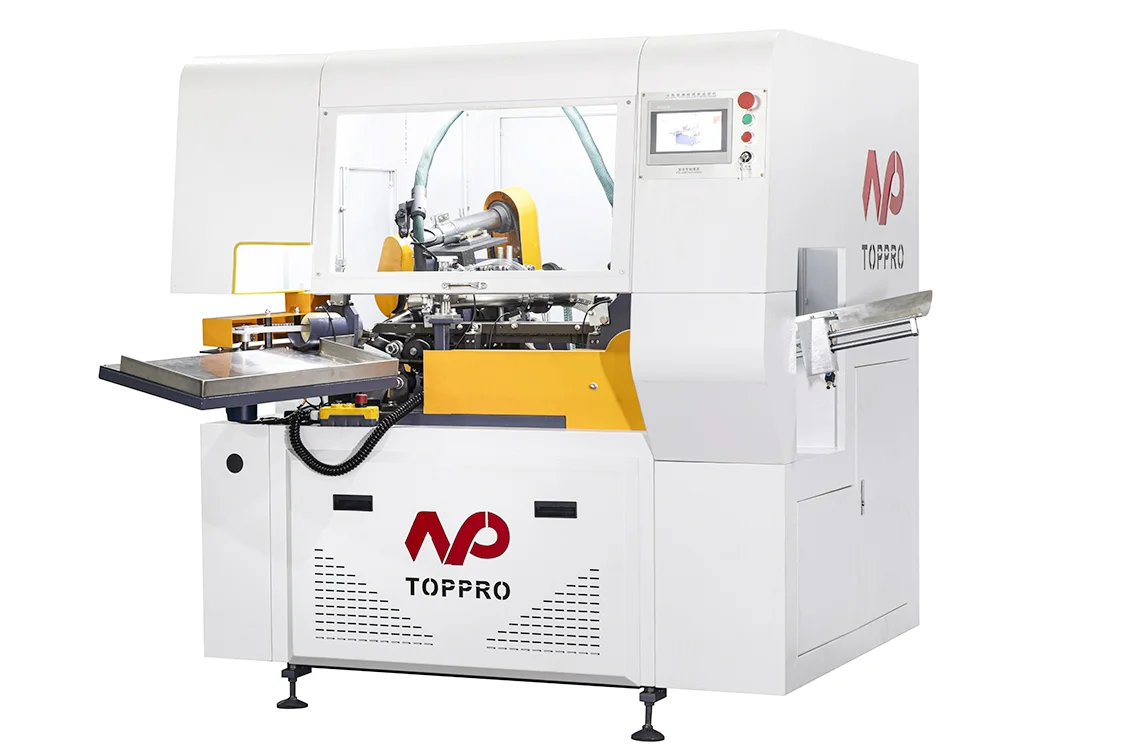
The CPC-300 from Sincere Machine combines the Xinje servo system, the Robatech glue box, and the Panasonic sensor package in a single platform. The compact footprint of 1850×1750×1800 mm and the 1,000 kg weight make it suitable for installation in an existing production hall without a major foundation change.
What Should You Check Before Selecting a High-Speed Cone Machine?
How do I match the speed to my downstream equipment?
A 300 pcs/min cone machine produces sleeves faster than many downstream cone-filling lines can consume them. Check the filler's speed and the buffer capacity between the sleeve machine and the filler. If the filler runs at 200 pcs/min, the cone machine will run intermittently or the buffer will grow. Match the sleeve machine's practical output to the filler's demand, not just the headline speed.
What paper grade does the machine require?
The machine accepts 80–170 g/m² paper. Lighter papers in the 80–100 g/m² range form more easily but may need careful tension control at high speed. Heavier papers up to 170 g/m² hold their shape better but require more force during winding. Test the actual paper grade on the machine before committing to a production order.
What maintenance does the servo and glue system need?
The servo motors are sealed units that don't require routine lubrication. Check the encoder feedback for consistency and verify the one-button reset returns all axes to the correct home position. The Robatech glue system needs periodic nozzle cleaning and temperature verification. Check the glue tank level and the dispensing valve for clogging. The vacuum pump filter should be cleaned according to the manufacturer's schedule.
Straight Answers on High-Speed Cone Sleeve Production
What's the difference between a servo cone machine and a mechanical one?
A mechanical cone machine uses a main motor and a gear train to drive all the motions. A servo machine uses independent motors for each motion. The servo machine can run faster because it eliminates the mechanical lag and the gear wear that limit a mechanical machine's top speed. It also holds tighter angular accuracy at speed.
Can the CPC-300 run different cone sizes?
Yes. The machine handles 4–10 oz cones with 17–23 degree angles and 100–230 mm lengths. Switching between sizes involves changing the forming mold and adjusting the machine settings. The servo control system stores parameters for different sizes, which shortens the changeover time between runs.
Why does the glue nozzle position matter at 300 pcs/min?
The Robatech nozzle sits at the bottom of the bonding area. Glue applied at that position lands where the paper layers overlap most, which is where the seam needs the highest holding force. At 300 pcs/min, the glue has to be applied and the seam closed within a fraction of a second. The nozzle position and the dispensing valve timing are tuned to that speed.
What happens if the paper runs out mid-run?
The photoelectric sensors detect the paper feed. If the paper runs out, the sensor signals the control system, and the machine stops before a glue-less cycle produces a defective sleeve. The operator reloads the paper, uses the one-button reset, and resumes production. The reset function returns all axes to the home position, so the operator doesn't have to manually re-phase the machine.
Let's Match a High-Speed Cone Machine to Your Line
Share Your Cone Size, Paper Grade, and Output Target
A Paper Cone Machine capable of 280–300 pcs/min should match your cone sizes, paper grade, and downstream filler speed—not the other way around. The CPC-300 Full Servo Paper Cone Sleeve Making Machine from Sincere Machine combines full servo control, a Robatech glue system, and a Huitong vacuum pump to hold ±0.1mm angular accuracy across 4–10 oz cones. The machine handles 80–170 g/m² paper and delivers the consistent output required for industrial ice cream packaging. If you're specifying a high-speed cone sleeve line, send us your cone size, paper grade, and output target — we'll help you confirm the right configuration before you order.