 English
 Español
 Pусский
 عربي



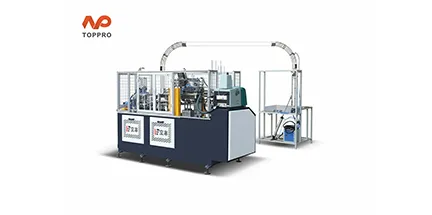
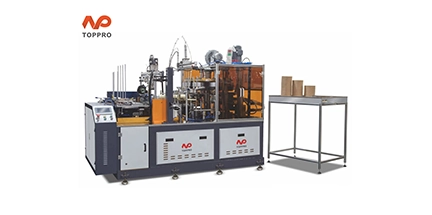
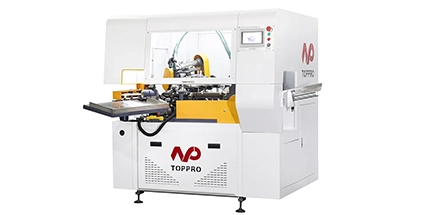
A Double Wall Paper Cup Machine doesn't form the cup itself—it takes a finished inner cup and adds a second paper layer around it. That second layer is what gives the cup its insulation, its print surface, and its grip. You'll see what the sleeve actually adds to the cup, how the GWT-600 feeds, seals, and glues that sleeve onto the inner cup, and where the cup-size and speed envelope sits.
What Questions Come Up Before Running a Sleeve Line?
Does the machine make the inner cup or just the sleeve?
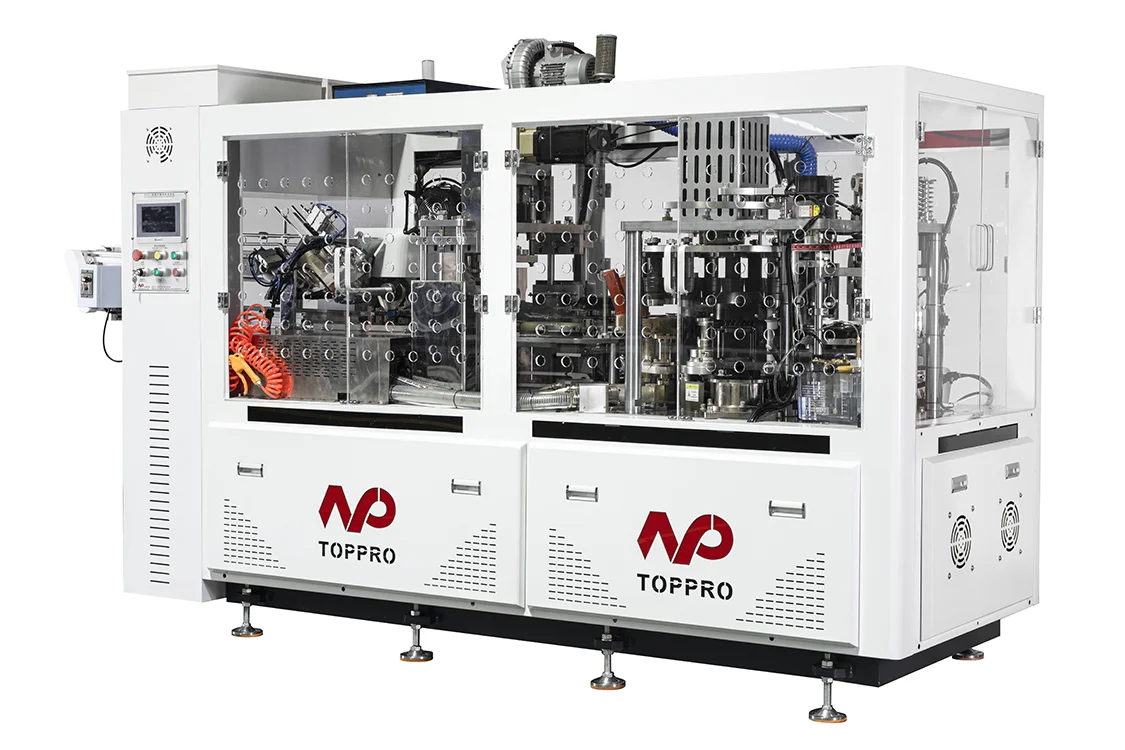
The GWT-600 is a sleeve machine, not a full cup-forming line. It takes a finished inner cup and wraps a paper sleeve around it, with automatic paper fan feeding, sealing, and gluing to create the double-layer or ripple-layer wall. That distinction matters for line planning: the machine sits downstream of a cup-forming machine, and its output rate has to be matched to the upstream supply rather than treated as a standalone cup production line.
What cup sizes and sleeve materials does it handle?
The page lists a cup size range of 4–16oz with customization available, and raw materials including PE coated paper, ripple paper, paper card, and grey paper board. The 4–16oz span covers small tasting cups through large noodle or soup cups, and the material list covers both the smooth double-wall sleeve and the corrugated ripple sleeve that adds extra insulation and grip.
Feeding, Sealing, and the Sleeve Bond
The process starts with the sleeve paper. The machine feeds the die-cut paper fan automatically, seals it into a sleeve, applies glue, and wraps it onto the inner cup. The page describes this as automatic paper fan feeding, sealing, and gluing to make the double layer or ripple layer for the inner cup to avoid heat.
The CAM driving system is the component that controls the timing. The page lists an imported high-precision CAM driving system with gear transmission, replacing the old traditional driving system, so each station's molding is accurate and repeatable. On a sleeve machine, that timing matters because the sleeve has to arrive at the cup at the right point in the cycle—a sleeve that arrives early or late won't wrap squarely around the inner cup, and the seam won't close cleanly.
The oil circulation and filtration system at the machine bottom is listed as keeping the transmission parts running stably over the long term. At 80–100 pcs/min, the CAM and gear surfaces are in continuous motion, and an oil circuit that filters and recirculates keeps wear debris from accelerating the wear on those surfaces.
| Parameter | GWT-600 (from the product page) |
|---|---|
| Cup size | 4–16oz or customize |
| Speed | 80–100 pcs/min |
| Stable running | 20 hours per day |
| Raw materials | PE coated paper, ripple paper, paper card, grey paper board |
| Voltage supply | 380V 50Hz 3-phase |
| General power | 5.5kW |
| Air source | 0.4MPa |
| Net weight | 2600kg |
| Measurement | 2500×900×1900mm |
| Control | PLC touch screen, automatic counting |
| Drive | Imported high-precision CAM with gear transmission |
Why the 20-hour running figure depends on the drive system
The page lists the machine as capable of 20 hours of stable running per day. That's not a claim about the motor alone—it's about the CAM drive, the gear transmission, and the oil circulation holding their timing through a full shift. A drive system that wears or drifts over 20 hours would produce sleeves that fit the cup at the start of the shift and misfit at the end. The oil circulation and filtration are what keep that drift out of the picture.
The Double-Wall Effect and the Ripple Option
The sleeve's job is insulation, and the page frames the machine's output as a double layer or ripple layer that avoids heat. A smooth double-wall sleeve creates a trapped air layer between the inner cup and the outer sleeve, which slows heat transfer from the drink to the hand. A ripple sleeve adds a corrugated texture that increases the air gap and gives the cup a tactile grip surface.
The material list reflects both options. Ripple paper is listed alongside PE coated paper, paper card, and grey paper board. The choice between a smooth double wall and a ripple wall is a product decision, not a machine limitation—the same GWT-600 platform runs either, with the sleeve material and the forming tooling matched to the format.
What the ripple layer changes about the bond
A ripple sleeve is thicker and less conformable than a flat sleeve. The gluing station has to apply adhesive across the ripple pattern's contact points rather than across a continuous flat surface, and the wrapping station has to press the sleeve against the cup without crushing the ripple. That's why the forming tooling and the glue application are specified per sleeve type—the ripple format is a tooling and setting change, not a different machine class.
Control, Counting, and the Operator Interface
The page lists a human-machine interface with a PLC touch screen for controlling, with manual touch to operate all settings. That interface is where the operator sets the cup size, the speed, and the station adjustments. The page also lists a full automatic counting system for finished cups, replacing manual counting and reflecting the machine's intelligence.
On a sleeve line running 80–100 cups per minute, manual counting isn't practical. The automatic counter turns the output into counted batches, so the cups that leave the machine are ready for packing without a separate counting step. That's a labor reduction at the output end, and it's also a quality record—the count confirms how many cups the machine produced in a run.
-
PLC touch screen: sets and monitors all machine parameters
-
Automatic counting: batches finished cups for packing
-
Stable running: 20 hours per day on the CAM drive and oil circuit
-
Automatic paper fan feeding: sleeve paper fed without manual loading
-
Automatic sealing and gluing: sleeve formed and bonded in one sequence
What the 5.5kW power figure covers
The total power is 5.5kW on a 380V 50Hz three-phase supply, with 0.4MPa air pressure. That covers the CAM drive motor, the sealing and gluing stations, the feeding mechanism, and the control system. The 2600kg net weight and 2500×900×1900mm footprint indicate a floor-mounted production unit with a stable base—the machine's weight is part of what keeps the CAM drive from transmitting vibration into the sleeve bond at speed.
Where the GWT-600 Fits a Cup Producer's Line
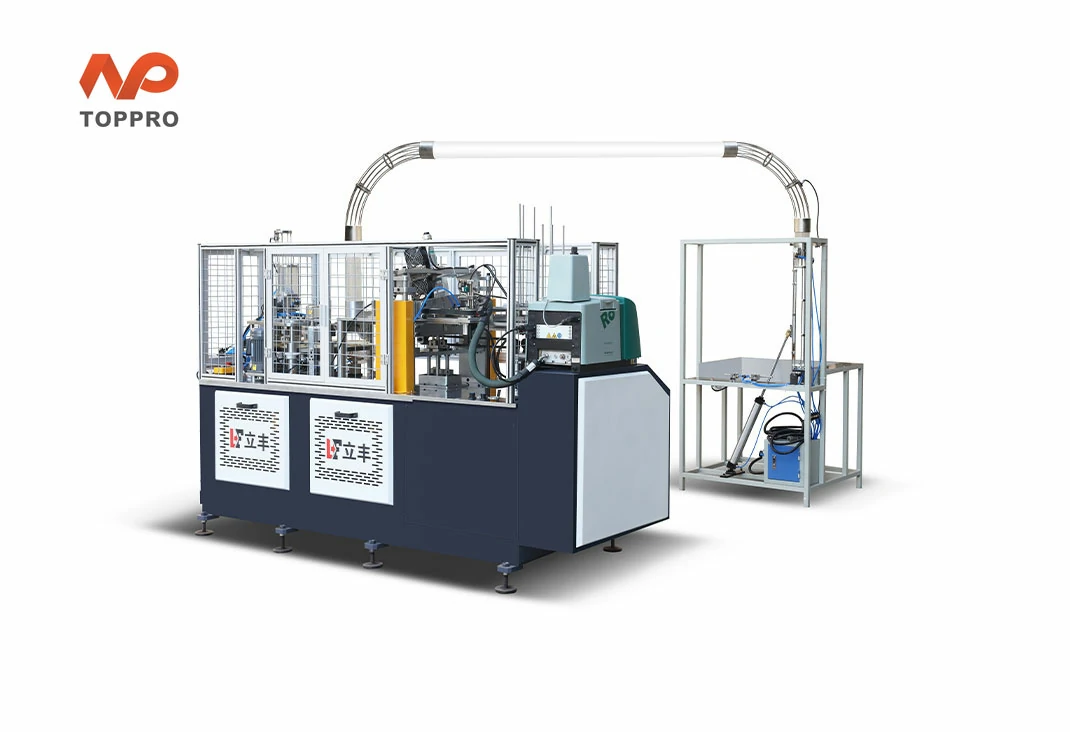
The GWT-600 Paper Cup Sleeve Machine from Sincere Machine is built around the sleeve-application role the page describes: automatic paper fan feeding, sealing, and gluing to create a double or ripple wall on a finished inner cup, running 80–100 pcs/min across a 4–16oz cup range. The imported high-precision CAM drive with gear transmission holds the station timing, the oil circulation and filtration support 20-hour daily operation, and the PLC touch screen with automatic counting gives the operator a single control point. For a Double Wall Paper Cup Machine buyer adding insulation to an existing cup line, the value sits in the dedicated sleeve format—the machine wraps and bonds the outer layer without re-forming the inner cup, and the CAM drive keeps that bond accurate across the full speed range.
What to confirm before matching a cup format to the GWT-600
Confirm the cup size against the 4–16oz range, the sleeve material against the PE coated paper, ripple paper, paper card, and grey board options, and the target output against the 80–100 pcs/min speed envelope. The page's specifications give the starting point; the trial run on the actual cup and sleeve material confirms whether the gluing and wrapping stations hold the bond at the target rate.
Let's Match a Cup Format to the GWT-600
Send over your cup size, sleeve material, and target output—we'll help you check them against the 4–16oz cup range, the 80–100 pcs/min speed, and the double-wall and ripple sleeve options. Talk to Sincere Machine about your Double Wall Paper Cup Machine requirements and get a format-level answer before you commit to the tooling.