 English
 Español
 Pусский
 عربي



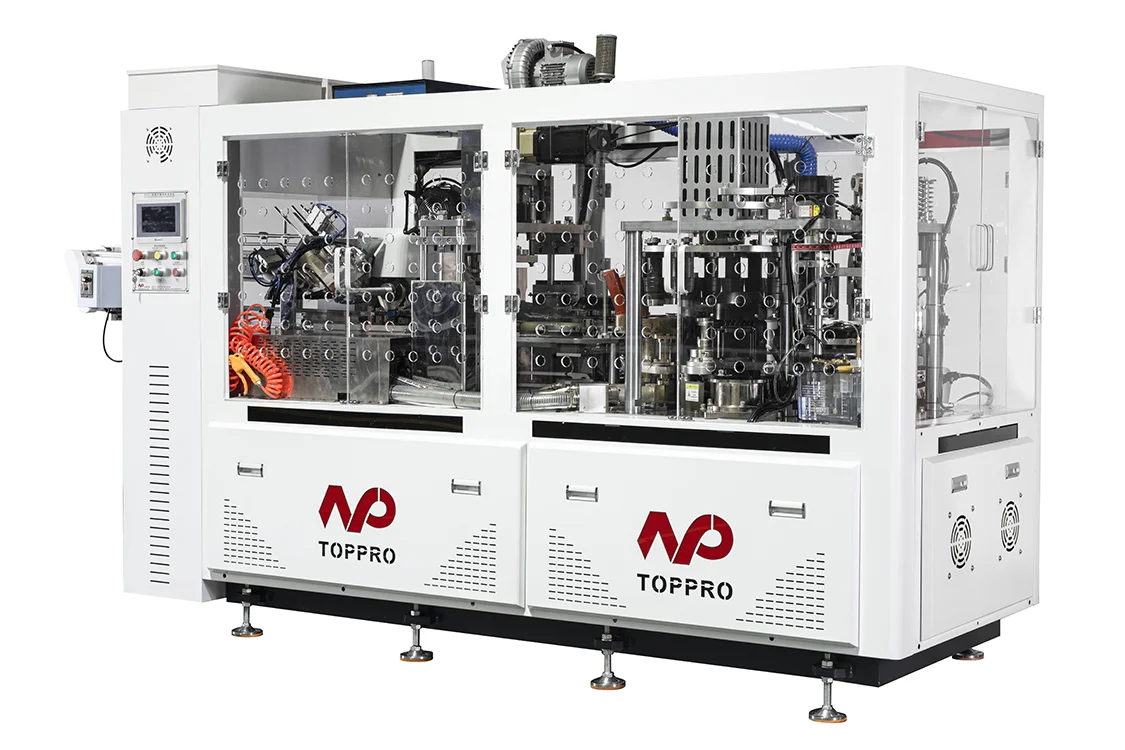
A Paper Cup Machine runs a repeating cycle: feed the fan, seal the side, punch the bottom, knurl, curl, and discharge. That cycle depends on every station acting at the same point in the rotation, cycle after cycle, for hours. The drive system is what holds that timing. You'll see why the LF-70 uses an open cam drive instead of a traditional dividing box, what the compact frame contributes, and where the cup size and speed envelope sits.
What Questions Come Up Before Choosing a Drive System?
What does a dividing box do, and why replace it?
A dividing box is a gear-driven indexing mechanism that converts continuous motor rotation into the intermittent motion the cup-making stations need. The page describes the LF-70 as replacing the old-fashioned dividing box transmission with an open cam drive system, described as making the drive more accurate, faster, and more reliably stable. The change is about transmission error: a dividing box accumulates wear in its gears over time, and that wear shows up as timing drift between the sealing, punching, and curling stations.
Does the drive change the machine's speed?
The page lists a speed of 65–75 pcs/min, which is the production rate the drive supports. The open cam's contribution isn't a higher top speed—it's holding the timing at that speed over a long run. The page notes that the drive is less prone to transmission error in long-term operation and ensures production continuity. On a machine running continuously, that stability is what keeps the cup quality consistent from the first hour to the last.
The Cam, the Chain, and the Timing Chain
The page lists the machine as using a CAM and chain transmission system, with the core part built on the open cam driving system. The cam provides the motion profile for each station, and the chain distributes the drive to the stations that are positioned away from the main shaft.
That combination is what allows the machine to run at 65–75 pcs/min without the stations drifting out of phase. The cam's profile sets when each station acts within the cycle, and the chain keeps the remote stations synchronized with the main cam. The page notes the machine runs stably over a long lifetime with that arrangement.
| Parameter | LF-70 (from the product page) |
|---|---|
| Cup size | 2–12oz |
| Raw material | Single PE coated paper |
| Paper weight | 170–300 g/m² |
| Speed | 65–75 pcs/min |
| Voltage | 380V, 50Hz |
| General power | 4.5kW |
| Net weight | 1800kg |
| Machine dimensions | 2300×1200×1800mm |
| Cup side sealing | Normal heater / ultrasonic (optional, +$1,500) |
| Bottom knurling | Normal heater |
Why the cam profile matters for seal quality
The side seal station has to hold the lapped seam under pressure for a defined dwell time while the heater brings the PE coating to bonding temperature. If the cam profile gives too short a dwell, the seal doesn't form; too long, and the cycle slows. The open cam is what defines that dwell precisely, and the page's note about accurate and fast drive is about holding that profile rather than approximating it through a gear train.
The Compact Frame and the Shipping Envelope
The page lists the machine dimensions as 2300×1200×1800mm and the net weight as 1800kg. The company describes the internal structure as optimized to make the machine smaller, saving plant space and making it easier to transport.
That compactness has a second effect the page calls out: one 40-foot container can load 10 machines, which the company says helps clients save about 60% on shipment cost. For a buyer importing multiple units or a distributor stocking machines, the container loading count is a direct cost input—not a detail about the machine's footprint alone.
-
Dimensions: 2300×1200×1800mm
-
Weight: 1800kg
-
Container loading: 10 machines per 40-foot container
-
Power: 4.5kW at 380V, 50Hz
-
Structure: optimized internal layout for a smaller footprint
What the precision positioning holes contribute
The page notes that the machine is installed with precision positioning holes and levelness features, making the parts installation more standardized with good versatility and interchangeability for easier maintenance. Those holes are what let a replacement part go back into the same position as the original—on a machine with multiple stations, that repeatability is what keeps the timing intact after a repair.
Sealing Options and the Material Envelope
The machine runs single-PE coated paper in the 170–300 g/m² range, across cup sizes from 2oz to 12oz. The side sealing is listed as a normal heater, with ultrasonic sealing available as an option at an additional $1,500. The bottom knurling uses a normal heater in both configurations.
That sealing choice matters for the cup's print and coating. A normal heater brings the seam area to bonding temperature through contact; an ultrasonic sealer concentrates the energy at the interface. For a cup with full-print graphics running close to the seam, the ultrasonic option reduces the risk of marking the print surface. The page presents it as a configuration choice rather than a standard feature.
-
Cup size: 2–12oz
-
Paper: single PE coated, 170–300 g/m²
-
Side seal: normal heater standard, ultrasonic optional
-
Bottom knurl: normal heater
-
Lubrication: semi-automatic system for continuous high-speed operation
-
Customization: machine and mold customizable to customer requirements
Why the lubrication system matters at 65–75 pcs/min
The page lists a semi-automatic lubrication system that ensures long-time continuous high-speed operation. At 65–75 cycles per minute, the cam surfaces and chain links are in constant motion. A lubrication system that meters oil to those surfaces is what keeps the wear rate low enough for the machine to hold its timing across a production shift—the same timing the open cam is designed to deliver.
Where the LF-70 Fits a Cup Producer's Line
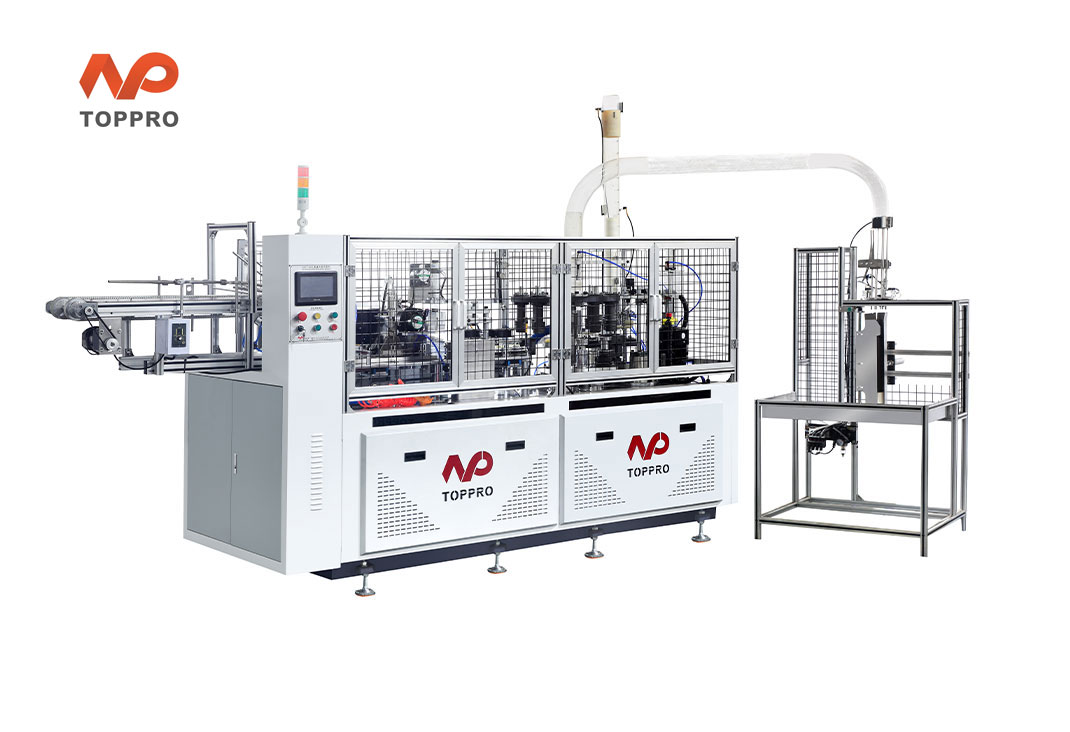
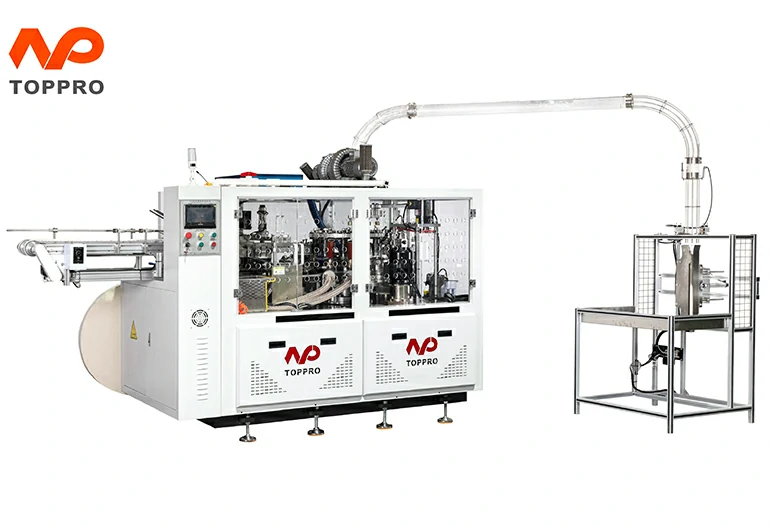
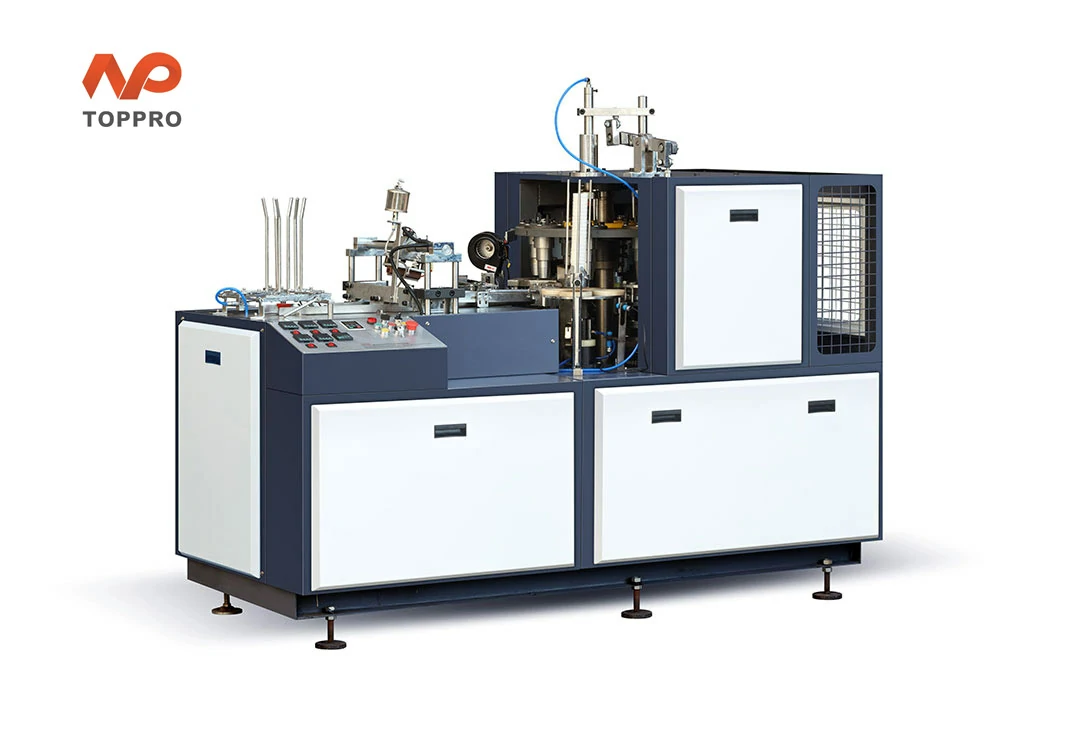
The Paper Cup Machine LF-70 from Sincere Machine is built around the open cam drive the page describes: a cam-and-chain transmission replacing the traditional dividing box, a 65–75 pcs/min speed across 2–12oz cups on 170–300 g/m² single-PE paper, and a 2300×1200×1800mm frame that loads 10 units per 40-foot container. The 4.5kW power, 1800kg weight, and semi-automatic lubrication support continuous operation, and the side sealing can be specified as a normal heater or an ultrasonic sealer. For a cup producer adding capacity, the value sits in the drive stability—the cam holds the station timing over a long run, and the compact frame keeps both the plant footprint and the shipping cost down.
What to confirm before matching a cup format to the LF-70
Confirm the cup size against the 2–12oz range, the paper weight against the 170–300 g/m² envelope, and the coating against the single-PE specification. Check whether the print design requires the ultrasonic side sealing option, and the power supply against the 380V, 50Hz requirement. The page's specifications give the starting point; a trial on the actual paper stock confirms whether the seal and the knurl hold at 65–75 pcs/min.
Let's Match a Cup Format to the LF-70
Send over your cup size, paper weight, coating type, and target output—we'll help you check them against the 2–12oz range, the 170–300 g/m² envelope, and the 65–75 pcs/min speed. Talk to Sincere Machine about your Paper Cup Machine requirements and get a format-level answer before you commit to the tooling.