 English
 Español
 Pусский
 عربي
عربي 


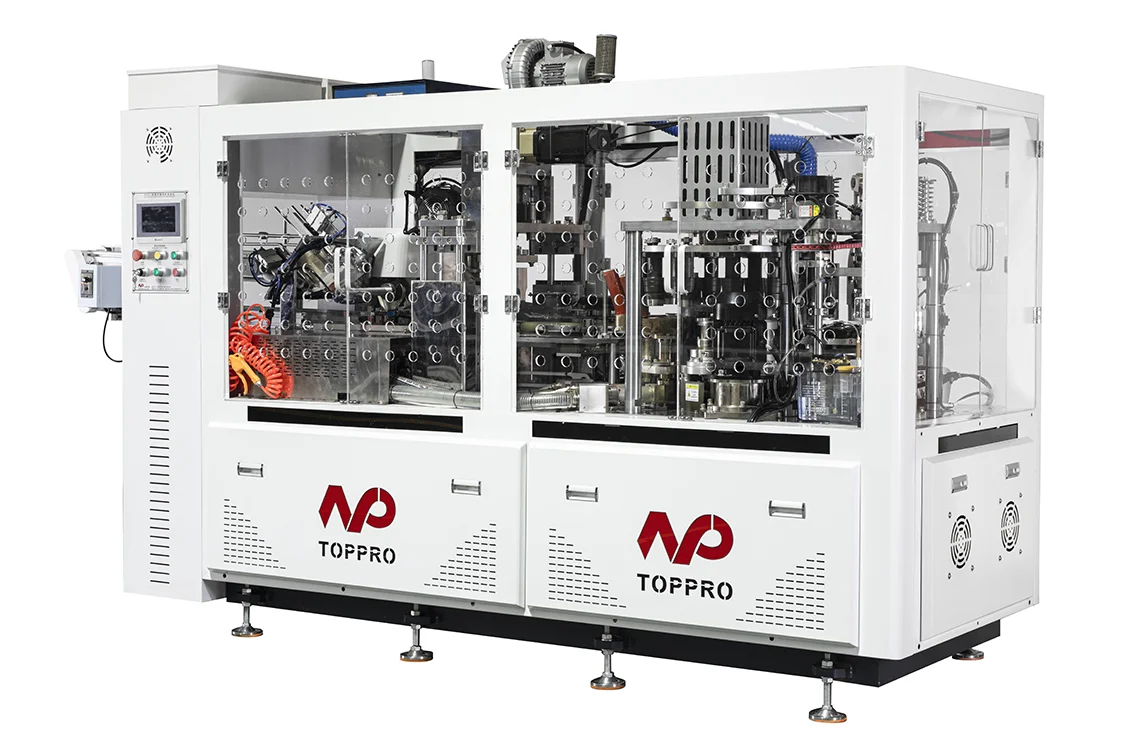
You're planning a paper bowl production line, and the target is 6,000 bowls per hour. That's the output needed to supply a fast-food chain during lunch rush or a takeout packaging distributor during peak season. A Paper Bowl Machine that can hit that number without leaking or jamming becomes the backbone of your operation. The WJ-90 High Speed Paper Bowl Machine runs at 80-100 bowls per minute, which translates to 4,800-6,000 bowls per hour. This article explains how it achieves that speed, why ultrasonic and double hot air sealing work together, and what to verify before specifying a high-speed bowl former.
How Fast Can a High-Speed Bowl Former Actually Run?
At 80-100 bowls per minute, the WJ-90 produces between 4,800 and 6,000 bowls per hour. This output level is designed for high-volume takeout operations where demand peaks during meal times and the line can't afford to slow down. For fast food and takeaway chains, that translates to consistent supply during the busiest hours. For packaging distributors, it means the ability to fulfill large orders without adding a second machine.
Understanding Output Rates and Capacity Limits
The WJ-90 doubles the output of conventional machines running at 50-70 pcs/min. That difference compounds over a shift—producing an extra 1,800 to 2,400 bowls per hour. The machine handles bowl capacities from 24oz to 46oz, covering the range used for noodle bowls, soup containers, and family-size takeout. PLC touch screen control provides dual-language operation and real-time fault diagnosis, while quick mold change allows switching between bowl sizes in under 10 minutes.
What Paper Weights and Coatings Work at Full Speed?
Paper weight compatibility is 170-350gsm, and the machine works with single PE, double PE, and PLA coated paper. For eco-friendly startups, PLA and water-based coated paper support is built in—ready for plastic ban regulations. The direct bottom paper feeding system reduces paper waste by 5-8% compared to conventional feeding methods, and precise servo tracking saves raw material cost on every production run.
Why Ultrasonic Sealing Outperforms Glue for Bowl Bodies
A paper bowl has two critical seals: the side seam and the bottom. The side seam holds the body together; the bottom seal keeps liquid inside. The WJ-90 uses ultrasonic sealing for the body—a glue-free process that creates a clean seam with a bond that's 30% stronger than traditional thermal sealing. Ultrasonic sealing works by applying high-frequency vibrations to the paper layers, causing the PE coating to soften and fuse at the molecular level. There's no adhesive, no drying time, and no risk of glue residue contaminating the bowl's interior. The result is a stronger, cleaner seam that performs consistently under hot liquid exposure.
The Science Behind Ultrasonic Bonding
The vibrations generate friction at the interface between the paper layers, raising the temperature precisely where the bond is needed. The PE coating melts and flows into the paper fibers, creating a bond that's stronger than the paper itself. This process eliminates the cold spots and inconsistent adhesion that can occur with thermal sealing alone.
Which Bottom Sealing Technology Prevents Hot Soup Leaks?
The bottom seal is where leaks happen. Hot soup finds the weakest point in the circumference and escapes. To prevent that, the WJ-90 uses a double hot air sealing system with two independent heating zones. This isn't a single heater trying to cover the entire bottom—it's two separate zones that maintain uniform temperature across the full sealing area. Even with hot soup, the seal holds.
Double Hot Air Zones for Uniform Adhesion
The double hot air system uses two separate heating zones at the bottom sealing station. This ensures that the entire bottom circumference reaches the activation temperature of the PE coating, eliminating cold spots that would cause leaks. The system works with the servo-driven bottom paper feeding to maintain precise alignment throughout the sealing process.
How Independent Heating Zones Eliminate Cold Spots
Each heating zone is independently controlled, allowing the operator to fine-tune temperature for different paper weights and coatings. When running 170gsm paper, the zones run cooler; when running 350gsm board, they run hotter. This adjustability ensures consistent seals across the full range of bowl specifications.
What Specifications Matter for High-Volume Production?
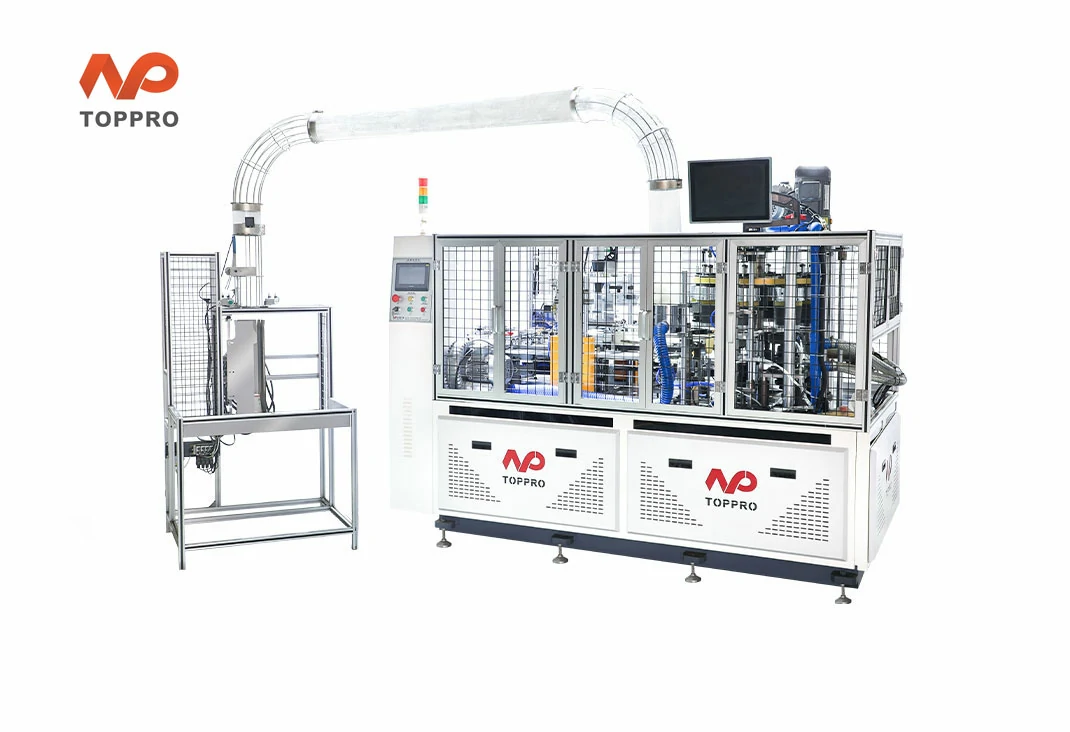
When comparing high-speed bowl formers, the specifications that matter most are the ones that affect throughput, material compatibility, and maintenance. The WJ-90 and the standard DW-50 share several core features—auto oil bath lubrication, PLC touch screen control, and ultrasonic sealing options—but they differ in speed, capacity, and the specific sealing technology used for the bottom. The WJ-90 is built for maximum output, while the DW-50 serves mid-sized production with excellent bottom sealing for cold food bowls.
Key Parameters for the WJ-90 and DW-50
| Parameter | WJ-90 (High Speed) | DW-50 (Standard) |
|---|---|---|
| Speed (pcs/min) | 80-100 | 50-70 |
| Bowl size (oz) | 24-46 oz | Up to 165mm bottom dia, height 80mm |
| Paper weight (gsm) | 170-350 | 170-350 |
| Paper type | Single/double PE, PLA | Single/double PE |
| Sealing technology | Ultrasonic (body) + Hot air (bottom) | Ultrasonic / Hot air |
| Lubrication | Auto oil bath | Auto oil bath |
| Control system | PLC + touch screen | PLC + touch screen |
| Dimensions (mm) | 2200×1200×1800 | 2650×1600×1800 |
| Best for | High-volume takeout, soup chains | Salad bowls, mid-sized production |
Which Production Environments Benefit Most?
The WJ-90 serves operations where speed, sealing reliability, and material flexibility all matter. Here's where it delivers the strongest return:
Fast Food and Takeaway Chains
High-speed output of 5,000-6,000 bowls per hour for peak demand. The double hot air sealing ensures leak-proof performance for soup and saucy foods.
Salad and Fruit Bowl Manufacturers
The DW-50 model is ideal for cold food bowls with excellent bottom sealing. For salad producers running mid-sized production, the standard model offers the right balance of output and flexibility.
OEM Packaging Suppliers
Custom mold service for branded bowls—size, logo, embossing. OEM suppliers can produce private-label bowls with custom dimensions and branding.
Eco-Friendly Startups
PLA and water-based coated paper support makes the WJ-90 ready for plastic ban regulations. Startups targeting sustainable packaging can run compostable materials without equipment changes.
What Operational Features Keep the Line Running?
The WJ-90 is designed for continuous operation with minimal manual intervention. The open cam + gear system with auto oil bath lubrication extends machine lifetime and reduces maintenance. The direct bottom paper feeding system reduces paper waste by 5-8%, and the automatic collection table provides customizable counting and stacking, reducing labor cost and fitting different bowl heights. These features work together to keep the line running at full speed throughout the shift.
Automatic Oil Lubrication for Extended Machine Life
The system circulates oil through the cam and gear housing, minimizing wear on the drive components. This reduces the frequency of manual lubrication and extends the service life of the mechanical parts.
Common Questions From Bowl Manufacturers
What types of paper bowls can the machine produce?
The paper bowl machines can produce a variety of bowl types, including single-wall bowls, double-wall bowls, and more, to meet different preferences and needs.
Do the machines offer customization options?
Yes. The paper bowl machines offer customization options that allow you to adjust parameters such as bowl size, shape, and design to meet specific requirements and branding needs.
How is quality and consistency ensured?
The paper bowl machines are equipped with state-of-the-art production equipment, advanced sensors, and control systems that monitor and maintain quality throughout the production process, ensuring consistency and compliance with standards.
How energy efficient are the machines?
Energy efficiency is a priority in the design of the paper bowl machines, with features such as highly efficient heating systems and optimized power usage to minimize energy consumption and operating costs.
Request a High-Speed Bowl Forming Configuration
A Paper Bowl Machine with 80-100 pcs/min output, double hot air bottom sealing, and ultrasonic body sealing is the practical choice for producers of soup bowls, takeout containers, and leak-proof paper bowls. The WJ-90 High Speed Paper Bowl Machine from TOPPRO delivers 80-100 bowls/min production speed, 24-46oz bowl capacity, 170-350gsm paper range with single/double PE and PLA compatibility, double hot air sealing with two independent heating zones, ultrasonic body sealing with 30% stronger bond, auto oil bath lubrication, PLC touch screen control, and direct bottom paper feeding for reduced waste.
Whether you're supplying fast food chains, salad bowl brands, or eco-friendly packaging startups, this machine offers the speed, sealing reliability, and material flexibility that high-volume bowl production demands. With quick mold change and automatic collection, it's built for continuous operation with minimal manual intervention.
Contact TOPPRO for a paper bowl machine configuration assessment → their team can help you select the right model, mold sizes, and paper specifications for your specific bowl types and production targets. Get a Paper Bowl Machine that seals every bowl without leaks — so your customers get their soup, not a soggy box.