 English
 Español
 Pусский
 عربي
عربي 


You're running a batch of 32oz soup bowls for a takeout chain. The first 500 look perfect. Then you pull a sample from the stack and see it—a thin line of moisture seeping through the bottom seam. The customer won't accept it. By the time you catch the problem, you've already run a thousand defective bowls.
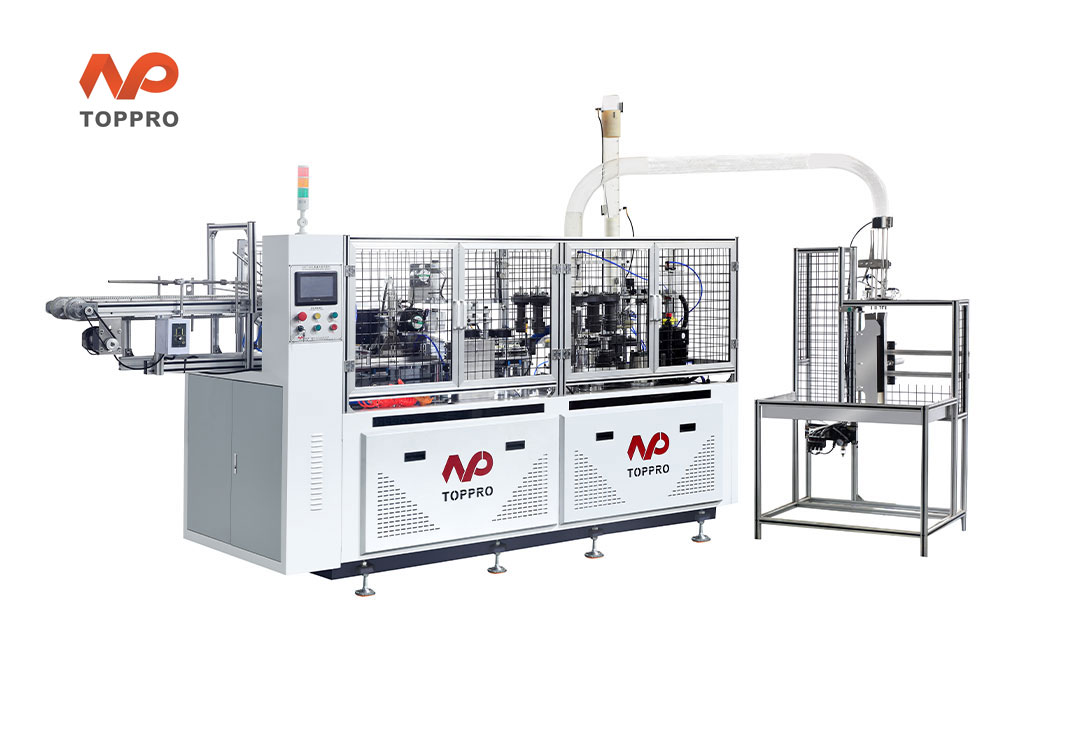
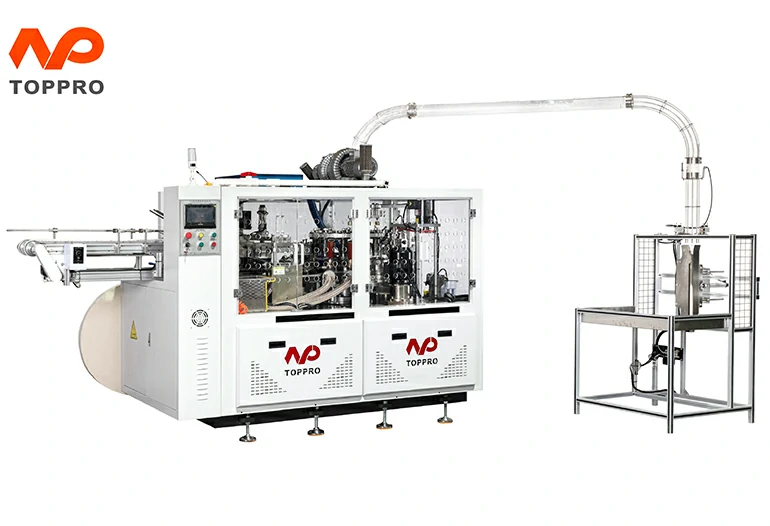
A paper bowl machine that produces leaking or misshapen bowls is more than a quality issue—it's a profit killer. The DW-50 produces 50–70 bowls per minute, while the high-speed WJ-90 reaches 80–100 bowls per minute. At those speeds, a small defect becomes a large scrap pile in minutes. This guide walks through the four most common paper bowl production issues, how to identify them, and what to do about each one. TOPPRO's DW-50 and WJ-90 series are engineered with double hot air sealing systems, ultrasonic body sealing, and PLC touchscreen controls with real-time fault diagnosis. But even the best machine needs operators who know how to troubleshoot.
Bottom seal leaking – the most common headache
The bottom seal is the most critical point on any paper bowl. If it leaks, the bowl is useless. For hot soups and saucy foods, a leaky bottom is a customer complaint waiting to happen.
Three reasons it fails
Bottom sealing failure usually traces to one of three causes: insufficient heat, uneven pressure, or inconsistent paper coating. The double hot air sealing system on TOPPRO machines uses two independent heating zones to guarantee uniform adhesion and 100% leak-proof bottoms. But if the heating elements drift out of calibration, the seal weakens.
For the DW-50, which handles up to 165mm bottom diameter with single or double PE paper, the bottom sealing temperature should be calibrated weekly. A drop of even 5–10°C can create a weak seal that fails under hot liquid.
A two‑minute soak test tells you
Run a simple test: fill a sample bowl with hot water at the temperature your customer will use. Let it sit for five minutes. Wipe the outside dry and check for moisture on the bottom or along the seam. If you see any dampness, the seal is failing.
Also inspect the bottom paper feeding. TOPPRO's direct bottom paper feeding system reduces paper waste by 5–8% and ensures consistent blank positioning. If the bottom paper is feeding slightly off-center, the seal won't be uniform.
Calibrate, clean, inspect
Calibrate the bottom sealing temperature. Check the thermocouple reading against a surface thermometer. Clean the heating elements—paper dust and adhesive residue insulate the heat. If the problem persists, inspect the sealing die for wear.
Ultrasonic seam not holding – what's wrong?
The body seam is where the paper blank is joined to form the bowl wall. Weak seams create leaks and structural failure.
30% stronger, but needs care
Unlike thermal sealing, which uses heat and pressure, ultrasonic sealing uses high-frequency vibrations to weld the paper fibers together. The result is a glue-free, clean seam that is 30% stronger than traditional thermal sealing. But ultrasonic sealing requires consistent contact between the horn and the anvil.
White or cracked? It's failing
If the seam appears white or stressed, or if it separates when you flex the bowl, the ultrasonic weld is failing. Inconsistent weld strength across a production run often points to a dirty or worn ultrasonic horn. Paper dust and adhesive residue on the horn surface reduce vibration transfer.
Clean, check, replace if needed
Clean the ultrasonic horn daily with a soft cloth and approved cleaner. Inspect the horn surface for pitting or wear. If the horn is damaged, replace it—TOPPRO stocks critical wear parts including ultrasonic transducers and components manufactured in-house.
Wrinkles and misalignment – paper feeding issues
Paper feeding issues show up as creases, wrinkles, or misaligned seams on the finished bowl. These defects are visible and obvious—but they're also the easiest to diagnose.
Crooked, creased, or jammed
The paper blank must feed smoothly and consistently through the forming station. If the paper is feeding at a slight angle, the bowl seam won't align. If the paper tension is inconsistent, the bowl wall may wrinkle. TOPPRO recommends using consistent 170–350gsm PE-coated paper. Variations in paper weight or coating thickness can affect feeding and forming.
Poor storage makes it worse
PE-coated paper absorbs moisture from the air. If stored improperly, the paper can curl or stick, causing feeding jams. Store paper rolls in a dry, climate-controlled area. Check the PE coating uniformity on each incoming roll—inconsistent coating creates weak spots that show up as seal failures.
Align, adjust pressure, clean rollers
Verify that the paper roll is aligned with the machine centerline. Check the feed roller pressure—too much pressure creases the paper; too little allows slippage. Clean the feed rollers regularly to remove paper dust buildup.
Worn molds – dimensions drift over time
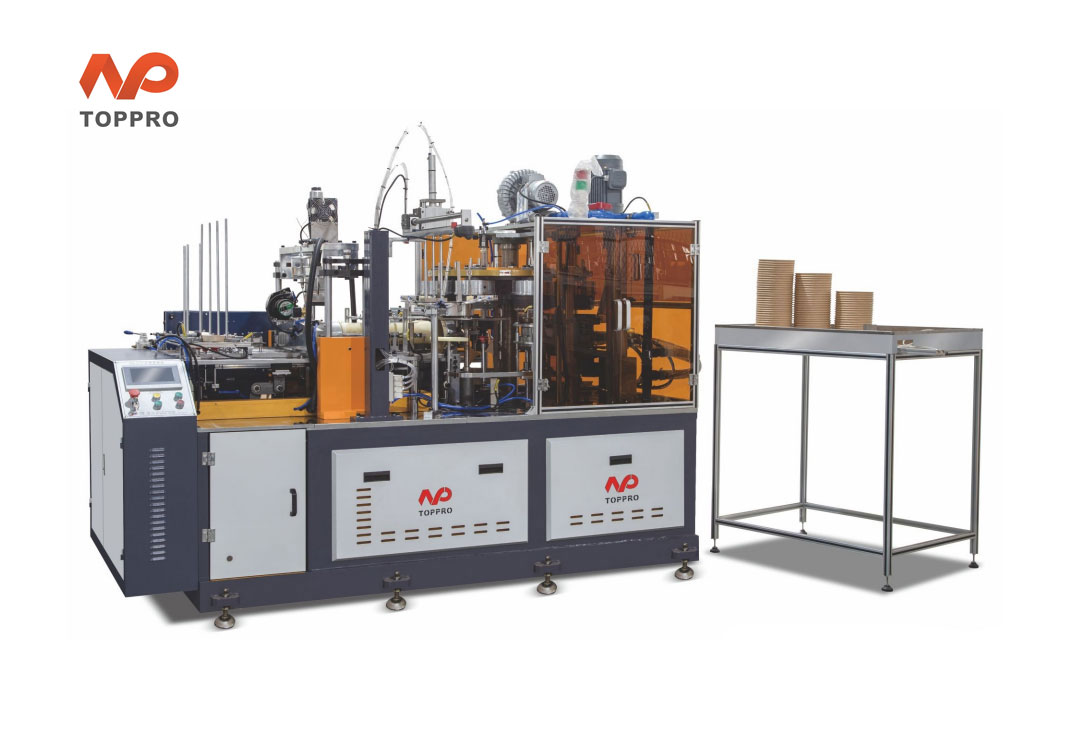
Over time, the forming molds—core and cavity—wear from continuous contact with paper and the high-speed forming cycle. Wear changes the bowl dimensions.
Too tall, too short, lids won't fit
Bowl height changes. Rim diameter drifts. The bowl no longer stacks properly. In extreme cases, the bowl won't fit the customer's lid. TOPPRO offers custom mold sets (core and cavity) and supports quick mold changes between bowl sizes—24oz to 46oz on the WJ-90—in under 10 minutes. But even the best molds have a finite life.
Keep spare molds ready
Replace worn molds before they affect quality. Keep a spare mold set in stock for each bowl size you run. TOPPRO's in-house manufactured spare parts ensure you can get replacements quickly.
Below is a quick reference table for common paper bowl machine issues:
| Symptom | Most Likely Cause | Check First |
|---|---|---|
| Leaking bottom seal | Temperature too low or uneven | Calibrate bottom sealing temperature |
| Weak or separated body seam | Dirty or worn ultrasonic horn | Clean horn daily; inspect for wear |
| Bowl wall creases or wrinkles | Paper feeding misalignment | Check paper roll alignment; clean feed rollers |
| Bowl dimensions off spec | Mold wear | Replace core/cavity mold set |
| Seam looks white or stressed | Ultrasonic weld energy too high | Adjust ultrasonic power setting |
| Bottom paper misaligned | Bottom paper feed off-center | Verify bottom paper guide position |
Questions from bowl plant veterans
Q: How often should I calibrate the bottom sealing temperature?
A: Weekly. A 5–10°C drift is enough to compromise seal quality. Use a surface thermometer to verify the actual temperature against the PLC reading. If you're running a high-volume job with tight quality requirements, check it at the start of every shift.
Q: What's the real difference between the DW-50 and the WJ-90?
A: The DW-50 is the standard model, producing 50–70 bowls per minute with up to 165mm bottom diameter and 80mm height. The WJ-90 is the high-speed model, producing 80–100 bowls per minute with bowl capacity from 24oz to 46oz. Both use ultrasonic body sealing and double hot air bottom sealing, with auto oil bath lubrication and PLC touchscreen control. Choose WJ-90 for high-volume takeout and soup chains; choose DW-50 for salad bowls and mid-sized production.
Q: Can these machines run PLA-coated paper?
A: Yes. Both the DW-50 and WJ-90 are compatible with single/double PE, PLA, and water-based coated paper. TOPPRO supports eco-friendly startups ready for plastic ban regulations. When switching to PLA, you may need to adjust sealing temperature and pressure—PLA has a different melt profile than PE.
How TOPPRO paper bowl machines support consistent production
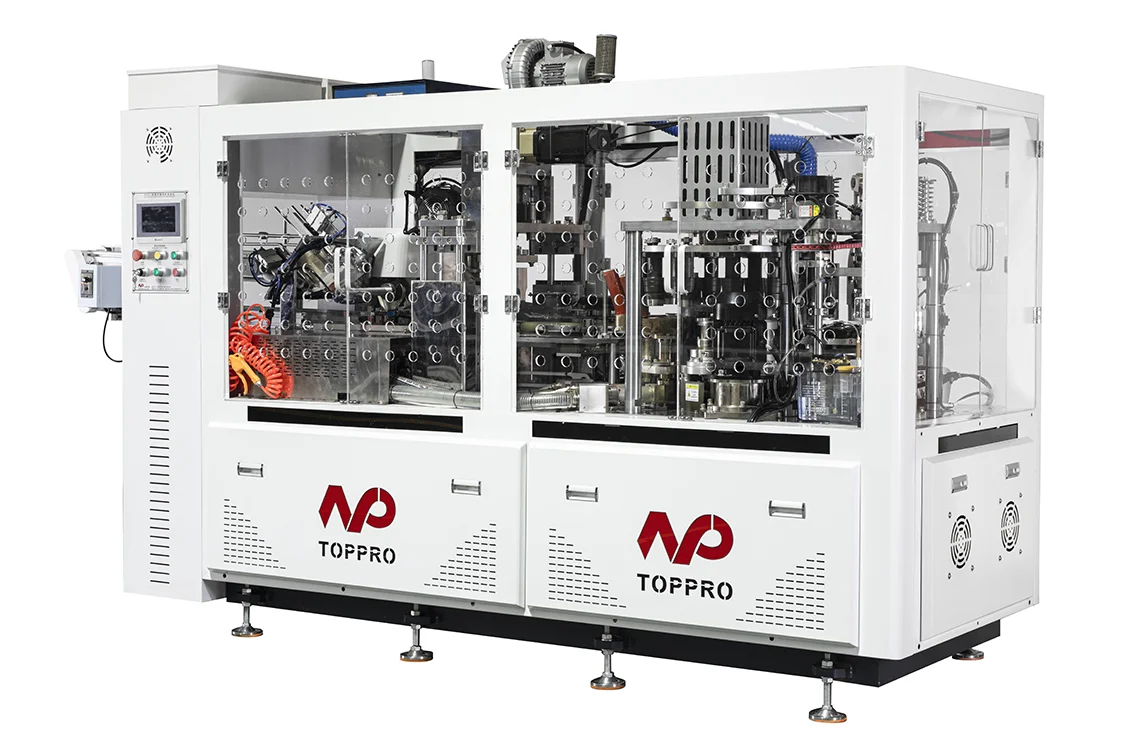
TOPPRO's DW-50 and WJ-90 paper bowl machines are engineered with features that address the four common issues discussed above. The double hot air sealing system uses two independent heating zones for uniform adhesion and 100% leak-proof bottoms. Ultrasonic body sealing delivers glue-free, clean seams with 30% stronger bonds than traditional thermal sealing. Direct bottom paper feeding reduces waste by 5–8% and ensures consistent blank positioning.
The WJ-90 produces 5,000–6,000 bowls per hour for peak demand, while the DW-50 is ideal for cold food bowls with excellent bottom sealing. Both machines feature auto oil bath lubrication for extended machine life and reduced manual maintenance, PLC touchscreen control with dual language and real-time fault diagnosis, and quick mold change capability.
TOPPRO also stocks critical wear parts manufactured in-house, including bottom heating elements, main drive gear sets, ultrasonic transducers, bowl collector fingers, punching dies, and custom mold sets.
Before you start your next production run, run a short test batch at operating speed. Inspect the bottom seal, the body seam, and the bowl dimensions. A few minutes of quality checking saves hours of rework.
Ready to upgrade your paper bowl production line or need help troubleshooting an existing machine? Contact TOPPRO for a quote on the DW-50 or WJ-90 paper bowl machine. Share your target bowl size, production volume, and paper type—their team can recommend the right model and provide mold customization for your specific bowl design.