 English
 Español
 Pусский
 عربي
عربي 


ou have a roll of PE-coated paper and a stack of orders for soup bowls, noodle bowls, or salad containers. Getting from raw material to finished product without leaks, wrinkles, or wasted sheets comes down to one piece of equipment. A Paper Bowl Machine takes flat paper rolls and turns them into ready-to-use bowls—automatically. This guide walks through the bowl‑forming process, explains the sealing technologies that prevent leaks, and shows you what separates a reliable machine from one that creates more headaches than bowls.
From Flat Roll to Finished Bowl
The process starts when the machine unwinds a paper roll—typically 170–350 gsm, single or double PE‑coated, and increasingly PLA‑coated for compostable applications. A die cuts a fan‑shaped blank, which wraps around a forming mandrel.
Ultrasonic vibration welds the side seam without glue—clean, strong, and no drying time. The bottom web feeds in separately, is punched into shape, and pressed into the bowl body.
Then comes a double hot air sealing step. Two independent heating zones bond the bottom to the body; heat melts the PE coating, the chill roll solidifies it, and you get a leak‑proof seal that holds hot soup or cold dressing. Finally, the rim curls into a smooth, rounded edge—safe to drink from, stable to stack, and strong enough to hold contents without deforming.
Why Some Bowls Leak and Others Don’t
Leaks are the number one consumer complaint about paper bowls—and the number one reason buyers return to their competitor. Modern systems have moved beyond simple heat sealing. Here is how the two dominant technologies compare:
| Feature | Ultrasonic Body Sealing | Double Hot Air Bottom Sealing |
|---|---|---|
| Bonding agent | None (friction/vibration) | Heat‑activated PE/PLA coating |
| Bond strength | 30% stronger than thermal | Uniform across two heating zones |
| Appearance | Clean seam, no residue | Smooth bottom, no burns |
| Best for | High-speed continuous runs | Soups, sauces, liquid‑heavy foods |
Double hot air sealing gives you two independent heating zones that guarantee uniform adhesion across the entire bowl bottom. Even if the paper coating varies slightly from roll to roll, the redundant heating catches what the first zone misses.
Ultrasonic sealing of the body seam eliminates glue costs entirely, keeps the sealing station cleaner, and delivers a 30% stronger bond than traditional thermal sealing. For eco‑focused operations, both methods work seamlessly with PLA and water‑based coated papers.
Realistic Output — Not Just Marketing Numbers
Raw speed numbers don’t tell the full story. A machine rated for 100 bowls per minute is useless if it jams every 500 bowls. That said, here’s what realistic output looks like across common configurations:
-
Standard machines run 50–70 bowls per minute. Stable, reliable, good for mid‑sized production or single‑shift operations.
-
High‑speed machines hit 80–100 bowls per minute, delivering 5,000–6,000 bowls per hour. The difference lies in cam drive design, automatic lubrication, and servo control precision. Models like the WJ-90 achieve this while handling bowl sizes from 24oz to 46oz.
-
Real‑world ROI: One US salad bowl brand replaced older equipment with a WJ‑90 and increased output from 40 to 90 bowls per minute. The investment paid off in eight months.
The jump from 50 to 90 bowls per minute might not sound dramatic, but across a 20‑hour production day, that’s the difference between 60,000 bowls and 108,000 bowls—nearly double.
PE, PLA, and Water‑Based Coatings — What the Machine Must Handle
Regulations on single‑use plastics are tightening worldwide. PLA‑coated paper—fully compostable under industrial conditions—is increasingly replacing traditional PE. Some markets are moving toward water‑based barrier coatings as a plastic‑free alternative.
A rigid machine that only accepts PE will lock you out of these opportunities. Many modern paper bowl machines now support all three. PLA requires slightly different heating profiles—it melts at a lower temperature than PE—so look for machines with adjustable temperature zones in the hot air stations. Water‑based coatings need adequate drying time before sealing; if you plan to run them, confirm the machine includes a drying section or extended heating path.
Lessons from the Floor — Three Things to Watch
Experienced operators point to three often‑overlooked considerations.
Clean the ultrasonic horn daily. Residue buildup on the horn reduces vibration efficiency, leading to weak side seams. A thirty‑second wipe at the end of each shift saves hours of troubleshooting later.
Calibrate bottom sealing temperature weekly. Thermocouples drift. The temperature reading on the screen isn’t always the temperature at the paper. Use a contact thermometer on the sealing surface every Monday morning.
Monitor incoming paper rolls for coating uniformity. PE coating thickness can vary within the same roll. Inconsistent coating means inconsistent sealing. Test the first few meters of each new roll before committing to a full run.
Check for automatic oil lubrication—open cam and gear systems that self‑lubricate eliminate manual greasing intervals and extend machine life. Also assess mold change time. Switching between bowl sizes shouldn’t require a maintenance call. The best systems let one operator complete a full mold change in under ten minutes.
TOPPRO’s Take on Bowl Making
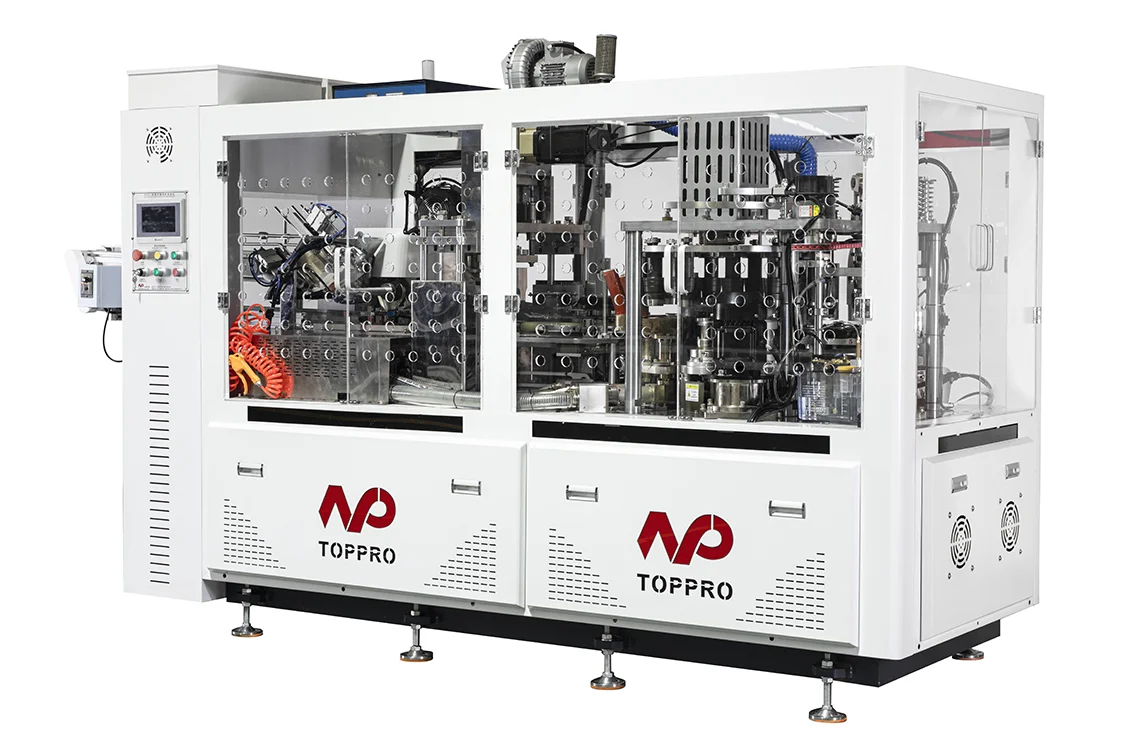
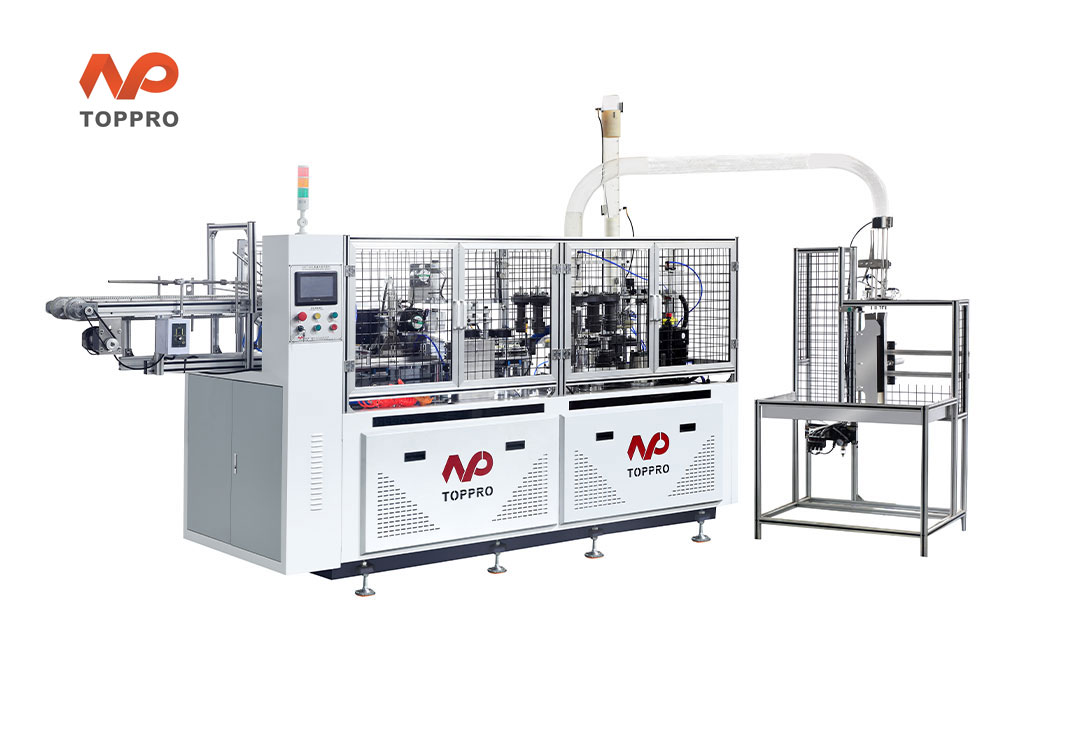
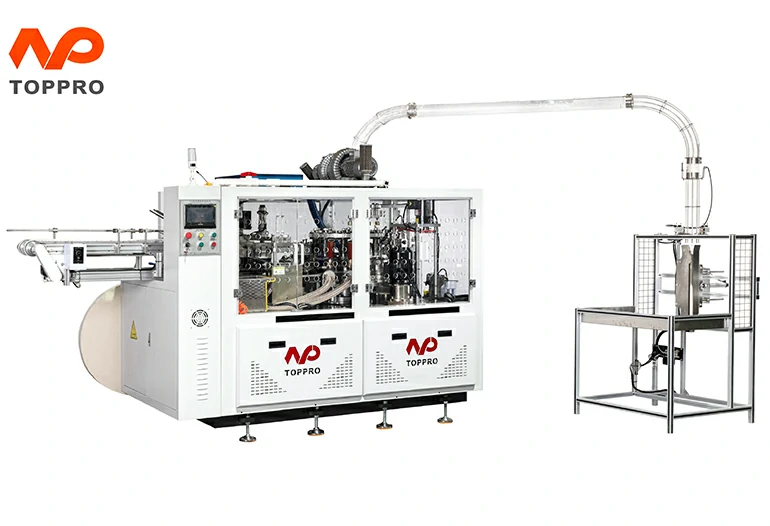
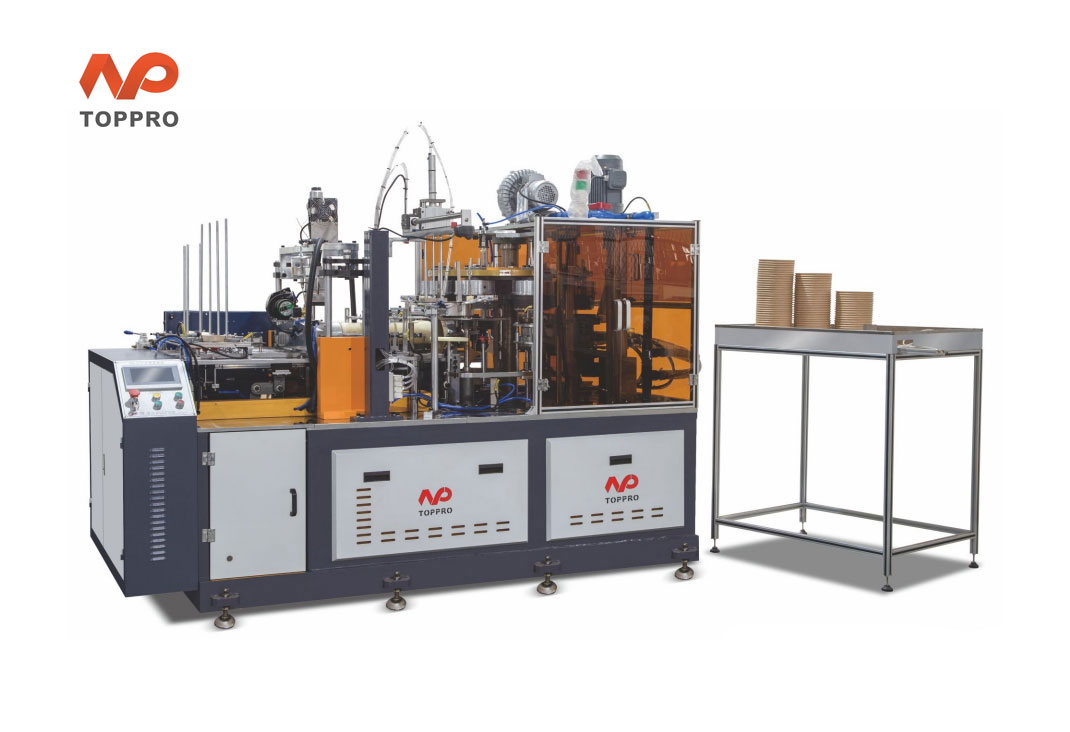
The Disposable Bowl Making Machine from TOPPRO comes in two primary configurations. The WJ‑90 (High Speed) produces 80–100 bowls per minute, handles 24–46oz bowl sizes and 170–350 gsm paper, and features ultrasonic body sealing plus double hot air bottom sealing. The DW‑50 (Standard) runs 50–70 bowls per minute, accommodates bottom diameters up to 165mm, and is ideal for salad bowls and mid‑sized production runs.
Both models include PLC touchscreen control with dual‑language interface and real‑time fault diagnosis. If a sensor trips or a heater fails, the screen tells you exactly which component needs attention—no guessing, no digging through wiring diagrams. Direct bottom paper feeding reduces waste by 5–8%, and automatic collection tables with customizable counting cut manual labor.
Real‑world examples back this up: an Indonesia noodle chain switched to custom 32oz bowl molds with double hot air sealing and eliminated leakage complaints entirely. A UAE catering company received a full line (forming, printing, die‑cutting) with training completed in one week. Genuine spare parts—bottom heating elements, ultrasonic transducers, custom mold sets—are stocked in‑house for all models.
Questions That Come Up Before You Buy
Can the same machine handle both small (16oz) and large (46oz) bowls? Yes, but you’ll need different mold sets. The WJ‑90 covers 24–46oz in one frame; for smaller bowls, check the DW‑50 or inquire about custom tooling. Mold change takes under ten minutes with quick‑release mechanisms.
What’s the real‑world reject rate on a well‑run line? Below 2% is reasonable for PE‑coated paper with daily maintenance. PLA can run higher (3–4%) until you dial in temperature settings. Most rejects come from inconsistent paper quality or neglected cleaning, not the machine itself.
What paper weights work best? 170–350 gsm. Lighter paper (under 170 gsm) tends to wrinkle during curling; heavier (over 350 gsm) puts extra stress on the forming mandrel and slows cycle time.
Do I need a separate operator for the machine? One operator can typically run two machines simultaneously, especially if they have automatic collection and stacking. Skilled operators also perform basic maintenance and mold changes during production.
A Few Final Checks Before You Commit
Run a live test with your actual paper stock, not just the pristine sample rolls the supplier brings. Watch the reject pile during the first five minutes. If more than 2% of bowls leak or show visible seam defects at the start, it will only get worse over a full shift.
Ask about in‑country service support and spare parts availability. A machine that costs $5,000 less but requires two weeks for a replacement heating element is not a bargain. And consider future material needs—if you plan to switch to PLA or water‑based coatings within the next three years, pay the small premium for a machine with wider temperature range and adjustable heating zones.
Jumping Into the Market
The global disposable food containers market is projected to reach nearly $90 billion by 2036, with paper‑based products leading the shift away from plastics. A reliable Paper Bowl Machine puts you in that market—producing leak‑proof bowls for soup chains, salad brands, and takeaway operators at 5,000+ bowls per hour, with lower labor costs and consistent quality.
【Request a quote from TOPPRO for the Disposable Bowl Making Machine】 — Share your target bowl sizes (oz), monthly volume, and paper type (PE/PLA/water‑based). Their technical team will recommend the right model and provide a custom mold quotation.