 English
 Español
 Pусский
 عربي
عربي 


A plant manager in China watched his team change over from 8oz coffee cups to 12oz iced cups. Forty‑five minutes later, the line was still producing test cups. The operator had to reset paper feed timing, side seam sealing temperature, bottom curling pressure, and cup ejection timing from scratch. Every time an order changed, the machine went silent for nearly an hour.
The upgrade to a touch‑screen paper cup machine changed that pattern. On the GZB‑600 model, the operator stored parameters for each cup size once. The next time the 12oz order came up, the operator recalled the recipe, swapped the quick‑change molds, and the line was running in under 10 minutes. The 35‑minute saving per changeover added an extra hour and a half of production per shift.
This article explains why recipe storage matters more than peak speed, how ultrasonic sealing eliminates glue‑related downtime, where the quick‑change mold system pays back in reduced labour, and why an automatic lubrication system prevents the 15‑minute greasing routine that operators often skip.
Recipe recall vs manual dial‑in: where the hidden 45 minutes go
A mechanical paper cup machine has dials, knobs, and mechanical stops. The operator sets the bag length by turning a handwheel while watching a scale. The side seam temperature is adjusted by a thermostatic controller that drifts as the machine heats up. The curling station pressure is set by a threaded stop that requires a wrench to change. A single changeover requires four separate adjustments. After each adjustment, the operator runs a test cup, inspects the seal, and tweaks the setting again. For a skilled operator, 25 minutes. For a trainee, 45.
A recipe‑based machine stores those values in non‑volatile memory. The operator recalls the job by name from the touch screen, and the servo‑driven axes reposition without a wrench. The paper cup machine with full servo + PLC control does not need an operator to remember the sealing temperature for 12oz double‑wall cups; it sets it automatically. The stored profile also includes the feed length, the curl pressure, and the ejection timing. The changeover time is the time it takes to swap the molds, not the time it takes to find the dial.
A changeover that used to cost 45 minutes of lost production now costs 10. On a machine running 70 cups per minute, that 35‑minute difference represents 2,450 cups that were previously scrapped or not produced at all. Over 10 changeovers per week, the lost output exceeds 24,000 cups.
Ultrasonic sealing: why the side seam stays consistent without a warm‑up period
Hot air sealing uses electric resistance heaters to raise an airstream's temperature. The heater cartridge warms up, the air heats, and the paper coating melts. When the machine stops for a size change, the sealing bar cools. When it restarts, the operator must run scrap cups until the temperature stabilises. A drifting temperature produces a weak seal that leaks when filled with hot coffee.
Ultrasonic sealing generates friction heat at the interface of the two paper layers by vibrating a horn at 20‑40 kHz. There is no heater cartridge, no warm‑up period, and no temperature drift. The weld is consistent from the first cup after a restart. The ultrasonic welder also requires no glue, eliminating the adhesive residue that builds up on sealing bars and requires daily cleaning.
For a paper cup machine that runs both 8oz and 12oz cups in the same shift, ultrasonic sealing means the first cup after the mold change is saleable. The operator does not scrap the first 50 cups while waiting for the sealing bar to reach temperature. The electrical life of an ultrasonic transducer is measured in years, not months, reducing a major maintenance cost that hot‑air machines incur every 3,000‑4,000 operating hours when heater cartridges fail.
How the double open cam system keeps the timing consistent across a long run
The GZB‑600 uses a double open cam design with intermittent indexing. Unlike a single‑cam design where a worn follower throws off the entire sequence, the double cam system allows each station to be adjusted independently. When the side seal station needs a timing tweak, the operator adjusts that cam alone. The other stations continue to run in spec. The open cam design also means the operator can inspect a worn follower without disassembling covers, reducing the time between noticing a drift and correcting it.
Quick‑change molds: why swapping the tooling takes 5 minutes, not 30
A conventional paper cup machine has the mold bolted directly to the turret. To change from 8oz to 12oz, the operator loosens several bolts, removes the heavy mold, installs the new mold, and aligns it with the stationary parts. The alignment process requires feeler gauges and test cups. If the mold is off by 0.2mm, the cup will leak.
The fully automatic paper cup machine uses a quick‑change mold carrier. The mold slides into a receiver and is locked with a cam lever instead of bolts. Alignment is maintained by hardened steel dowels, not by the operator's feeler gauge. A mold change that took 30 minutes on a bolted machine takes 5 on a quick‑change carrier.
The machine stores the servo‑drive positions for each mold size. When the operator recalls a job, the paper feed timing, the bottom disc position, and the ejection timing all reset to the stored values. The operator does not need to re‑zero the photo‑eye or recalibrate the bottom paper step feed. The changeover procedure is: recall the recipe, swap the molds, load new paper, and start. The test cups are not required because the machine already knows where everything should be.
| Feature | Benefit |
|---|---|
| Recipe recall (touch screen) | 35‑minute changeover reduction |
| Ultrasonic sealing | No warm‑up period, no glue residue |
| Quick‑change mold carrier | 5‑minute mold swap vs 30 minutes |
| Double open cam system | Independent station timing |
| Automatic oil‑bath lubrication | Eliminates daily greasing routine |
Paper range and cup dimensions: why 170‑350gsm covers both lightweight takeout cups and heavy coffee sleeves
The GZB‑600 handles 190‑350gsm PE coated paper, single or double PE. The lower end (170‑200gsm) is used for cold cups and lightweight takeout cups where stiffness is not critical. The upper end (300‑350gsm) is for double‑wall hot cups and coffee sleeves that must hold their shape when filled.
Paper weight selection affects the sealing temperature. A 350gsm double PE board requires higher ultrasonic power and longer dwell than a 190gsm single PE sheet. The recipe storage allows the operator to save the power setting for each weight. When a 350gsm double‑wall cup order repeats, the machine calls up the saved power level. The operator does not need to recalibrate the welder by trial and error.
The cup volume range is 4‑16oz (110‑450ml). A 4oz cup is an espresso cup; a 16oz cup is a large takeout coffee. The mold sets for the extremes are different, but the machine accepts both. The quick‑change carrier works for all sizes within the range, so a converter does not need a separate machine for small and large cups.
| Parameter | GZB‑600 Specification |
|---|---|
| Cup volume | 4‑16 oz |
| Paper weight | 190‑350 gsm (single/double PE) |
| Cup height range | 60‑135 mm |
| Top diameter range | 55‑90 mm |
| Production speed | 130‑150 cups/min |
| Control system | PLC + touch screen |
| Sealing method | Ultrasonic + hot air (dual) |
Data sourced from GZB‑600 product specifications.
Automatic oil‑bath lubrication: why the machine runs a full shift without a grease gun
A mechanical paper cup machine has grease points on every cam follower, bearing, and guide. The operator is supposed to grease them at the start of each shift. In practice, operators skip the greasing when they are behind schedule. The cams wear, the timing drifts, and the machine produces crooked seals. An 8‑hour shift that starts with missed greasing ends with a half‑hour repair session.
The fully automatic machine uses an oil‑bath lubrication system. The cams and followers run in a sealed housing filled with oil. The oil is circulated by a pump and filtered continuously. The operator checks the oil level once per week, not greases 12 points per shift. The elimination of the daily greasing routine removes the single largest source of operator‑induced timing drift.
The oil‑bath also acts as a heat sink, absorbing the heat generated by the cams and gears. A grease‑lubricated machine running at 150 cups per minute can see cam follower temperatures exceeding 80°C, which softens the grease and accelerates wear. The circulating oil maintains a consistent temperature across the housing, extending component life by 30‑50%.
How the fully automatic paper cup machine fits into a high‑mix packaging line
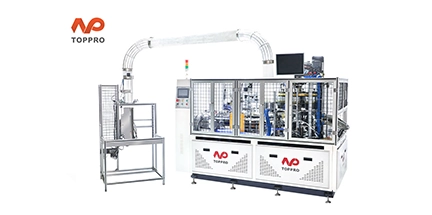
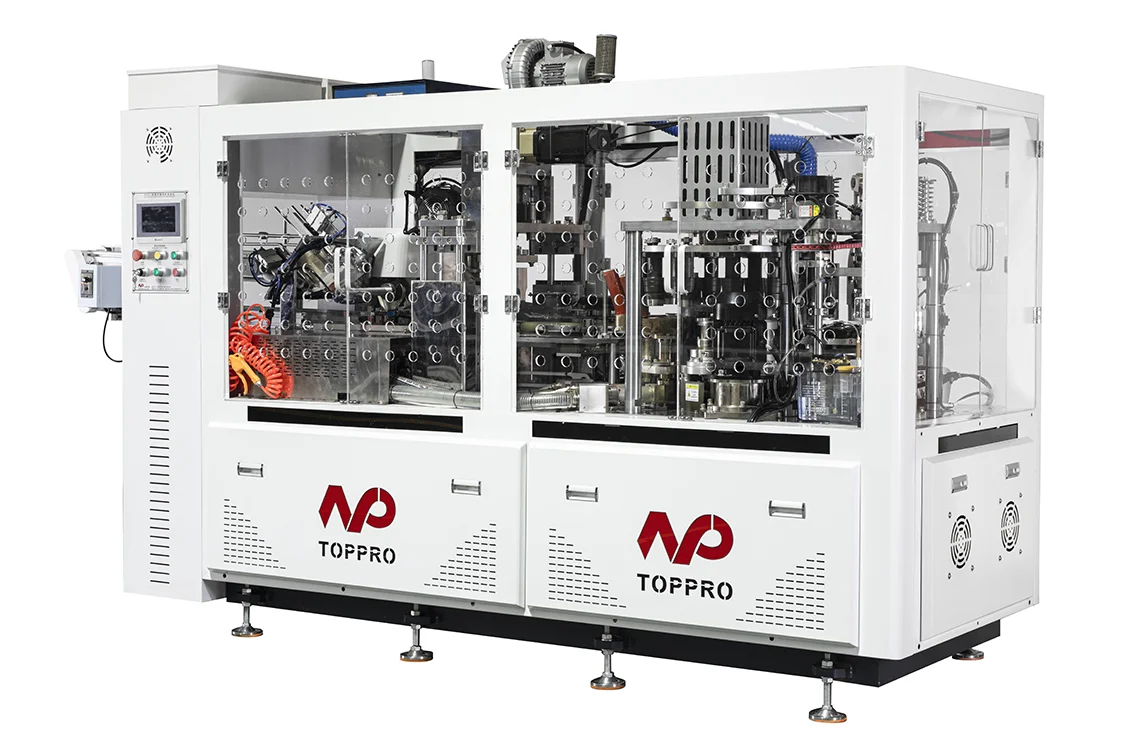
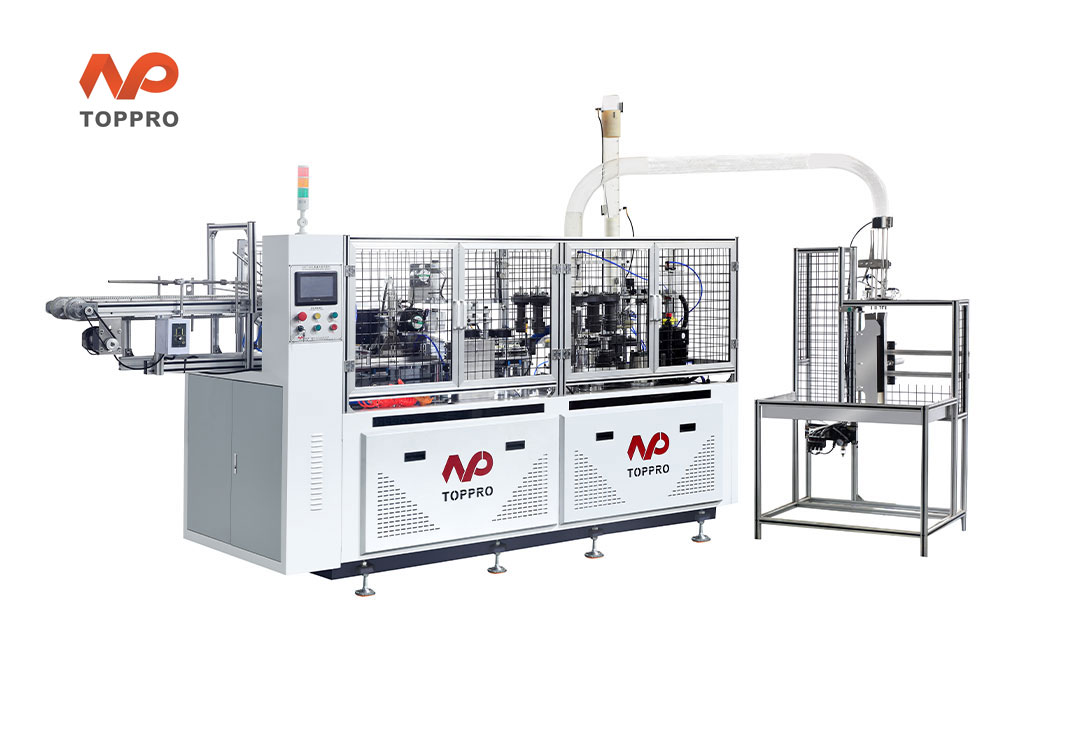
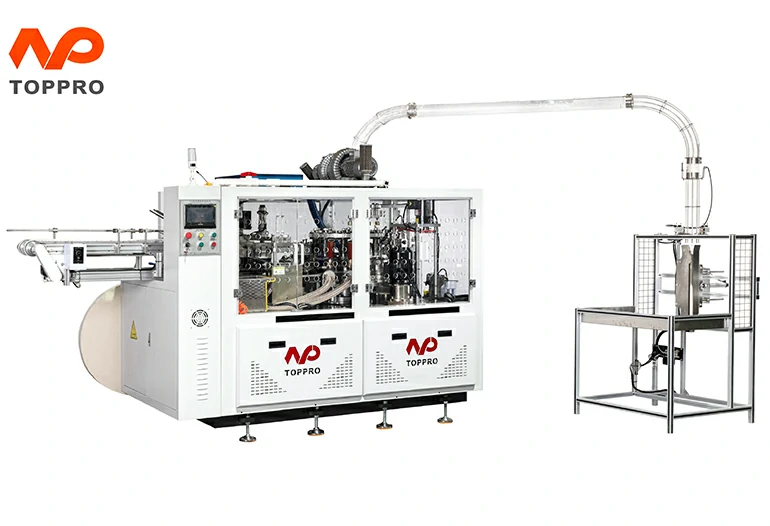
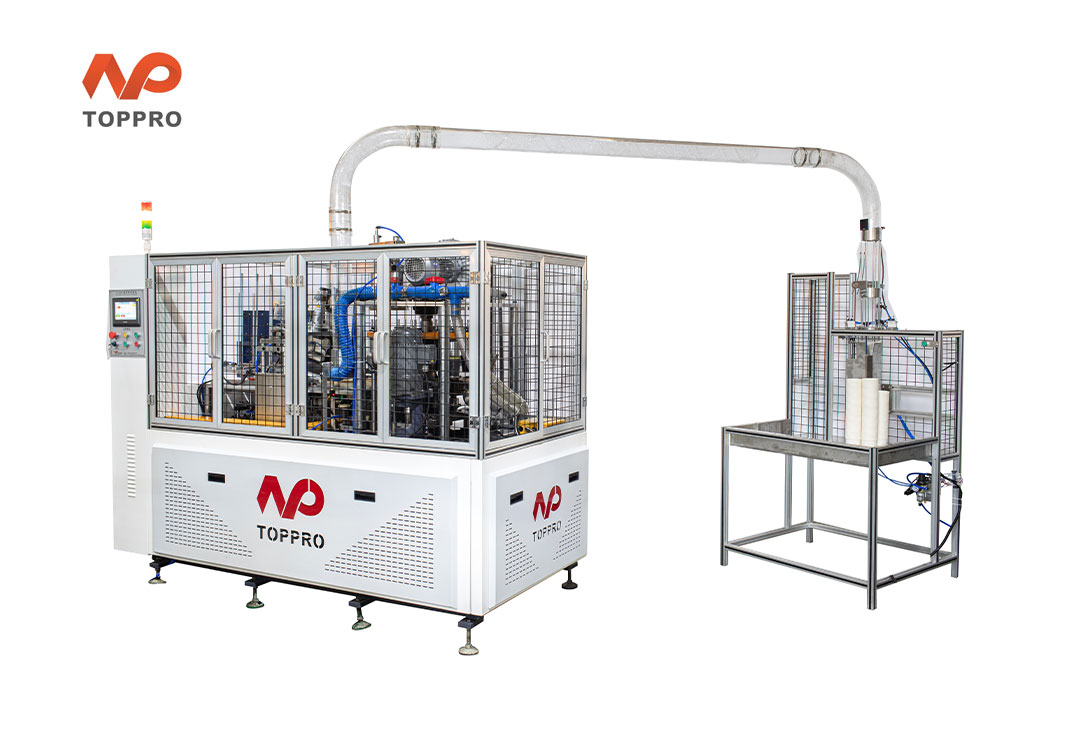
TOPPRO (Wenzhou Toppro Machinery Co., Ltd.) manufactures the GZB‑600 fully automatic paper cup machine for converters who run multiple cup sizes daily. The machine combines a full servo + PLC control system with recipe storage, a quick‑change mold carrier, ultrasonic sealing for glue‑free operation, double open cam timing for independent station adjustment, an automatic oil‑bath lubrication system, and CE certification for European market compliance.
A paper cup machine that stores job settings and changes molds in 5 minutes delivers what a mechanical machine cannot: the ability to run short orders profitably. For a converter who switches between 8oz hot cups, 12oz iced cups, and 16oz cold cups multiple times per shift, the combination of recipe recall, quick‑change tooling, and ultrasonic sealing turns a 45‑minute disruption into a 10‑minute transition.
【Request a quote from TOPPRO】
Contact TOPPRO with your target cup size range (4‑16oz), paper weight (190‑350gsm), and daily changeover count to receive a GZB‑600 configuration recommendation and sample video of the quick‑change mold system.