 English
 Español
 Pусский
 عربي
عربي 


You’ve been running cone sleeves for hours. The first few hundred looked perfect. Then a batch comes off the machine with visibly uneven wall thickness—thin enough on one side to see light through, bulging on the other. Uneven paper cone wall thickness isn’t just a cosmetic problem. It creates weak spots that fail during filling, causes inconsistent stacking in customer packaging lines, and leads to rejected orders. On a Paper Cone Machine, thickness variation usually points to one of three root causes: the paper itself is inconsistent, the rollers have drifted out of parallel, or the glue application timing is off. This guide walks through each cause in the order you should check them, with tests that take minutes and fixes that don’t require tearing apart the machine.
Paper material inconsistency
Uneven wall thickness often starts before the paper ever enters the machine. Paper weight for cone sleeves typically runs from 120 to 300 gsm. If the paper is too heavy in one spot and lighter in another, the cone wall will follow that variation. Moisture content is equally critical. Acceptable moisture for most cone stock is 8–10%. A variation exceeding 2% across the roll will cause the paper to expand and contract unevenly during forming.
Search results from China’s cone manufacturing industry point to poor plasticization uniformity as a leading cause of wall thickness variation. When the paper material does not plasticize evenly during the forming process, the result is a cone with thin spots and thick spots that correspond directly to the material’s inconsistent behavior.
Material partial decomposition is another hidden culprit. When paper coating material partially decomposes (often from improper storage), the degradation products create localized viscosity changes. These changes alter how the paper flows through the forming mandrel, producing walls that vary in thickness around the circumference. Store paper rolls in a climate‑controlled environment away from direct sunlight and moisture.
Quick moisture test
Use a handheld moisture meter to test paper samples from the start, middle, and end of the roll. If the variation exceeds 2%, reject the roll and contact your paper supplier.
Paper weight consistency check
Cut samples from different spots across the roll width and weigh them on a precision scale. Variation greater than 3–5% indicates poor mill quality. Switch to a tighter‑tolerance supplier.
Roller misalignment and mechanical wear
If the paper checks out, the next suspect is mechanical. Cone‑forming machines rely on a series of rollers that wrap the flat paper into a conical shape. If those rollers are not aligned, the paper travels unevenly through the forming station. The most common mechanical cause of uneven cone ends is misaligned roller shafts. Use a precision level to measure the relative positions of each roller shaft. If the deviation exceeds 0.1 mm per meter, the resulting cone will have one side tighter and one side looser. Loosen the mounting bolts, adjust the roller position until the level reading is within tolerance, and retighten. Rollers that have developed grooves, flat spots, or uneven wear from extended service will transfer that irregularity to the paper. Run your hand across the roller surface—any obvious ridge or depression means the roller needs resurfacing or replacement. The mandrel around which the paper wraps must be perfectly round and concentric. A mandrel that has been dropped or bent will produce cones that are oval rather than round. Use a dial indicator to measure mandrel runout. Any reading above 0.05 mm requires mandrel replacement. On CPC series machines, the full automatic oil lubrication system extends part life and reduces daily maintenance, but it does not compensate for existing roller damage.
Checking roller shaft parallelism
Measure at both ends of each roller. The difference should be under 0.1 mm per meter of roller length.
Inspecting the forming mandrel
Rotate the mandrel slowly while watching the dial indicator. Replace if runout exceeds 0.05 mm.
Glue application drift
The glue seam is the only thing holding the cone together. If glue is applied too early, too late, or in inconsistent quantity, the paper will shift as it wraps, creating localized thick and thin areas around the seam. Inconsistent adhesive application patterns—uneven coating thickness, gaps in coverage, or irregular flow rates—cause seam movement. One edge of the paper gets more glue, pulls tighter, and creates a bulge on that side. The result is a cone that is round on one side and flattened on the other.
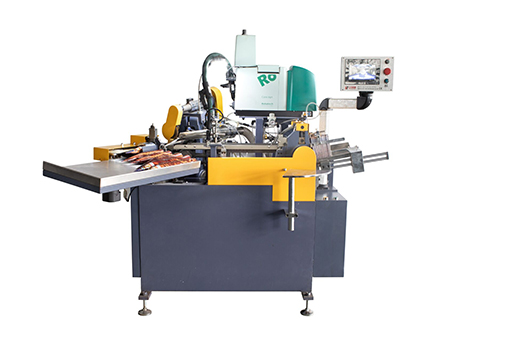
Robatech glue systems operate within a specific temperature window. If the temperature is too low, the adhesive is thick and applies unevenly. If too high, the adhesive becomes too fluid and spreads beyond the intended seam area. Use the controller’s temperature readout to verify the setpoint. If the actual temperature fluctuates, the heater or thermocouple may be failing.
Air leaks in the pressure system are a frequent but easily overlooked cause. Any air or glue leak causes pressure fluctuations. Intermittent pressure produces intermittent glue flow, which causes the paper seam to shift from one cone to the next. Inspect all fittings and hoses for visible leaks. If you detect a drop in system pressure without a change in regulator setting, a leak is likely.
Daily calibration routine
Adjust glue pressure and temperature daily using the parameters provided by the system manufacturer. For Robatech systems, calibration settings are documented in the machine manual.
Nozzle cleaning and alignment
If glue application appears uneven, remove the nozzle and clean it with an appropriate solvent. Blocked nozzles are a common cause of intermittent glue flow. Ensure the nozzle tip is centered over the glue wheel groove with a gap of approximately 0.1 mm.
Process parameters that drift over time
Even with good paper, proper alignment, and consistent glue application, process parameters can drift during a run. Temperature changes, component wear, and operator errors all contribute to thickness variation that appears gradually. If the glue application does not match the cone formation speed, the paper will not seat properly. Higher speeds require faster glue application rates. If you increase machine speed without adjusting glue flow, the seam may shift and create uneven walls. Modern machines like the CPC‑220 use Mitsubishi PLCs with touchscreen control. Parameters should be locked to prevent accidental changes. If operators are manually adjusting settings without logging changes, create a parameter log. Record the correct settings for each paper type and cone size. Check actual values against the log daily. Vibration over time can loosen bolts and change roller alignment. Add monthly alignment checks to your maintenance schedule. Use a torque wrench to verify that all mounting bolts are at specified tightness. Even a 5% reduction in torque can allow rollers to shift under load.
Speed vs. glue flow ratio
When increasing line speed, increase glue flow proportionally. A mismatch is a common cause of gradual seam shift.
Parameter log template
Create a laminated sheet attached to the machine. Record paper type, cone size, glue temperature, pressure, and line speed for every job.
| Root Cause | Key Symptom | Diagnostic Test | Corrective Action |
|---|---|---|---|
| Paper moisture variation | Consistent thin wall on one side | Moisture meter across roll | Reject roll; improve storage |
| Roller misalignment | Cone thicker on one edge | Precision level check | Adjust parallelism to <0.1 mm/m |
| Glue temperature drift | Intermittent seam shift | Check controller vs. actual temp | Calibrate or replace sensor |
| Air leak in glue system | Random glue spits and uneven seam | Listen for hiss; inspect fittings | Replace leaking hoses or seals |
| Speed increase without glue adjustment | Seam shift only at high speed | Compare glue flow at low vs high speed | Increase glue pump output |
Real questions from cone production lines
Q: Can the same cone machine handle different paper weights without recalibration?
A: No. Changing paper weight requires adjusting roller pressure, glue quantity, and forming speed. The CPC‑220 series supports paper from 120 to 300 gsm, but you must recalibrate when switching weights. Save settings for each paper type in the PLC memory for recall.
Q: How often should I replace the forming mandrel?
A: Inspect the mandrel monthly for wear or scoring. Replace when surface roughness exceeds 0.05 mm Ra. For high‑volume production exceeding 2 million cones per year, replace mandrels every 12 to 18 months as preventive maintenance.
Q: What does a properly formed cone seam look like?
A: The glue should appear as a continuous, uniform bead with no gaps or bulges. Use the built‑in vision reference every 2 hours to check seam alignment. The seam overlap should be consistent down the entire cone length—no widening or narrowing at the base or tip.
Q: Can uneven wall thickness be fixed without stopping production?
A: Minor adjustments to glue pressure or roller alignment can be made while running, but major mechanical changes require stopping the machine. Use real‑time monitoring of cone dimensions to detect drift early and make small corrections before the problem escalates.
When to call for technical support
If you have checked paper quality, roller alignment, and glue system, but uneven thickness persists, the problem may be deeper. Electrical control issues—faulty sensors or PLC communication errors—can cause intermittent forming problems. Contact the manufacturer’s support team with a detailed log of what you have tested and the results. Sincere Machinery provides lifetime technical support, remote diagnosis, and on‑site service for their CPC series machines.
Built for consistent cone quality
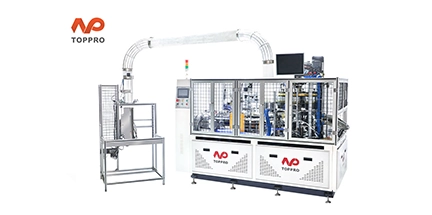
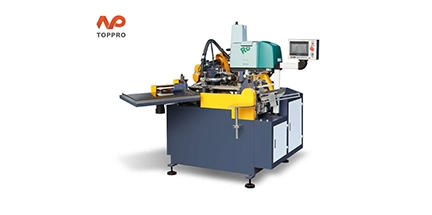
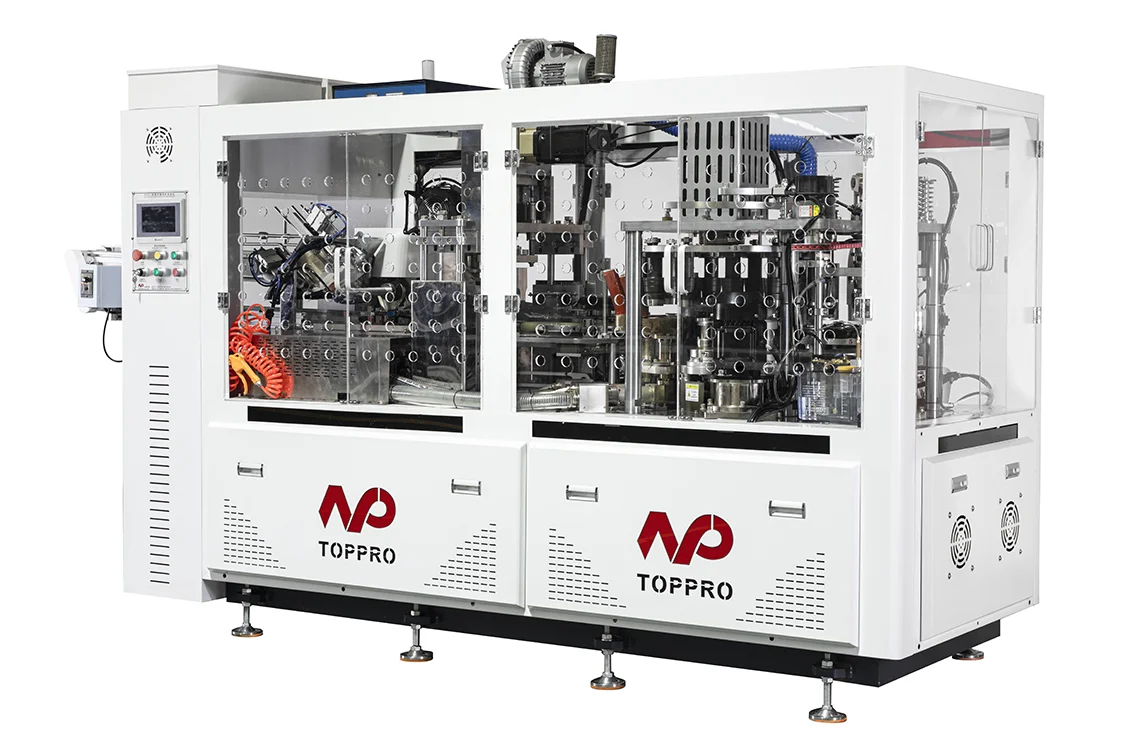
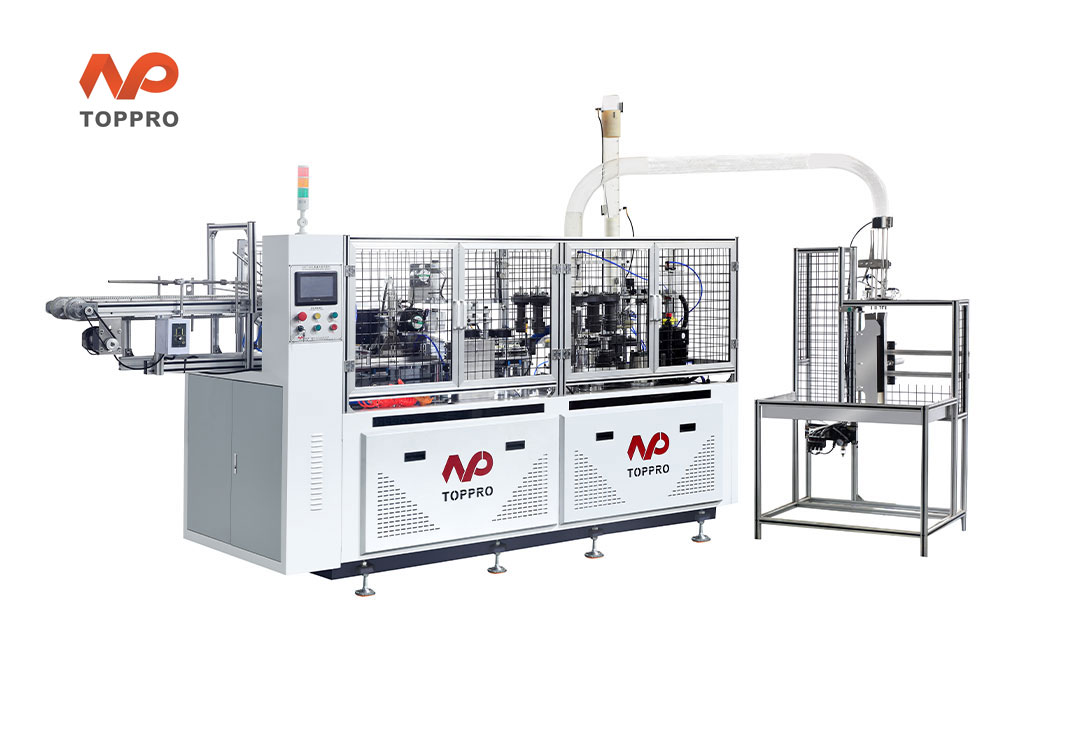
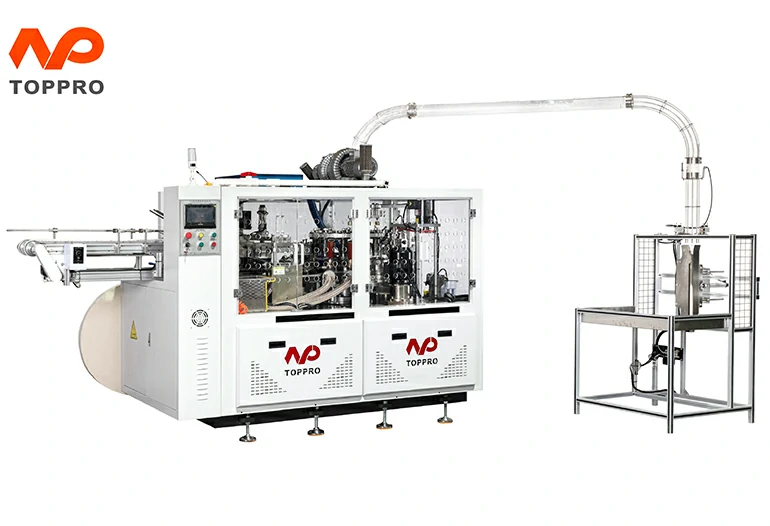
When unreliable thickness drives you to consider replacing your equipment, the design of your Paper Cone Machine matters as much as your maintenance routine. Sincere Machinery (TOPPRO brand) manufactures the CPC‑220 Automatic Paper Cone Making Machine for ice cream cone sleeves, wafer cone wraps, and custom branded sleeves.
The CPC‑220 runs at 190 to 230 cones per minute and handles 4 to 10 ounce cone sizes. Key features include a Mitsubishi PLC with dual‑language touch screen for real‑time fault diagnosis, a Robatech precision glue application system that reduces glue consumption by up to 20 percent, a high‑speed rotary die that delivers consistent cone shape and minimal paper dust, and a full automatic oil lubrication system that extends part life and reduces daily maintenance. Complete mold change for different cone sizes takes less than 15 minutes.
For converters who need higher throughput, the CPC‑300 model reaches 280 to 300 cones per minute. Sincere Machinery provides on‑site installation, operator training, lifetime technical support, and fast spare parts delivery.
→ Request a quote from Sincere Machinery for the CPC-220 Automatic Paper Cone Making Machine — Share your target cone size (4 to 10 ounces), paper type (art paper, kraft, aluminized), and monthly output requirement. Their technical team can recommend the right model and provide thickness calibration guidance.