 English
 Español
 Pусский
 عربي
عربي 


A packaging plant in Eastern Europe had a persistent bottleneck. Each time the production schedule required a change from 8oz coffee cups to 12oz cold cups, the line would stop for 45 minutes. The operator would pull out the manual, adjust the paper feed settings, recalibrate the sealing temperature, tweak the bottom curling station pressure, and run test cups until the side seam finally lined up. The machine cost them €200 per hour in lost production during each changeover. The trainer spent two weeks teaching a new operator all 32 adjustment points.
The plant upgraded to an intelligent paper cup machine from TOPPRO with full servo control and one‑click recipe recall. The trainer stored the parameters for 8oz and 12oz cups once. The new operator learned to recall the saved profile, swap the molds using the quick‑change system, and resume production in 12 minutes.
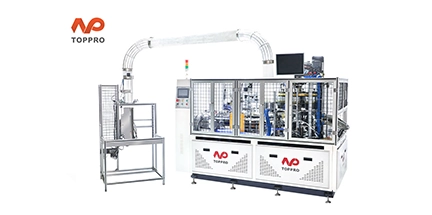
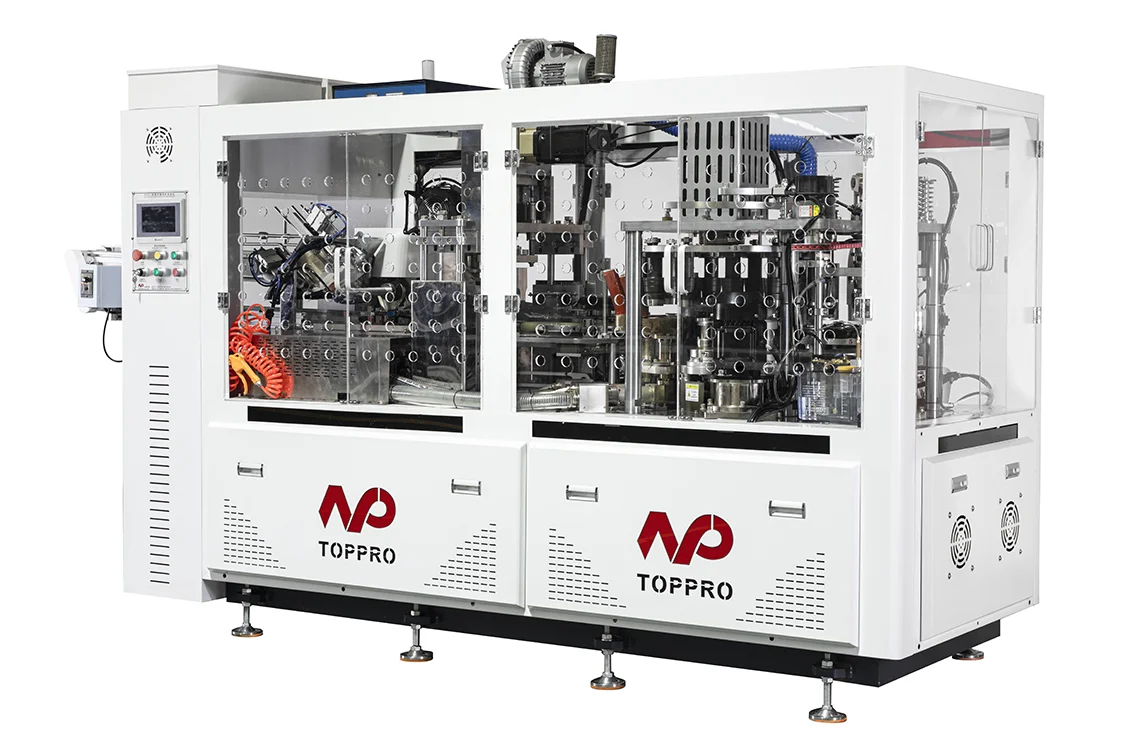
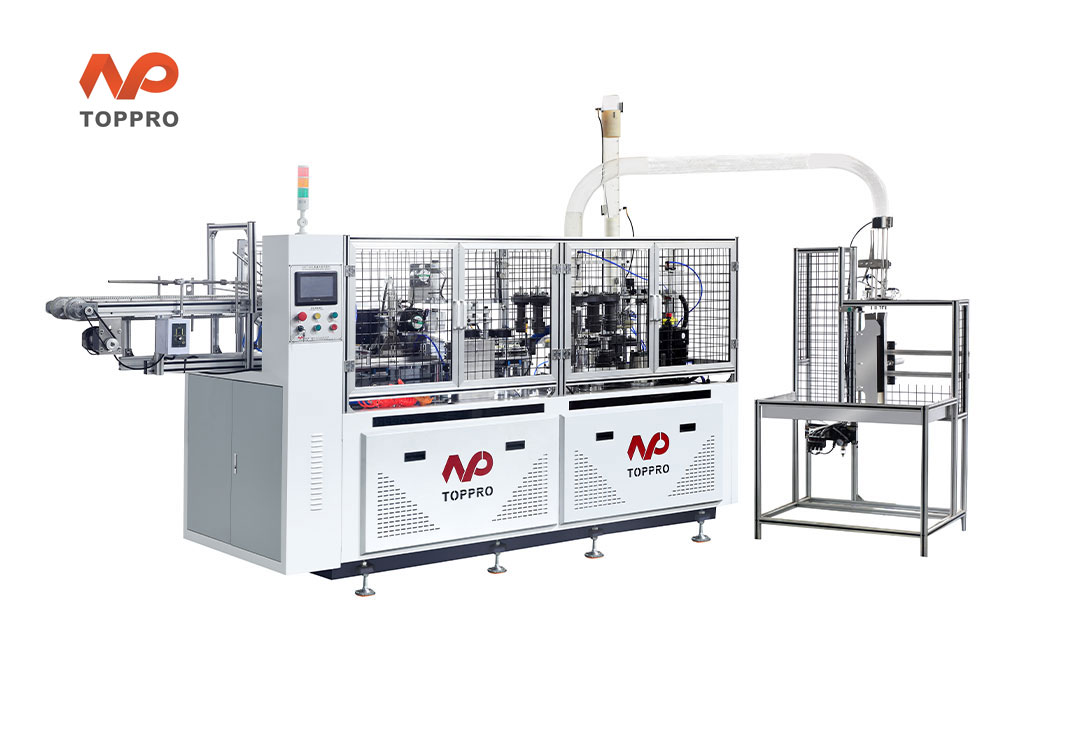
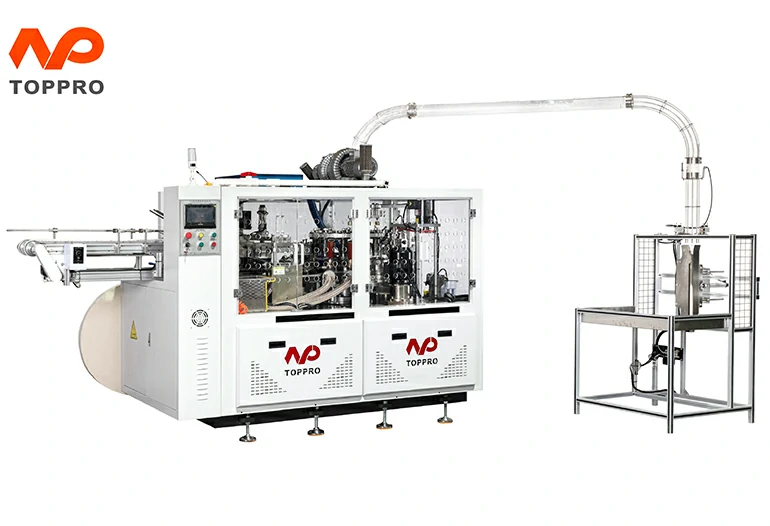
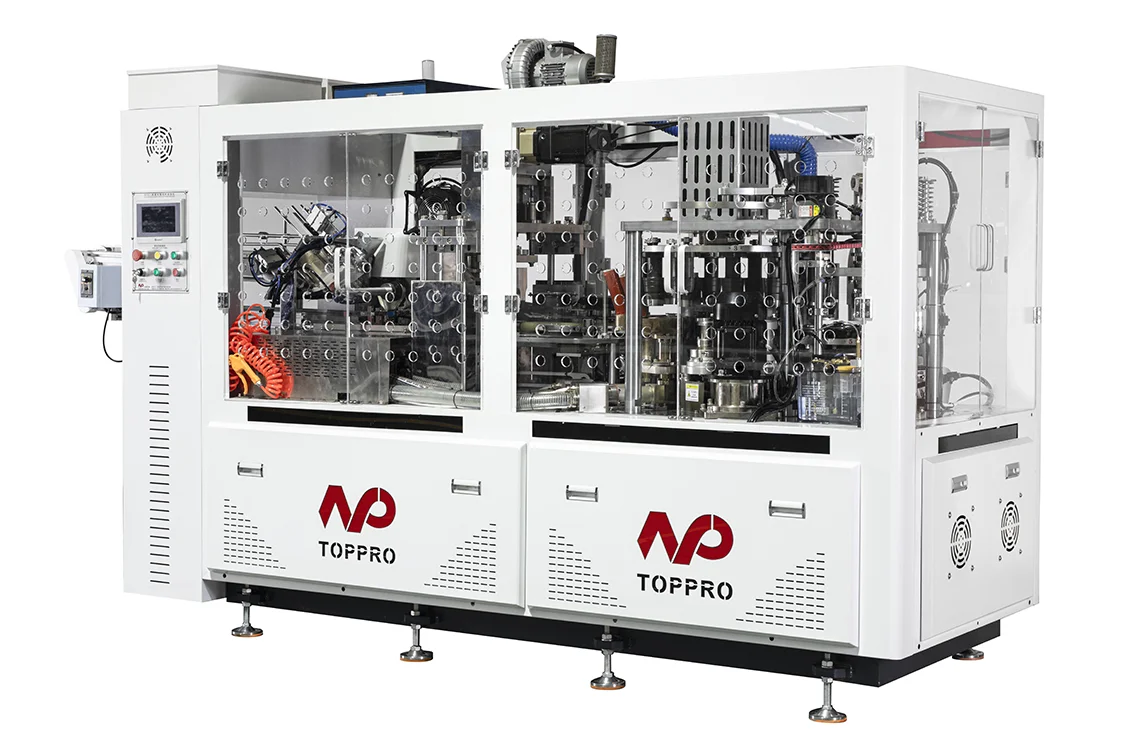
An paper cup machine designed for intelligent operation integrates sensors, servo drives, and PLC logic at every stage, including the main paper feeding, side seam sealing, bottom disc forming, curling, and cup stacking. The SFBJ‑600 model, which uses a full servo + PLC control system, achieves speeds from 160 to 200 cups per minute, operates with both ultrasonic and hot air sealing options, and accepts single or double PE paper from 190 to 350 grams per square meter, covering a cup volume of 4 to 16 ounces. The GZB‑600 model, another fully servo‑controlled machine, runs at 130 to 150 cups per minute, while the LF‑110 mid‑speed model suits smaller plants at 100 to 120 cups per minute, and the LF‑70 economy model provides an entry point for startups at 65 to 75 cups per minute, with a smaller 2 to 12 ounce cup range. This guide looks at how parameter storage, automatic lubrication, and quick‑change tooling turn a machine that needs a dedicated technician into a system that runs with a single trained operator.
Parameter storage: why the memory that holds your best 8oz cup settings matters more than the machine's peak speed
The peak speed rating on a paper cup machine spec sheet applies to continuous runs of the same cup size. Real‑world production involves changeovers, often multiple times per shift. Every time the machine changes from 8oz to 12oz, the operator must reset the paper feed timing, the side seam sealing temperature, the bottom curling pressure, and the cup ejection timing. A machine without memory forces the operator to dial in each parameter manually, using a mix of guesswork and experience.
An intelligent paper cup machine stores these parameters in the PLC memory. The operator enters the settings for a new cup size once. The next time that order repeats, the operator recalls the saved job profile, the machine adjusts its servo drives to the stored positions, and production resumes without recalibration. The SFBJ‑600’s full servo architecture enables one‑click recipe change functionality, where the system automatically repositions multiple axes simultaneously. The quick‑change mold set allows switching between cup sizes in 5‑10 minutes, compared to the 30‑45 minutes required on conventional machines.
For a packaging converter running 10 different cup sizes weekly, the time saved across changeovers can exceed 5 hours per week. Training new operators is also faster because the trainee only needs to learn the recall procedure, not the full parameter list for every cup size. The machine’s diagnostic system also flags when a parameter is out of tolerance, alerting the operator before it produces defective cups.
Full servo control that replaces mechanical cams – how the machine learns to compensate for wear without a technician
A conventional paper cup machine uses mechanical cams and gear trains to synchronize stations. When the cams wear, the timing drifts, and the machine produces cups with misaligned side seams or weak bottom seals. A technician must disassemble covers and adjust mechanical stops. The machine stops, the technician works, and the line loses output.
A full servo control system replaces the main drive shaft and mechanical cams with independent servo motors for each station. The SFBJ‑600 uses full servo + PLC control with independent servo drives for paper feeding, sealing, bottom forming, curling, and stacking. The PLC synchronizes all axes electronically. If a servo motor’s position encoder indicates drift, the controller compensates by adjusting the target position, maintaining registration without mechanical teardown.
The open cam design on TOPPRO machines allows operators to access components without disassembling covers, reducing maintenance time. The automatic oil‑bath lubrication system extends part life and reduces manual maintenance, eliminating the need for an operator to grease cam followers at the start of every shift.
For a plant running two shifts, automatic lubrication eliminates the 15‑minute manual greasing routine that operators often skip or rush. The servos maintain registration within ±0.1mm across the machine’s full speed range from 70 to 200 cups per minute. This holds true even when the machine runs intermittent production, where a mechanical cam machine would lose sync after frequent stops and starts.
Ultrasonic and hot air sealing that the machine monitors – why the controller knows when the seal strength drops before the QC check fails
The side seam seal is the most quality‑critical failure point in a paper cup. If the seal leaks, the cup is scrap. On conventional machines, the operator checks seal quality by periodically pulling a cup off the stack and filling it with water. By the time the water test fails, the machine has already produced dozens of leaking cups.
The ultrasonic sealing system on TOPPRO’s intelligent paper cup machines integrates sensors that monitor the power drawn by the ultrasonic transducer. When the power required to achieve a consistent seal exceeds the programmed threshold, the controller alerts the operator. A sudden power increase indicates that the horn is wearing or that the paper has changed, allowing the operator to intervene before the seal quality fails. The system provides 30% better leak resistance compared to conventional sealing methods and eliminates the need for glue, making the production process more environmentally friendly.
For hot air sealing models, thermocouples monitor each heating zone. The controller compares the actual temperature to the setpoint stored in the job profile. If a zone drifts by more than 3‑5°C, the machine sounds an alarm but continues running. A drifting zone may still produce acceptable cups short‑term, but the operator can address it during the next natural stop rather than as an emergency.
The combination of ultrasonic and hot air sealing on the SFBJ‑600 and GZB‑600 models ensures that the machine can handle both single and double PE‑coated paper as well as PLA and water‑based coated paper, providing flexibility for converters who work with multiple material types.
The automatic cup stacking system that counts and rejects – why the operator does not stand at the delivery end counting cups by hand
In a basic paper cup line, the operator stands at the delivery end, watching cups fall into a bin, manually counting when the stack reaches a certain height, and occasionally pulling a cup for quality inspection. The operator cannot leave the station.
An intelligent paper cup machine integrates cup stacking with automatic counting. The stacker collects cups in counted columns, releasing them to a conveyor when the programmed count is reached. The operator only needs to remove the full stacks and replace the empty bin. Some models also integrate automatic detection of missing or misaligned cups at the stacking station, stopping the machine immediately rather than letting defective cups reach the packaging line.
The sensors at the bottom paper station also detect when the bottom paper roll is low, triggering an alarm that gives the operator time to splice in a new roll without stopping production. Combined with the main paper feed roll monitoring system, the machine can run through an entire shift with only one or two operator interventions.
Three ways an intelligent control system changes how a production manager plans the shift
One: The stored job profiles eliminate the setup scrap that eats the first 200 cups of every run
On a manual machine, every changeover produces a trial‑and‑error period where the operator runs test cups and adjusts parameters until the seal looks right. Those test cups are scrap. For a changeover from 8oz to 12oz cups, the operator might scrap 200‑300 cups. On a new, intelligent paper cup machine, the operator recalls the stored job profile and runs the first cup. If the mold tooling is properly seated, that first cup is often saleable. Across 10 changeovers per week, the scrap reduction alone can exceed 2,000 cups per week.
Two: The real‑time diagnostics tell the shift supervisor which station is trending toward failure, not which station already failed
A conventional machine’s first warning of a problem is often a jam or a defective cup. The supervisor then investigates the root cause. An intelligent machine with sensors on each station can trend the data. The sensor at the side seam sealing station may show that the contact time is drifting by 0.01 seconds over several hours. The trend line is still within tolerance, but the supervisor knows that the station will need adjustment after the current run finishes. Planned maintenance replaces emergency maintenance.
Three: The energy monitoring stops the “machine running but not producing” waste
An intelligent control system logs when the machine is in production and when it is idle but still powered. If the machine runs for 8 hours but the production log shows only 5 hours of actual cup output, the supervisor investigates the 3‑hour gap. The energy‑efficient motors and optimized hot air and ultrasonic sealing combine to reduce power consumption compared to older models, while the intelligent system ensures the motors are not drawing power unnecessarily during idle periods.
What the speed range actually delivers across the full product line
TOPPRO offers four primary paper cup machine models, each suited to different production environments and operator skill levels.
| Model | Speed (pcs/min) | Cup Size (oz) | Paper Weight (gsm) | Control System | Sealing |
|---|---|---|---|---|---|
| SFBJ‑600 (Full Servo) | 160‑200 | 4‑16 | 190‑350 | Full servo + PLC | Ultrasonic + Hot air |
| GZB‑600 (High Speed) | 130‑150 | 4‑16 | 190‑350 | PLC + touch screen | Ultrasonic / Hot air |
| LF‑110 (Mid Speed) | 100‑120 | 4‑16 | 190‑350 | PLC + touch screen | Ultrasonic + Hot air |
| LF‑70 (Economy) | 65‑75 | 2‑12 | 170‑300 | Basic PLC | Electric / Ultrasonic |
The LF‑70 economy model serves small cafes and tea shops, offering a lower entry cost while still supporting a basic level of automation with single PE paper compatibility. The LF‑110 provides a mid‑speed option for startups requiring flexibility across varied products. The GZB‑600 delivers high‑speed output for medium beverage plants, and the SFBJ‑600 full servo version is recommended for large chains and OEM manufacturers who need maximum throughput and smallest possible changeover time.
The energy‑efficient optimized hot air and ultrasonic sealing reduce power consumption across all models, with the full servo models showing the greatest percentage improvement due to the regenerative braking of their servo drives capturing energy during deceleration.
Three installation checks that show whether an intelligent paper cup machine will deliver its promised speed
Check one: Run the automatic lubrication test
Before accepting the machine, run it at 50% speed for two hours. Check the oil level in the automatic lubrication reservoir. If the level has not dropped, the system is either not dispensing oil or the dispense interval is set too long. A correctly configured automatic oil‑bath system will use a measurable volume of oil over the test period. For an operator who will run two shifts, the lubrication interval should be less than the shift length so that human error does not leave the cams dry.
Check two: Perform a changeover and measure the operator’s interventions
Change from 8oz to 12oz cups using the stored job profile. Time the changeover and count how many times the operator needs to touch a mechanical adjustment. On the SFBJ‑600, a full servo changeover with quick‑change mold set should require only the mold swap and the job recall. Count each manual tweak as a failure of the parameter storage system. A well‑designed intelligent paper cup machine should require zero manual adjustments after the recall.
Check three: Run the bottom paper feed at 80% of rated speed with the lightest stock
Load the machine with your lightest paperboard stock (170‑190 GSM) and run at 80% of its rated speed. Watch the bottom disc placement in twenty randomly sampled cups. The step feed system that controls the bottom paper cutting should position each disc within 0.2mm of the correct location. If the variation exceeds 0.3mm, the bottom paper feeding system is not holding tolerance, and QC will spend extra time checking bottom seals.
[Image: Quick‑change mold set for TOPPRO intelligent paper cup machine, showing the interchangeable tooling that allows a single machine to handle 4‑18 oz cup sizes]
Where the intelligent paper cup machine fits into a packaging converter’s production line
Sincere Machinery, operating under the TOPPRO brand for their paper cup line, manufactures these intelligent machines using ultrasonic sealing (glue‑free, environmentally friendly, 30% better leak resistance), full servo + PLC control for precision paper feeding with real‑time diagnostics and one‑click recipe change, a quick‑change mold set for 5‑10 minute changeovers between cup sizes, automatic oil‑bath lubrication to extend part life and reduce manual maintenance, and compatibility with single PE, double PE, PLA (biodegradable material), and water‑based coated paper to serve the growing demand for eco‑friendly packaging.
The models range from 65 to 200 cups per minute, covering cup dimensions from 2 to 18 ounces, with a 4 to 16 ounce range on most machines, and paper weights from 170 to 350 GSM depending on the model. The machines are CE certified to meet global safety and electrical codes, with on‑site installation, operator training, remote troubleshooting, and lifetime technical support provided. The company offers integrated solutions including cup forming, printing, die‑cutting, and raw material rolls for full production lines.
For an paper cup machine that reduces operator training by two‑thirds, cuts changeover time from 45 minutes to 5‑10 minutes, and eliminates manual greasing at the start of every shift, the TOPPRO intelligent platform delivers stored job parameter recall, full servo synchronization, automatic lubrication, quick‑change tooling, and real‑time diagnostics — all working together to keep the machine running with minimal supervision.
【Request a quote from Sincere Machinery】
Contact TOPPRO with your target cup size range (2‑18 oz), daily output requirement, and paper type (single PE, double PE, PLA) for an intelligent paper cup machine recommendation with a full certification package.