 English
 Español
 Pусский
 عربي
عربي 


If you’re searching for a full paper cup production line that can take raw paper blanks all the way to sealed, stacked, ready-to-ship finished cups, you need more than just individual machines—you need a coordinated, reliable system that cuts downtime, reduces waste, and maintains consistent cup quality across every shift. Paper Cup Machine technology has evolved to support end-to-end lines, but the best setups integrate forming, sealing, counting, and packing in one smooth workflow without bottlenecks. Many buyers come to us struggling with mismatched equipment, slow changeovers, or inconsistent cup shape and sealing strength, especially when running small-batch custom orders. In this guide, we break down how a complete blank-to-finished cup line works, what performance benchmarks to expect, and how to choose a system that matches your production scale and product needs.
What Buyers Actually Need From a Full Paper Cup Production Line
Most buyers entering this space aren’t just looking for machinery—they want a turnkey paper cup solution that lets them start production quickly, train staff easily, and scale output as their business grows. Based on industry data from the China Packaging Machinery Association (2024), over 68% of paper cup manufacturers cite production stability, low defect rates, and fast format change as their top three purchasing priorities.
A real-world complete line must handle the entire process: feeding paper blanks, heating, sealing the side seam, forming the bottom, curling the rim, counting, stacking, and even optional packaging. Fragmented setups often lead to 8–12% product waste, while integrated lines can lower that figure to under 2%. For businesses producing cold cups, hot cups, double-wall cups, or ripple-wall cups, flexibility is non-negotiable.
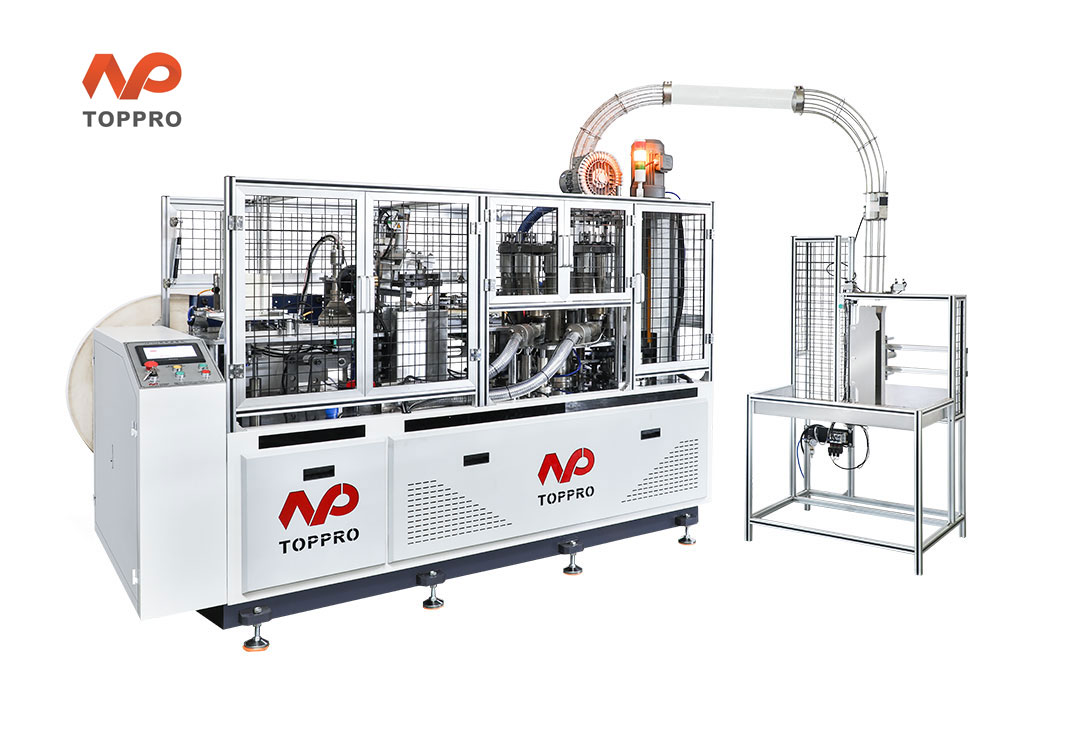
Whether you run a small-to-medium factory or a large-scale packaging plant, your line should adapt to different cup sizes (3oz–22oz) without extensive retooling. Operators also value intuitive controls, minimal maintenance, and accessible after-sales support—factors that directly affect long-term operational cost. Many buyers overlook total cost of ownership, focusing only on upfront price, but a stable line delivers far better value through years of consistent performance.
Key Stages of a Blank-to-Finished Paper Cup Production Flow
To understand what makes a strong complete line, it helps to walk through each production stage and where inefficiencies typically occur.
Paper Blank Feeding & Pre-Heating
The process begins with precise feeding of printed or plain paper blanks. Misaligned feeding causes wrinkling, mis-sealing, and jams. High-quality lines use servo-controlled feeding systems to ensure each blank enters the forming station accurately. Pre-heating prepares the paper surface for strong, leak-proof sealing—critical for hot beverage cups that must withstand high temperatures without leaking.
Cup Forming & Sealing
This is the core stage where flat blanks become three-dimensional cups. Side sealing and bottom fitting must be precise to avoid deformation. Weak seals lead to failed quality checks and lost product, while over-sealing can cause brittleness or charring. Modern lines use temperature-controlled sealing systems with real-time monitoring to maintain consistency.
Rim Curling & Finishing
Cup rim curling improves rigidity, user comfort, and stacking ability. Uneven curling results in messy stacks and damaged cups during transport. After curling, cups move to a checking station where defective units are automatically rejected, ensuring only qualified products proceed.
Counting, Stacking & Output
Final-stage automation includes counting, stacking, and collecting finished cups. Some lines add optional cup packing or bagging to create a fully closed-loop system. For high-output factories, continuous operation without manual intervention is essential to meet daily production targets.
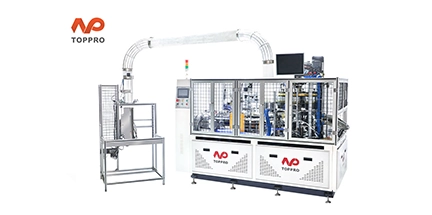
At this stage, many buyers want to compare different configurations and see real machine performance. For those looking into detailed mechanical specifications, you can explore full production line details through the brand’s dedicated equipment page.
Comparing Integrated Lines vs. Standalone Equipment
Many early-stage cup manufacturers start with separate machines for forming, sealing, and packing. While this reduces initial investment, it creates several pain points as production volume increases:
- Manual transfer between machines increases labor cost and injury risks
- Inconsistent coordination leads to uneven output and higher defect rates
- Changeover between cup sizes takes significantly longer
- More control panels mean a steeper learning curve for operators
Integrated blank-to-finished lines solve these issues by unifying control systems, optimizing material flow, and synchronizing speed across all units. According to practical production data, integrated lines can improve per-shift output by 25–40% compared to scattered setups, while lowering defect rates to industry-leading levels.
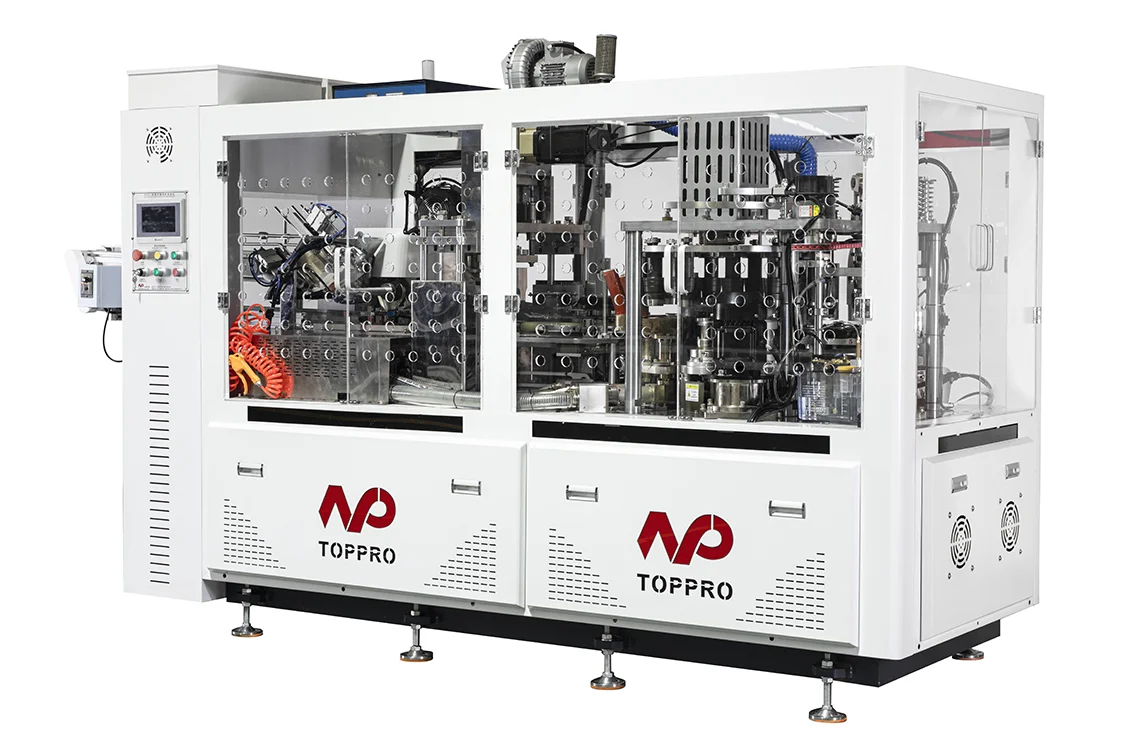
One of the reliable solutions in this category supports stable high-speed production and seamless format change, fitting for both standard and custom cup requirements. Unlike basic mechanical setups that lack precision, this type of equipment uses advanced control logic to maintain speed, accuracy, and safety over long running hours.
When choosing between options, buyers should focus on real production data rather than theoretical speed claims. Look for lines with verified hourly output, low energy consumption, and proven performance in similar factories.
Customization Capabilities for Different Cup Types
Today’s paper cup buyers serve diverse markets: coffee shops, chain restaurants, catering companies, event planners, and retail brands. Each requires different cup sizes, wall types, printing styles, and functional features.
A truly complete production line must support:
- Single-wall hot & cold cups
- Double-wall insulated cups
- Ripple-wall anti-scald cups
- Custom printed cups with logo and branding
- Mini tasting cups and large beverage cups
TOPPRO specializes in tailoring lines to client needs, whether you need a compact line for small workshops or a high-speed line for large-scale mass production. Customization includes adjustable speed, extended feeding systems, automatic rejection, online counting, and even color touchscreen panels with multilingual support.
For buyers concerned about material compatibility, modern lines work with food-grade PE-coated paper, PLA-coated biodegradable paper, and other eco-friendly materials—meeting global food packaging standards.
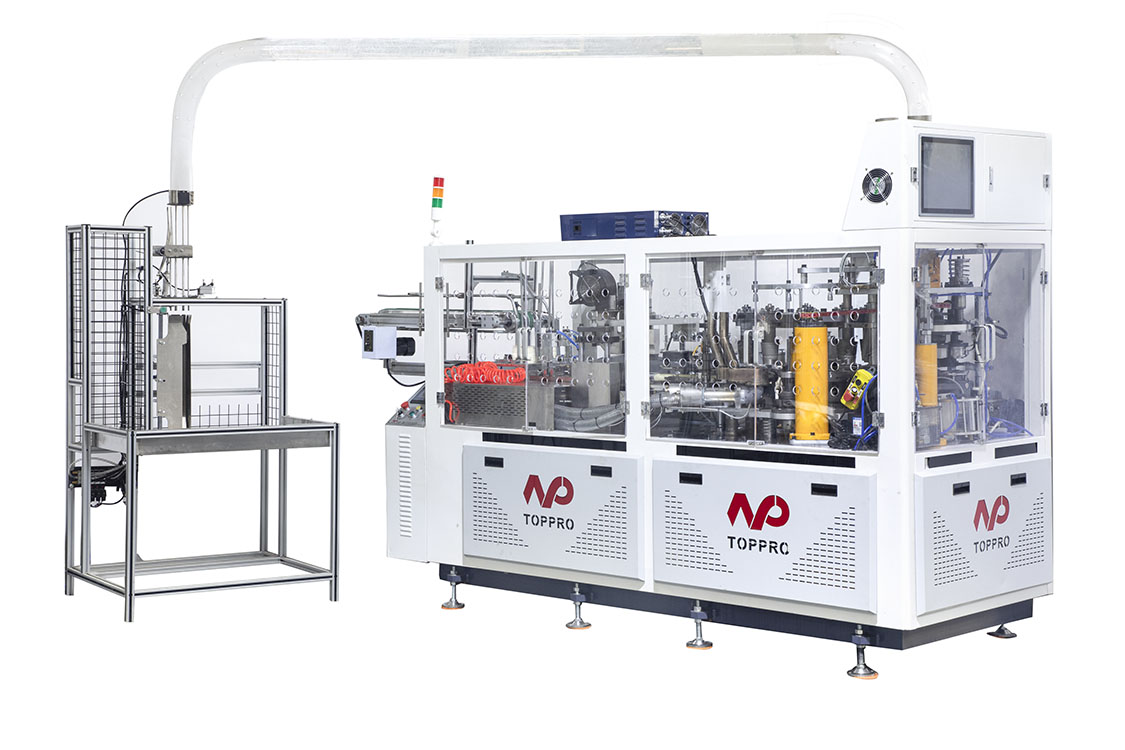
If you’re evaluating which configuration best matches your product mix, you can check customizable production options to see how the system adapts to different cup specifications.
Long-Term Value & After-Sales Support
Purchasing a complete paper cup line is a long-term investment. Beyond machine performance, buyers should evaluate after-sales service, spare parts availability, installation, training, and technical support.
Leading manufacturers provide:
- On-site installation and commissioning
- Operator training for smooth start-up
- One-year warranty and lifelong technical support
- Quick-response maintenance services
- Spare parts supply to reduce downtime
According to a global packaging industry survey, businesses that choose suppliers with strong after-sales support reduce annual downtime by up to 70%. This directly improves annual output and revenue stability.
The right Paper Cup Machine integrated line doesn’t just produce cups—it supports your business growth, improves product quality, and lowers long-term operational costs. When compared to generic assembly setups, a purpose-built complete line offers better stability, higher efficiency, and easier management.
Whether you’re replacing old equipment, expanding production capacity, or launching a new cup manufacturing business, the goal is to achieve consistent, high-quality output with minimal hassle.
Final Thoughts on Building Your Ideal Paper Cup Line
A complete blank-to-finished paper cup line is more than a collection of machines—it’s a production system designed for efficiency, reliability, and flexibility. By choosing an integrated solution, you eliminate bottlenecks, reduce waste, lower labor demands, and ensure every cup meets quality standards.
TOPPRO’s end-to-end paper cup lines are built using industrial-grade components, tested under continuous working conditions, and optimized for real factory environments. From small businesses to large-scale manufacturers, the system scales to meet different output needs while maintaining ease of use.
If you’re ready to discuss your production requirements, cup specifications, or space constraints, you can get professional line configuration advice to receive a tailored solution for your project.