 English
 Español
 Pусский
 عربي
عربي 


It starts with a promising quote. Three weeks later, the newly arrived equipment is sitting idle while your team fights with wrinkled side seams and a bottom seal that leaks hot coffee onto the factory floor.
According to a 2024 packaging machinery report by PMMI, nearly 35% of cup forming equipment underperforms within the first 90 days—not because it is “broken,” but because it was selected based on the wrong criteria. Speed sheets lie. Peak numbers deceive. What actually matters is how the equipment behaves with your paper, your humidity, and your operator’s workflow.
Let’s walk through four real-world filters that separate reliable forming lines from expensive headaches.
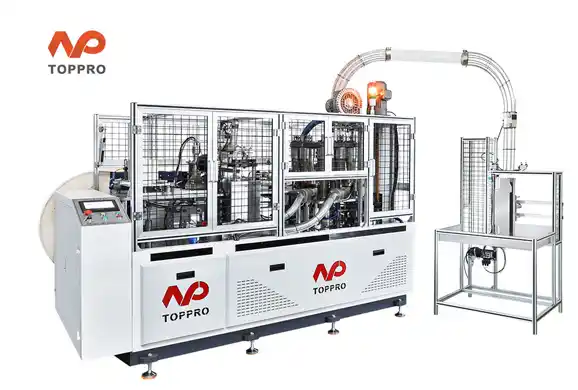
Filter #1: Match Output to Your Downstream Reality, Not the Brochure
A supplier claims “180 pieces per minute.” Sounds impressive. But ask them: at what paper weight? With what ambient temperature? Most published speeds are measured in ideal lab conditions—low humidity, premium virgin paper, and a fresh set of knives.
In real production, three factors cut sustainable output by 20–35%:
-
Recycled paper (lower stiffness = more misfeeds)
-
Non-standard cup diameters (tooling was optimized for 8oz/12oz only)
-
Operator skill level (complex HMI panels slow down new hires)
How to verify: Request an 8-hour continuous run log using your actual paper roll. Watch the stack press mechanism closely. Pneumatic presses are common but lose consistency as air pressure fluctuates. Servo-driven presses maintain identical force on cup #1 and cup #10,000.
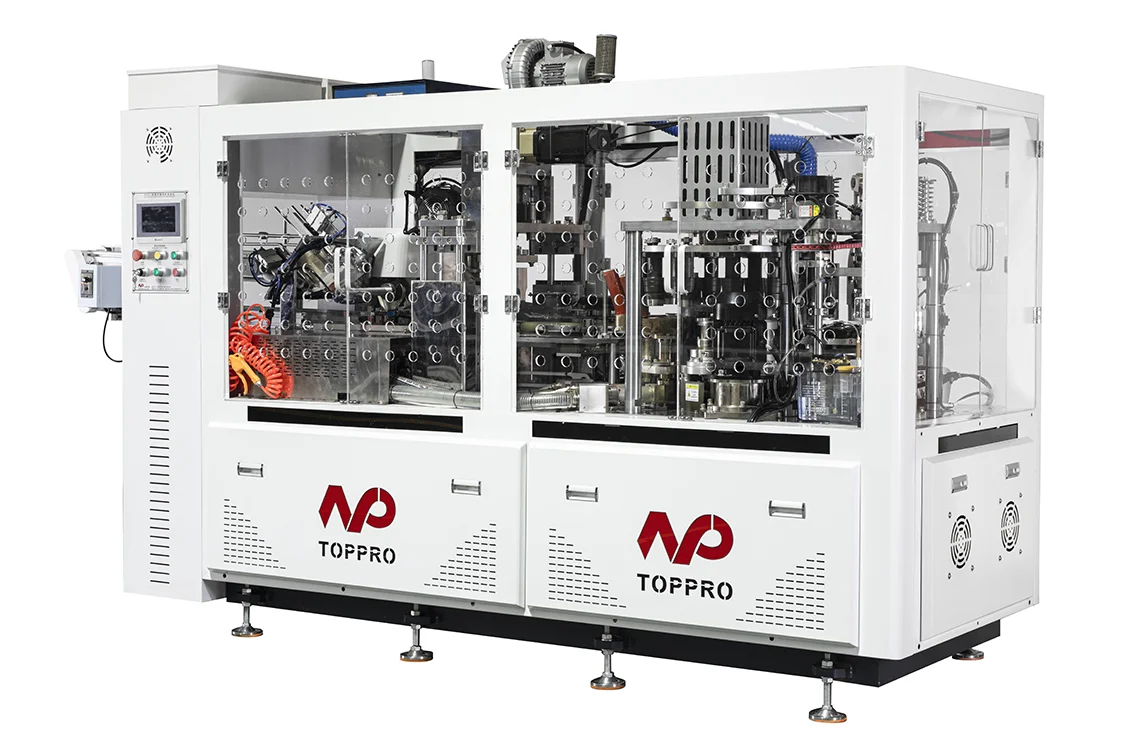
For production managers running two shifts, the difference between pneumatic and servo can mean an extra 15,000 usable cups per week. [See a side-by-side comparison of pneumatic vs. servo stack press designs here].
Filter #2: Prioritize Heat Sealing Stability Over Flashy Features
The most expensive repair you will ever face is not a broken motor. It is inconsistent heat distribution across the sealing surfaces. When the side-seam heating ring fluctuates by ±15°C, you get burnt exteriors on one batch and leaky bottoms on the next.
Professional-grade systems use PID (Proportional-Integral-Derivative) controllers with solid-state relays. This keeps temperature variation under ±3°C. You can see the difference immediately: a uniform sealing ring without white stress marks or brown scorch trails.
What to inspect during a demo:
-
Does the machine have individually controlled heating zones for body and bottom?
-
Is the ultrasonic side-seam system equipped with auto frequency tuning? (Essential when paper moisture changes seasonally.)
-
How long is the cooling phase after bottom knurling? Too short = warped cups.
A packaging team in Vietnam recently shared their fix: after switching to a forming line with PID-controlled zones, their monthly reject rate dropped from 8.2% to 1.7%. That is 6,500 fewer cups thrown away every week.
If your facility operates in high-humidity regions (above 65% RH year-round), the sealing section becomes even more critical.
Filter #3: Calculate Changeover Time as a Direct Cost
Your product mix will evolve. Maybe you start with 8oz hot cups, then add 12oz cold cups, then a 16oz soup container. A forming line that requires 4 hours and two technicians to change molds is not a machine—it is a bottleneck.
Modular mold cartridges have changed this calculation. With a quick-release turret design, one operator can complete a full changeover in under 50 minutes. No hoist. No special tools. Just a pre-aligned cartridge that slides in and locks.
Ask every supplier these three exact questions:
-
“Is the mold cartridge pre-aligned outside the machine, or do I need to calibrate it on the frame?”
-
“What tools are required for the punch-and-die swap? Can you list them?”
-
“What is the actual average changeover time recorded in your last 10 customer installations?”
A production manager at a mid-sized packaging plant once told me: “I buy the machine for the 80% standard run. But I lose money during the 20% changeover time. That is where the real cost hides.”
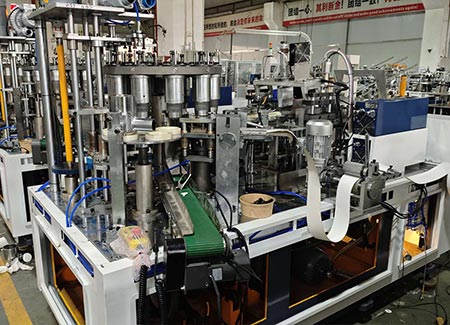
Filter #4: Inspect the Paper Path and Dust Management (The Most Overlooked Failure Point)
Paper dust is the silent killer of cup forming equipment. Every time the blank is cut and fed, microscopic paper fibers float into the air. They settle on sensors, clog photoelectric eyes, and cause misfeeds that stop the line.
Red flags to spot during a factory visit or video tour:
-
No dust cover on the paper feeding track
-
Exposed sensor housings (dust will find them)
-
Unsealed electrical cabinets near the cutting station
Green flags:
-
Enclosed paper path with negative-pressure dust extraction ports
-
IP54-rated sensor enclosures at minimum
-
Centralized auto-lubrication (manual grease points attract dust)
According to field service records from a major European supplier, 42% of unscheduled service calls trace back to paper dust interfering with registration sensors. A simple cover costs the manufacturer $40 to install. It saves you $2,000 in avoidable downtime.
Your Final Decision Checklist
Before you sign any purchase order, put your shortlisted equipment through this six-point real-world filter:
| Criterion | What to Verify |
|---|---|
| Sustainable output | 8-hour continuous log with your paper roll |
| Temp control system | PID + SSR, not simple on/off |
| Changeover tools required | List them. More than 3 tools = too many |
| Dust protection | Enclosed paper path? Sealed sensors? |
| Consumables availability | Knives, punches, heating rings—local stock? |
| Safety interlocks | Full-stop brake, not just speed limiter |
From Selection to Action
Selecting reliable forming equipment does not require a degree in mechanical engineering. It requires asking the right questions before the quote is signed. Speed is seductive, but consistency pays the bills. Thermal stability, changeover speed, and dust management determine whether your new line runs at 90% efficiency—or sits idle while you wait for a service technician.
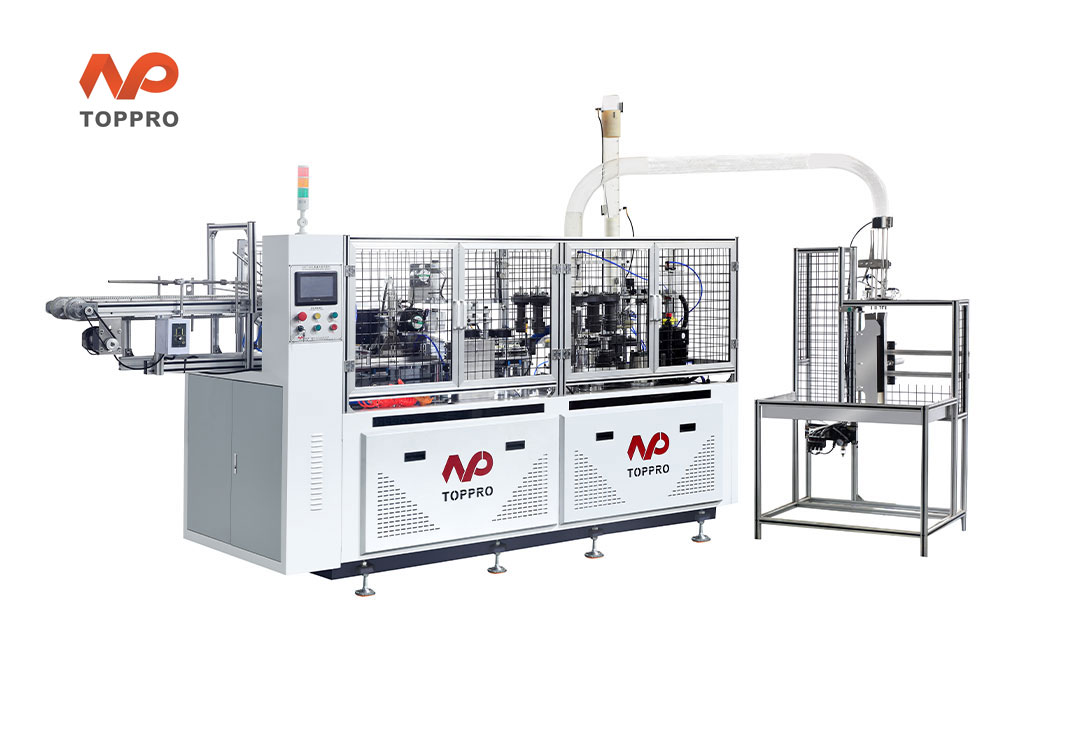
If you are currently evaluating suppliers and want to benchmark your requirements against a production-ready design that addresses all four filters above, [review the complete technical configuration of a servo-driven model here].
The Bottom Line
A well-selected forming line feels boring to operate. It starts on time. It seals evenly. It changes over without drama. That boring machine is the most profitable one you will ever own.